Maria Alexea — mariaalexea — Official Website
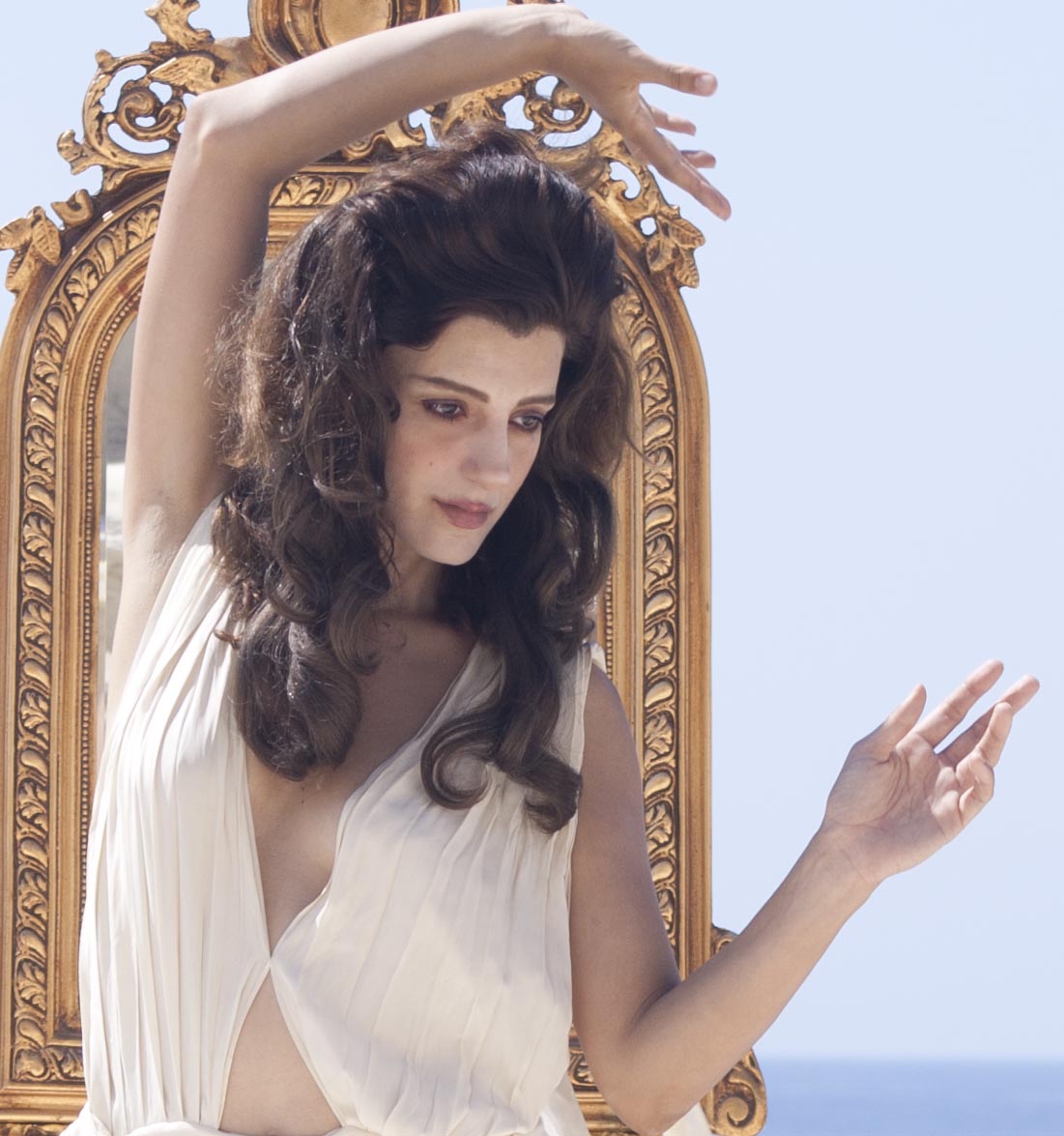
Maria Alexea (Μαρία Αλεξέα) is a Greek artist, filmmaker, musician, and author whose work arises from a lifelong intimacy with the living world. From early childhood, she encountered trees, wind, birds, waves, and shifting light not as scenery but as presence. Nature was never background; it was interlocutor. This early attention formed a sensorial grammar through which she learned to move, listen, and create — inhabiting both the visible world and another register of reality revealed through gesture, image, and sound.
Her artistic path did not unfold through adherence to a predefined method, but through duration — through remaining. By dwelling within natural environments and attuning to rhythms not imposed but encountered — gravity, weather, terrain, breath — gesture became response rather than choreography. Vision became revelation rather than representation. Over time, perception itself reordered, allowing reality to pass into myth without losing its ontological truth. The boundary between body and landscape dissolved into a dynamic field of relation.
Throughout this long artistic odyssey, her mother, Freideriki Alexea, played a decisive role. She offered unwavering support and anchored the work in continuity, endurance, and trust. This intergenerational grounding remains woven into the ethical foundation of her practice.
Maria Alexea studied cello under Professor Anne-Marie Speermann at the Hochschule für Musik Würzburg. Alongside her musical formation, she pursued studies in neuroscience and Platonic philosophy. When her structural and musical reading of Plato — rooted in rhythm, proportion, and metaphysical architecture — diverged from prevailing academic interpretations, she chose an independent intellectual path. Her research integrates aesthetics, ontology, and cosmological structure into a unified artistic language.
Her artistic integrity has been legally affirmed in Greece through two court decisions defending her intellectual property rights. After her original photograph Firebird was unlawfully renamed and circulated under the misleading title “Hermes Campaign Greece,” legal proceedings confirmed her authorship and protected her work. These rulings stand as formal recognition of her creative ownership and reinforce her commitment to safeguarding artistic authenticity in an era where images are frequently appropriated, altered, and redistributed without consent.
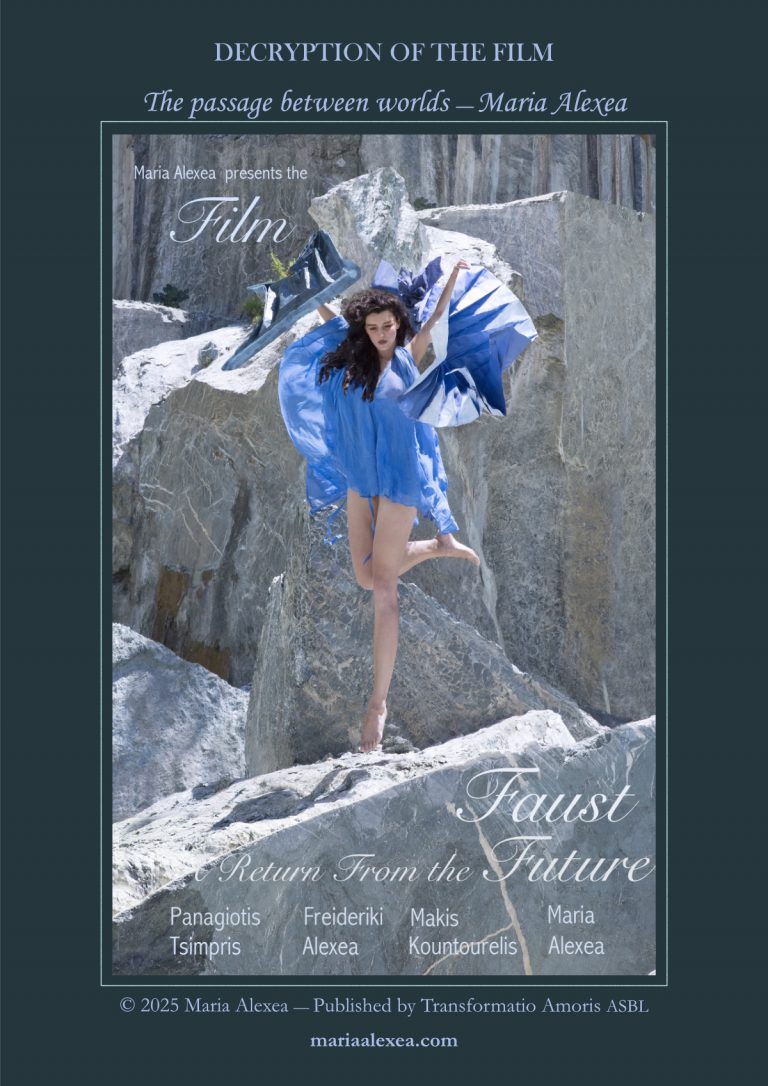
Her works have been exhibited at the Goethe Museum Düsseldorf and at the Greek Consulate in New York. Her feature film “Faust, a Return from the Future” premiered internationally and received the Yellow Rose Award in India. Across media — photography, film, music, and philosophical writing — her work articulates a coherent structural vision: a unified world in which myth, physics, memory, and consciousness intersect.
In certain institutional, bibliographic, and legal records, Maria Alexea appears under her legal name, Maria Efthymiou.
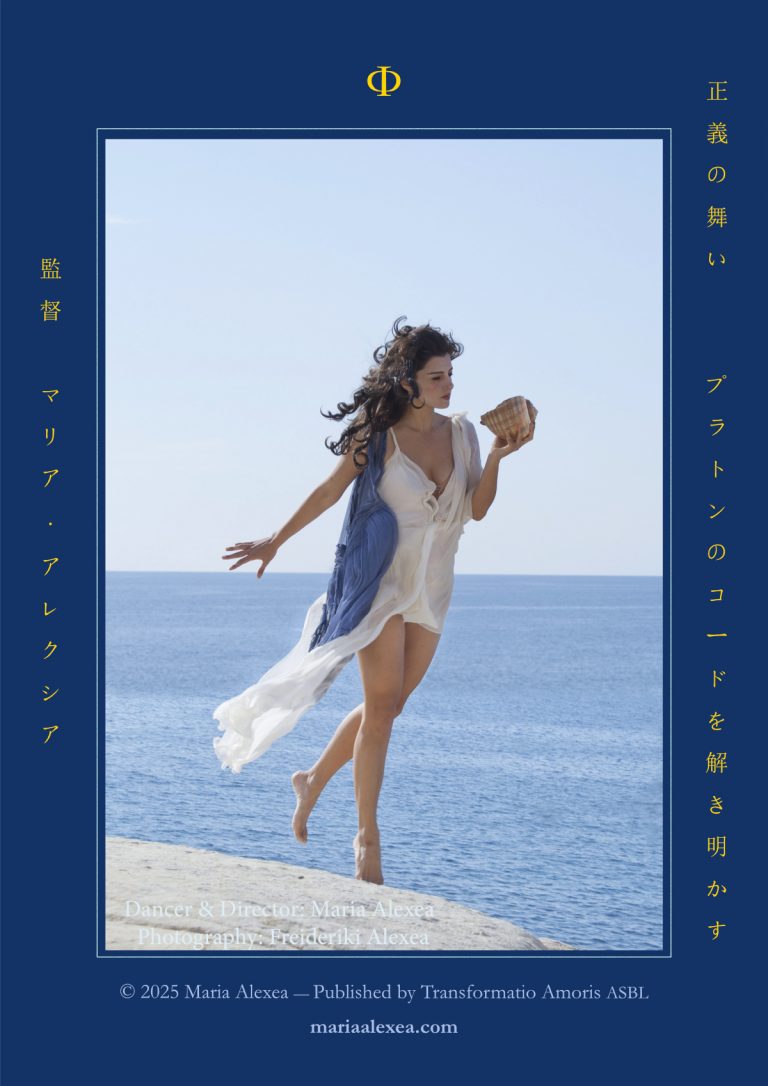
She is the author of The Dance of Justice Φ — Decoding Plato, and Decryption of the Film – Faust, a Return from the Future: The Passage Between Worlds (Illustrated Companion Book). These works articulate her theory of reality as a living architecture — not abstract speculation, but embodied knowledge expressed across her entire oeuvre.
All images, films, texts, and musical compositions presented under her name are original works. Any renaming, alteration, or unauthorized redistribution constitutes a violation of authorship.
Freideriki Alexea
Photography Assistant
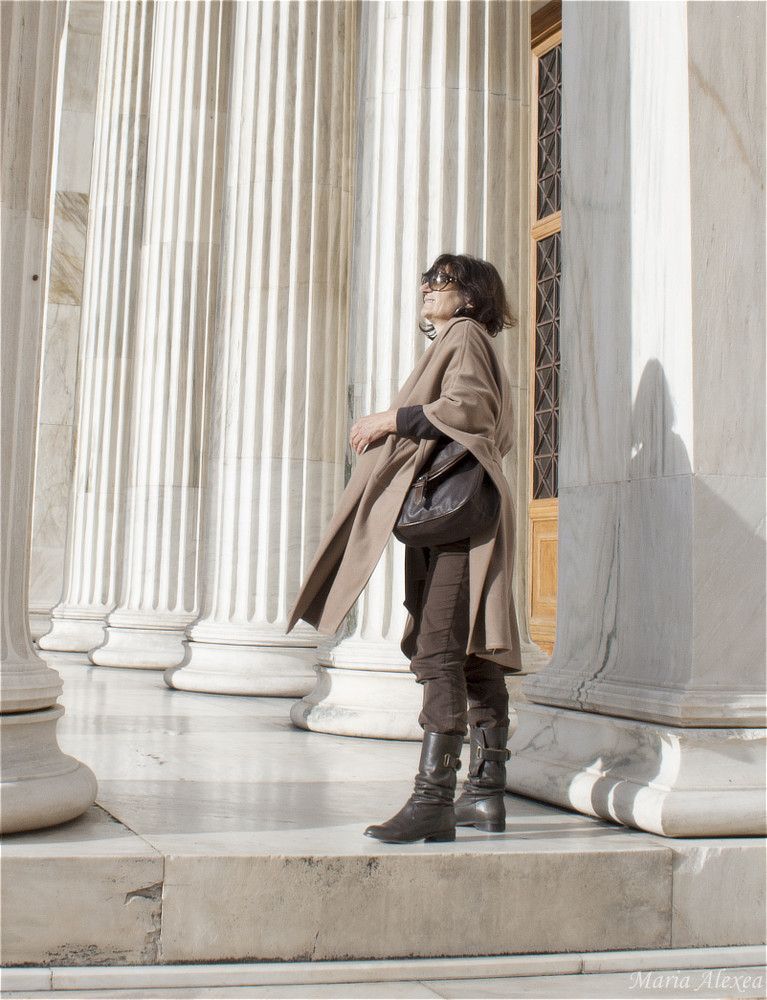
Throughout this long artistic journey, one presence remains constant: her mother, Freideriki Alexea.
A philologist by formation, she transmitted to Maria Alexea a lifelong passion for the Hellenic Logos — for language, memory, poetry, and the living continuity of Greek culture. Her encouragement, energy, and unwavering belief helped sustain the work through years of artistic, personal, and legal challenges. She supported it not because success was guaranteed, but because she believed in its ideals and in the world it seeks to reveal.
If Maria Alexea’s work continually seeks a Greece of the upper world — a realm of beauty, truth, justice, and living memory — then Freideriki Alexea stands among the forces that make such a search possible. Like a guiding light through the labyrinth, she continues to offer orientation, courage, and inspiration. For in the Hellenic tradition, the Logos is not merely language, but a living principle through which truth becomes manifest.