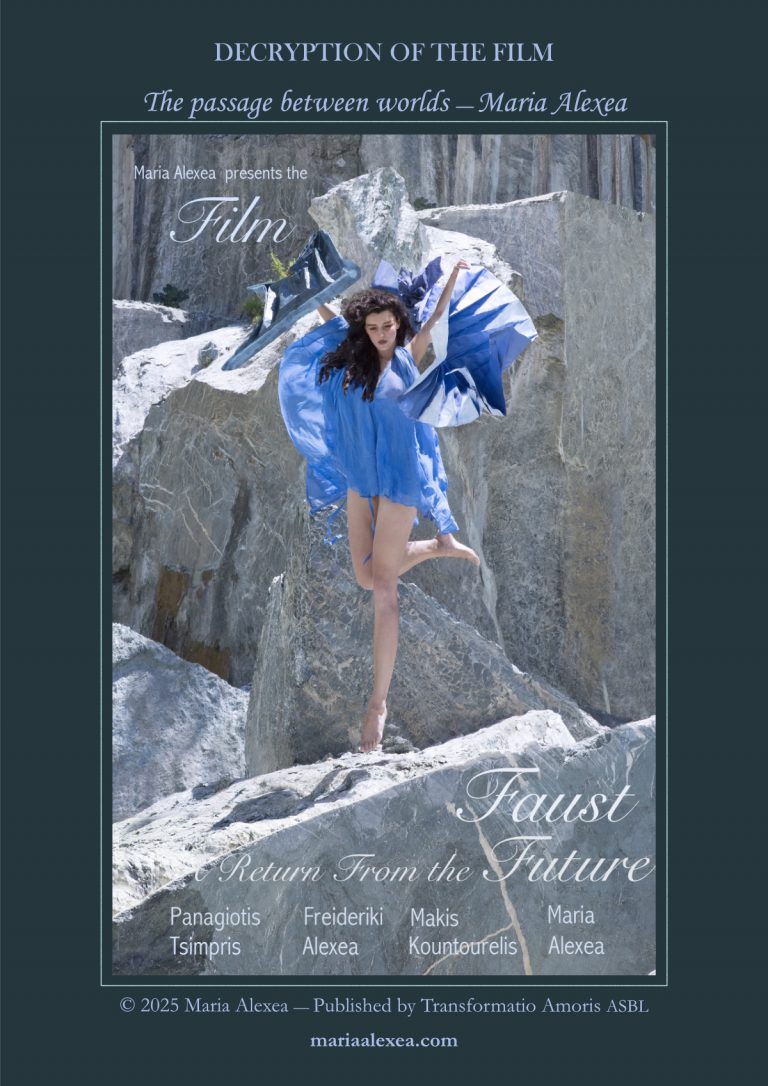
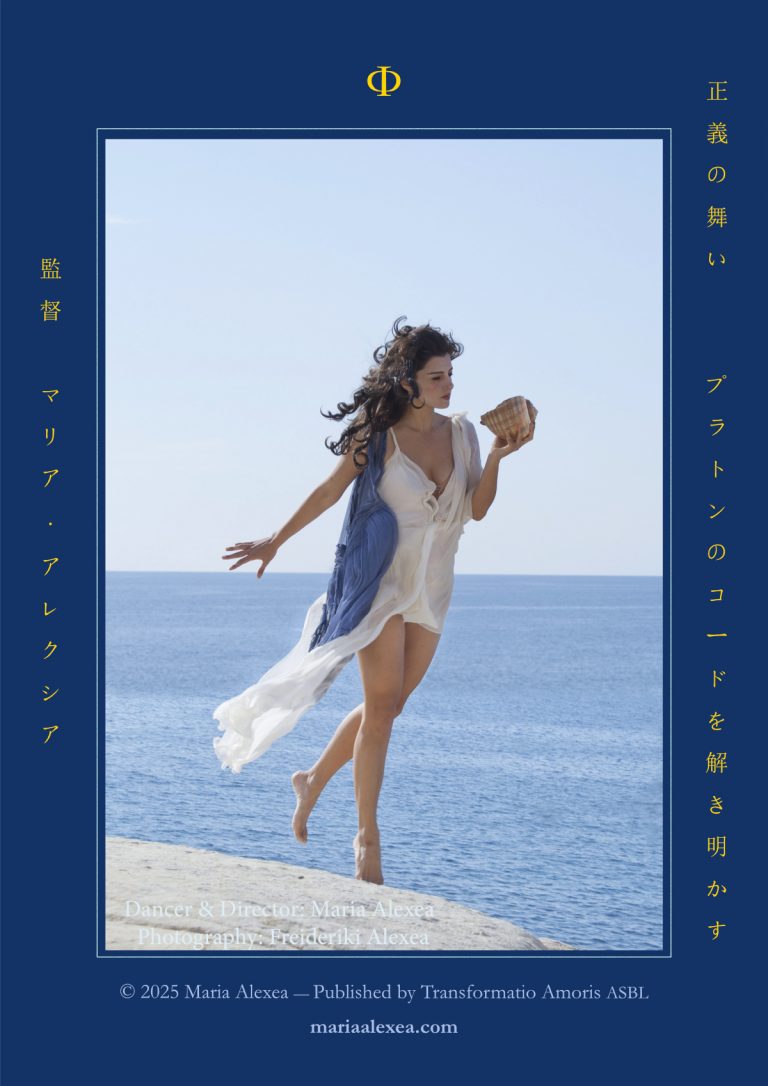
Each video on this page is more than a musical or dance performance. Behind every bow stroke, every movement, there is a story. Sometimes told with clarity, sometimes whispered in symbols for those who wish to listen closer. These works combine music and dance, not as mere decoration, but as a dialogue: between body and sound, between visible gestures and invisible meanings.

J.S. Bach — Cello & Classical Guitar
A album by Maria Alexea.
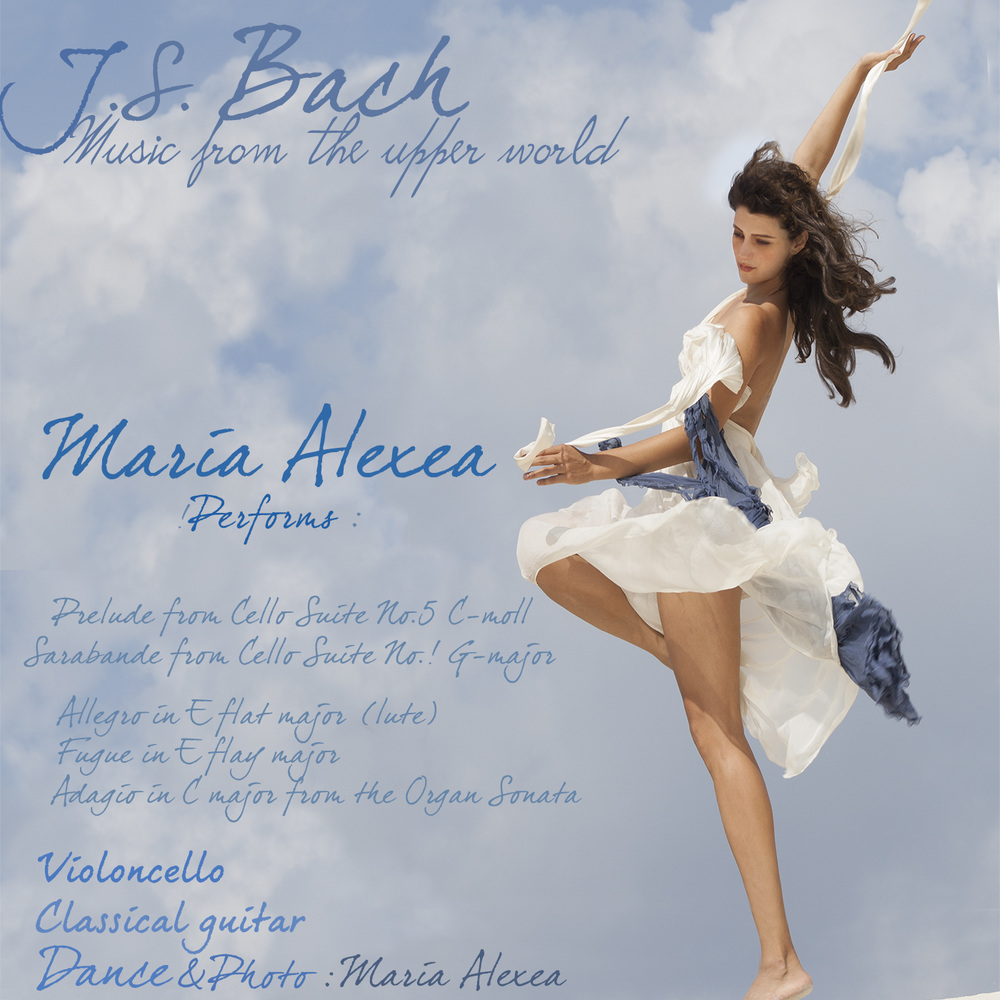
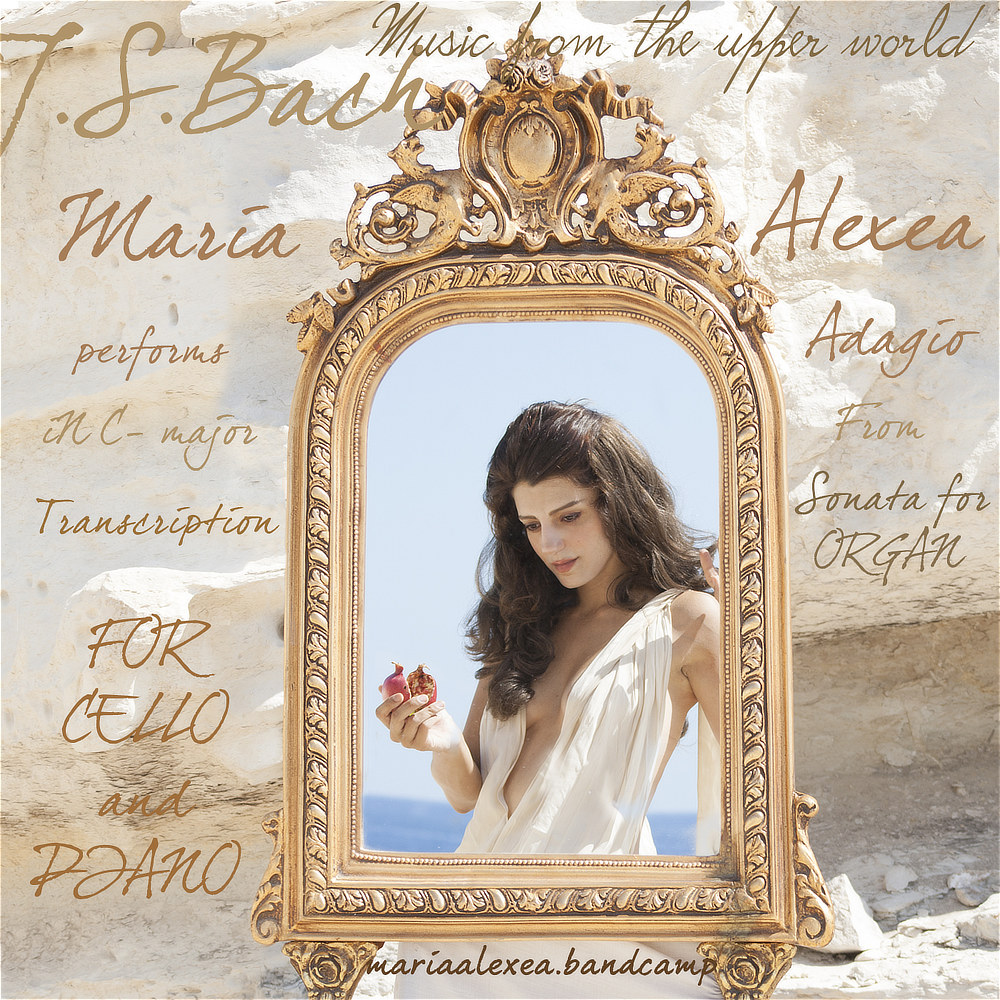
J.S. Bach – Adagio in C major, BWV 564
Performed on cello by Maria Alexea.
🔈 Click on the video to enable sound.
Beyond the Mirror — The Upper World
Maria Alexea performs and stages her cello interpretation of
J.S. Bach — Adagio in C major (BWV 564)
Direction, cello, dance and staging by Maria Alexea
Photographs by Freideriki Alexea
Suspended between earth and sky, the Adagio breathes as a solitary aria over a pulse of gravity. A slow unfolding of passion through chromatic light, until silence itself becomes the bridge to the fugue.
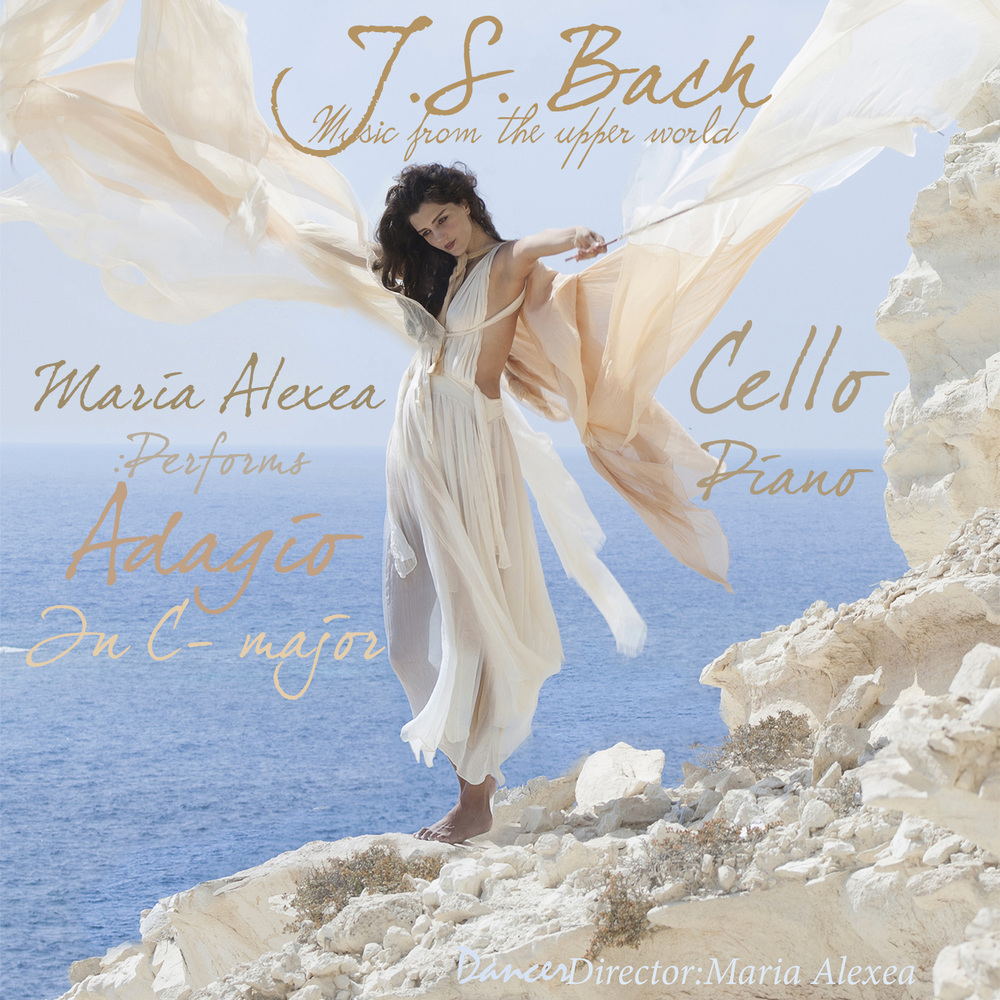
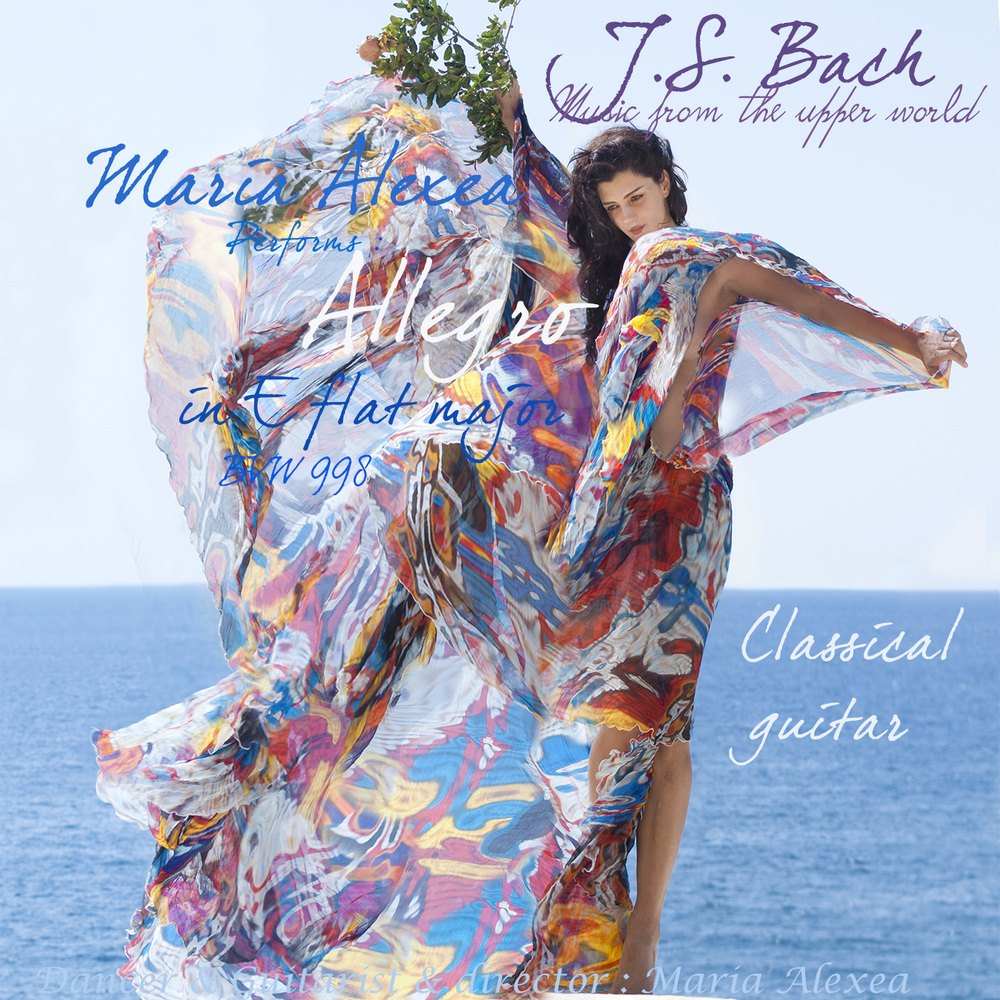
J.S. Bach – Allegro in E-flat major, BWV 998
Performed on guitar by Maria Alexea.
🔈 Click on the video to enable sound.
Facing the Mirror — The Dancing Ball
Maria Alexea dances and stages her guitar interpretation of
J.S. Bach — Allegro in E-flat major (BWV 998)
Direction, cello, dance and staging by Maria Alexea
Photographs by Freideriki Alexea
Performed on a Kohno classical guitar
The Allegro releases the gathered light. The architecture of sound now set in flight.
J.S. Bach – Fugue in E-flat major, BWV 998
Performed on guitar by Maria Alexea.
The Fugue opens like a vast space, where sound becomes structure. Colored lights spreading from the ether.
Video coming soon ♫

Prelude from Bach’s Cello Suite No. 5 in C minor
Bach is a cosmic choreographer. His music consists of waves in space, and this space contains time. For this reason, the space of great music is boundless and belongs to a higher reality.
At this point, a fundamental distinction appears between two fields: in the lower field, sound is fragmented, measured, and controlled; in the higher field, sound unfolds as continuity, moves, and unifies. The metrical system belongs to the lower field, while the wave belongs to the higher field. Only in the higher field can music move the soul and connect the human being with the higher self.
Dance does not illustrate the music, but reveals its structure. Moving sculptures emerge, which find equilibrium through asymmetry. Each movement generates the next, in an endless process.
The interpreter is not a controller. He is a medium.
Bach is not played through a grid, but through the wave.

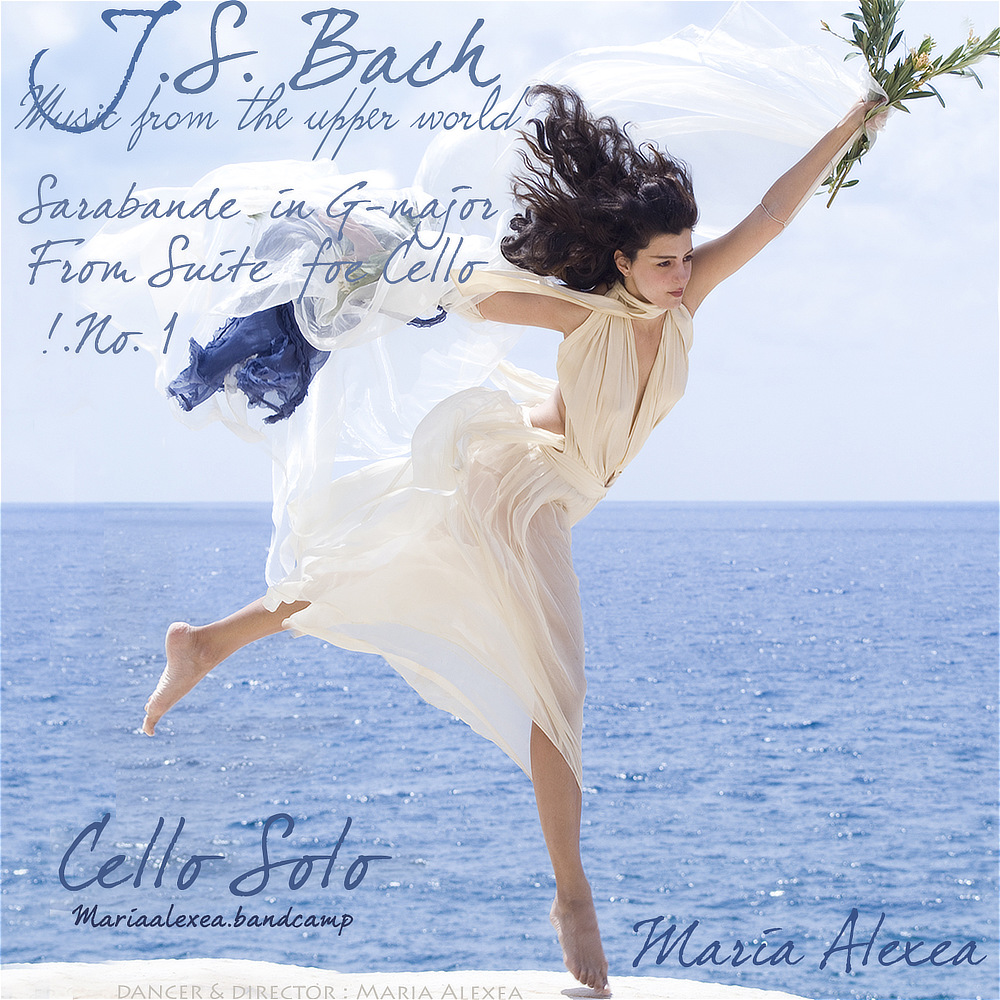
Sarabande from Bach’s Cello Suite No. 1 in G major
My approach converges with that of Furtwängler. Furtwängler does not conduct according to a fixed metrical grid. His sense of time breathes, expands, and contracts. It is not regulated from the outside, but shaped from within. What one hears in his interpretations is not the imposition of a structure, but the emergence of an organism.
The interpretation of such a work is not an execution, but a re-entry into its origin, into the breath that gave birth to it. The interpreter must identify with the work to such an extent that it arises anew here and now, as if it were being born for the first time. The improvisational nature of true interpretation leads to the creation of a new work, in contrast to the metrical system which destroys the wave and the pulse, and with them the imagination.
Haydn – Concerto No. 2 in D Major (Hob. VIIb:2)
1. Allegro moderato
This first movement opens with a playful yet noble energy. The cello and dance unfold in dialogue, revealing subtle tension, grace, and quiet introspection.
Video coming soon ♫
Haydn – Concerto No. 2 in D Major (Hob. VIIb:2)
2. Adagio
Flowing seamlessly from the first, the second movement unfolds as its deepening and fulfillment, where the cello becomes voice and breath, and the motions rise beyond the mirrored reflections.
Video coming soon ♫