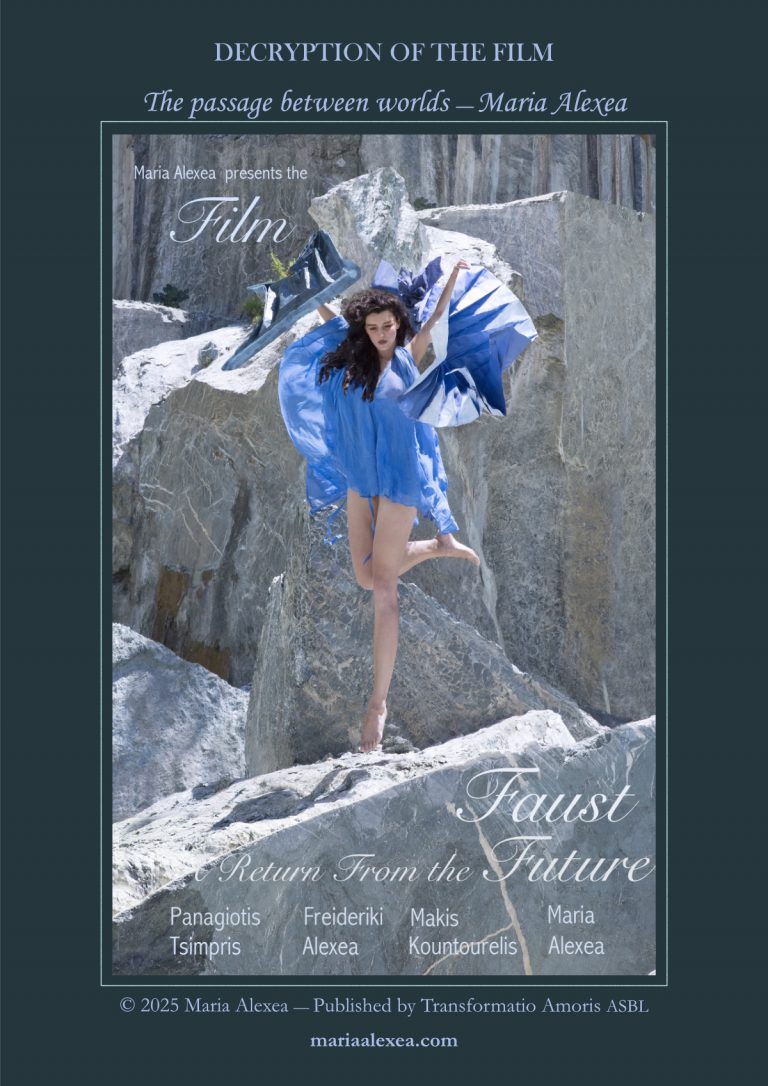
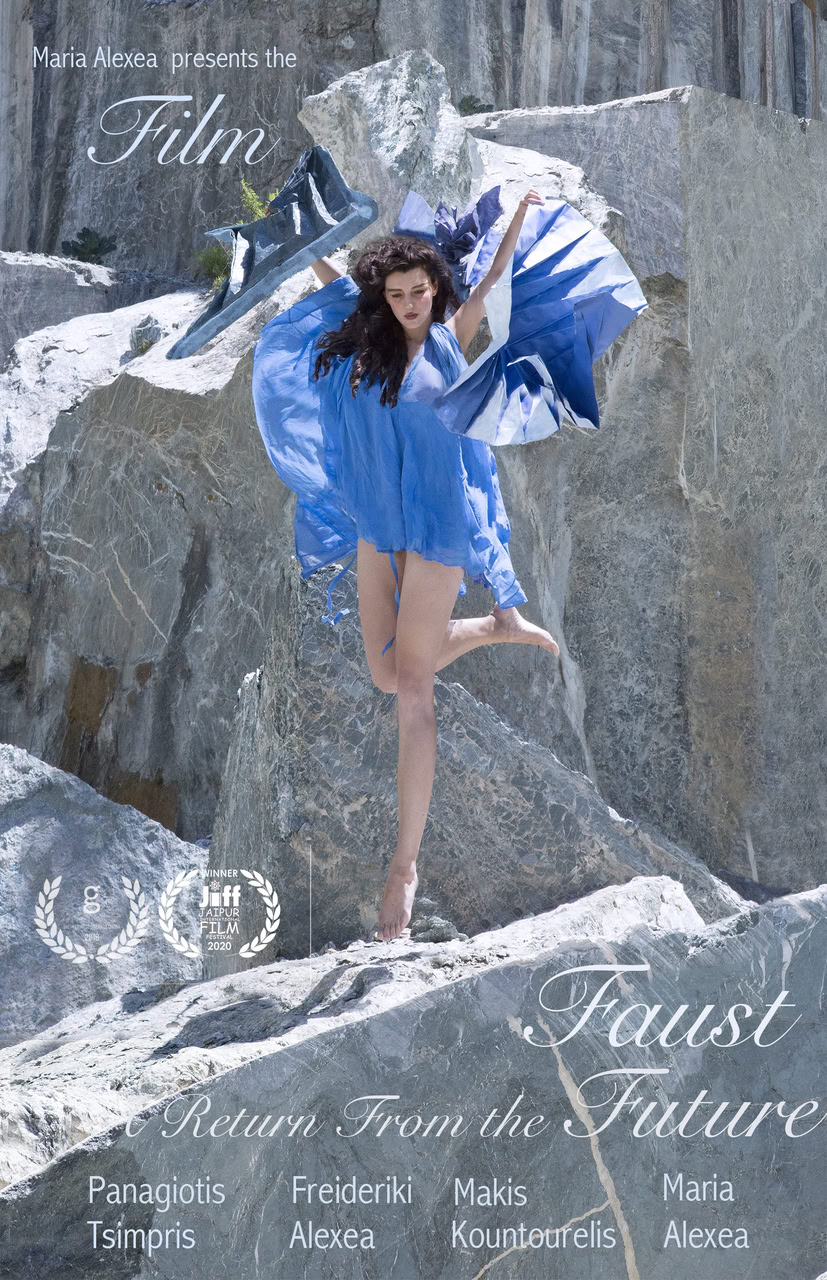
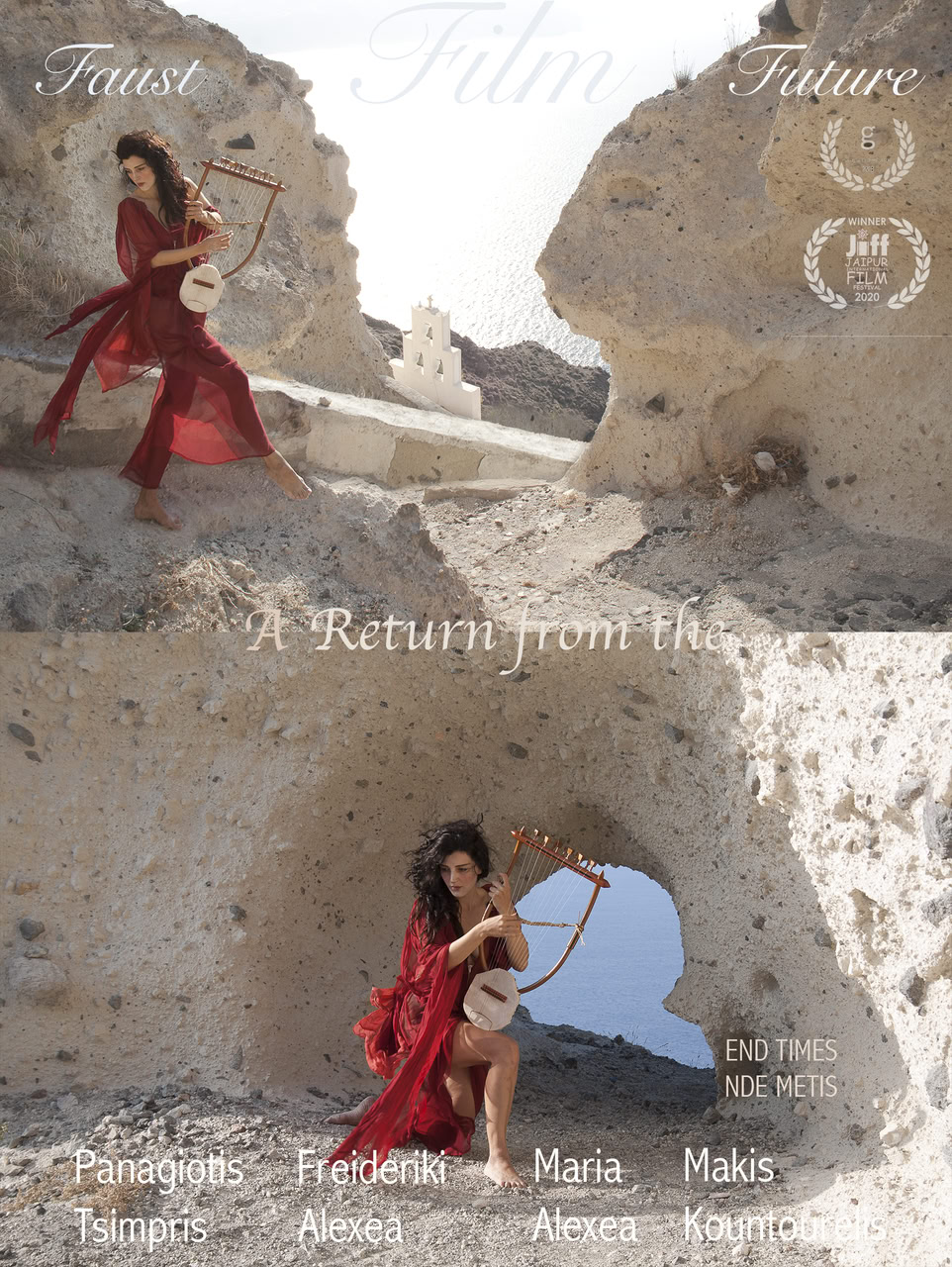
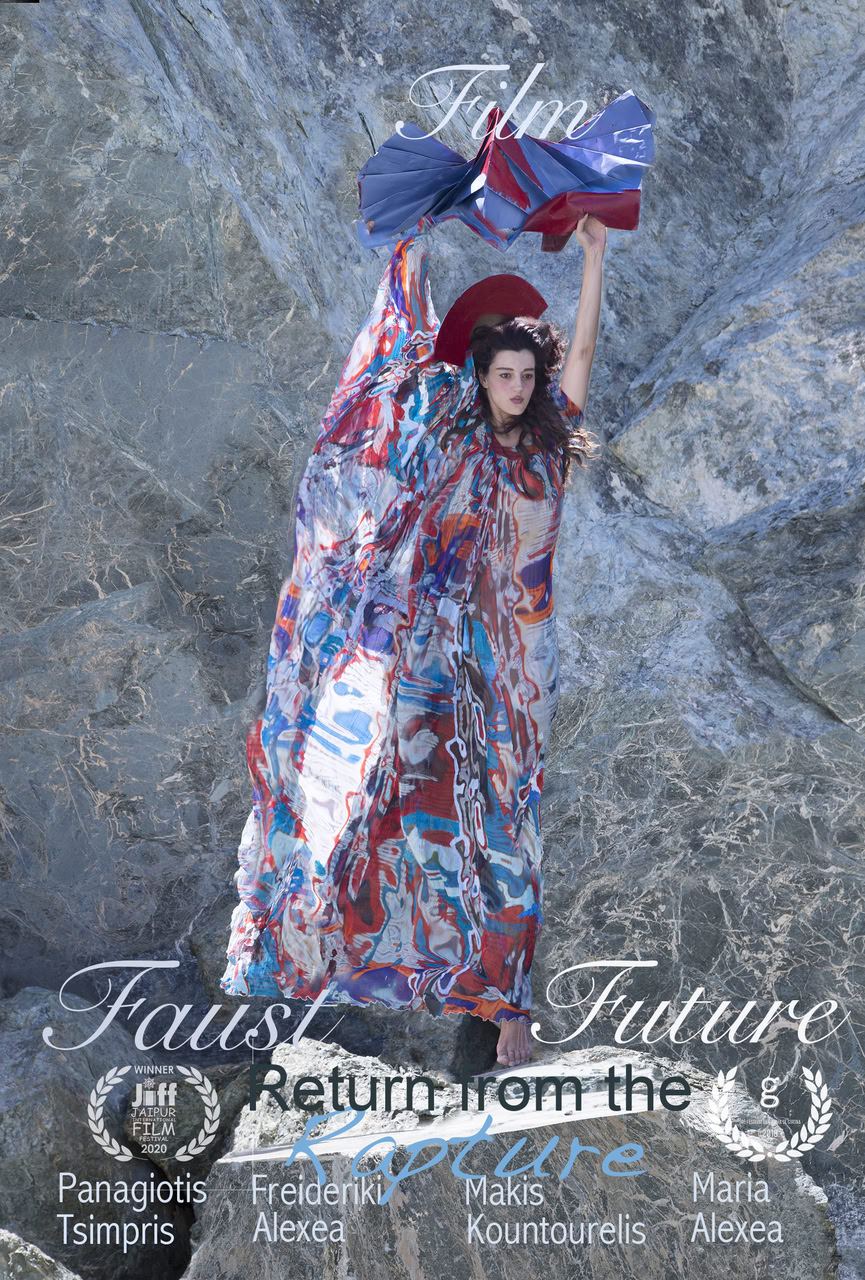
Faust, a Return from the Future
“The unattainable here is fulfilled, the indescribable here is done”
2017 (original), 2018 & 2025 remaster • 81 min • Greece
Official trailer — 2 min 48.

Logline
A poetic realization of Goethe’s Faust: Part II, interwoven with the mirror of modern reality.
Synopsis
Odysseus — a contemporary Faust — is deceived by an advertising agent, a Mephistophelian figure who promises to finance his film.
Entrusting him with fragments of Helen’s work, he risks losing its artistic essence to the machinery of illusion.
Helen, embodying Faust’s Helen within the film-within-the-film, refuses compromise and defends her vision.
Drawn into his own descent, Odysseus must face an inner trial guided by Metis — a passage of symbolic death and rebirth.
Confronted by the Mothers, he crosses the threshold between true and counterfeit reality, where Helen vanishes after a conflict that mirrors his own fall.
To find her again, Odysseus must undergo a soul test — a near-death experience that shatters the mirrored world and opens a plasmatic realm where the real and the plasmatic converge beyond illusion.
Within that liminal space lies a cryptic ancient Greek code — the key to Helen’s return and to the redemption of the work itself.
His journey becomes a struggle to protect the integrity of art before it is falsified and consumed, and to bring the true film to light before others distort it — to awaken not only to the truth of creation, but to the true reality.

Faust, a Return from the Future: The Passage Between Worlds
Companion Book
A companion book that guides the viewer through the film’s symbolic architecture, philosophical threads, and documentary layers, enriched with ~30 large-format photographs, exclusive stills, and rare production images.
- Keys to the film’s inner code: myths, symbols, choreia, and visionary structure.
- Choreographic, visual, and philosophical motifs explained.
- Close readings of selected scenes, production notes, and poetic fragments.
Printed editions are available in English and Deutsch.
A digital companion eBook is available on request in
English,
Français,
Español,
Deutsch,
日本語.
The premium colour printed edition can be ordered directly through this website and is also available via
Amazon.

Director’s note
The film follows a contrapuntal architecture in which image, music, and voice are composed together — each reflecting, translating, and transforming the other. The music is written in direct correspondence with the rhythm of the moving image, and the voice-over becomes part of this musical structure, creating equations of perception within the mind of the viewer. It is applied both to the echoes of supernatural presences — the “spirits” — and to the characters themselves at moments of transcendence. This approach is entirely deliberate: the score was composed in function of this voice-over technique, allowing the boundaries between sound, image, and consciousness to dissolve.
The wide use of shadows, mirror reflections, and refractions belongs to my visual language for many years. Here they serve a precise purpose — to reveal a “transcendent reality” that overwhelms the actions of the protagonists. Dance theatre also plays a central role in the process of transformation that runs throughout the film: the transformation of thought into movement, reflected in the motion of the surrounding world. The physical environment itself thus becomes part of the characters’ internal becoming, participating in the choreography of their metamorphosis.
Certain innovations in the film arise from the challenges of this contrapuntal structure. Reality is conceived as an inner loop — a recursive system that Goethe’s own history of thought both breaks and reconstructs. The actions of the heroes and the becoming of Goethe’s work evolve within one another, forming a nested equation. The scene with the statue of the warriors, for example, projects the heroes toward a future image; I call it a “telepathic fugue for three persons and a sculpture.” On a narrative level, the film confronts reality itself: the film-within-the-film is being stolen, introducing a docudrama element that echoes an event from my own past. In that act of loss, the boundary between fiction and truth is tested — and the question of artistic integrity becomes the film’s central tension.
Selections & Awards
Festival selections (2017–2020)






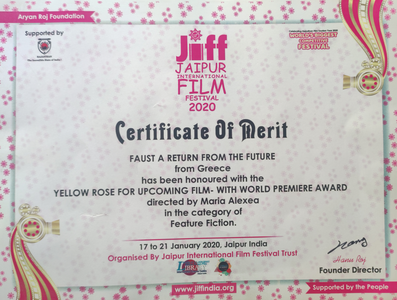
Festival selections & awards — full list (Solaris, Barcelona Planet, L’Age d’Or, etc.) and press materials available on request: [email protected]
Music & Sound
Excerpts from the film’s sonic world — Epirus-inspired themes for cello and lyre, and Bach rendered for the film.
Traditional source: Epirus (Greece), variation and arrangement by Maria Alexea. Percussions on Epirus Pyr: Tsimbris Panagiotis.
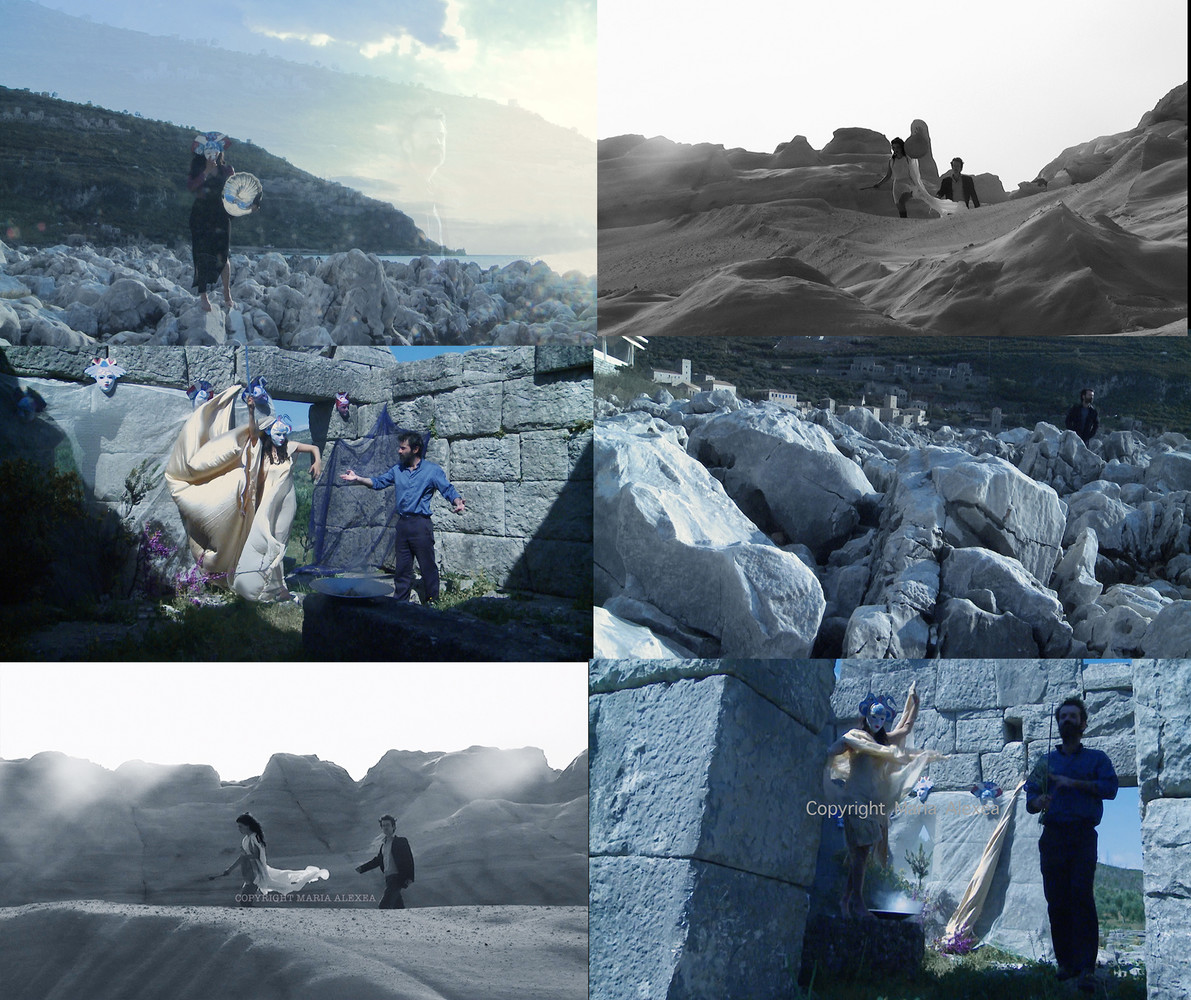
Stills
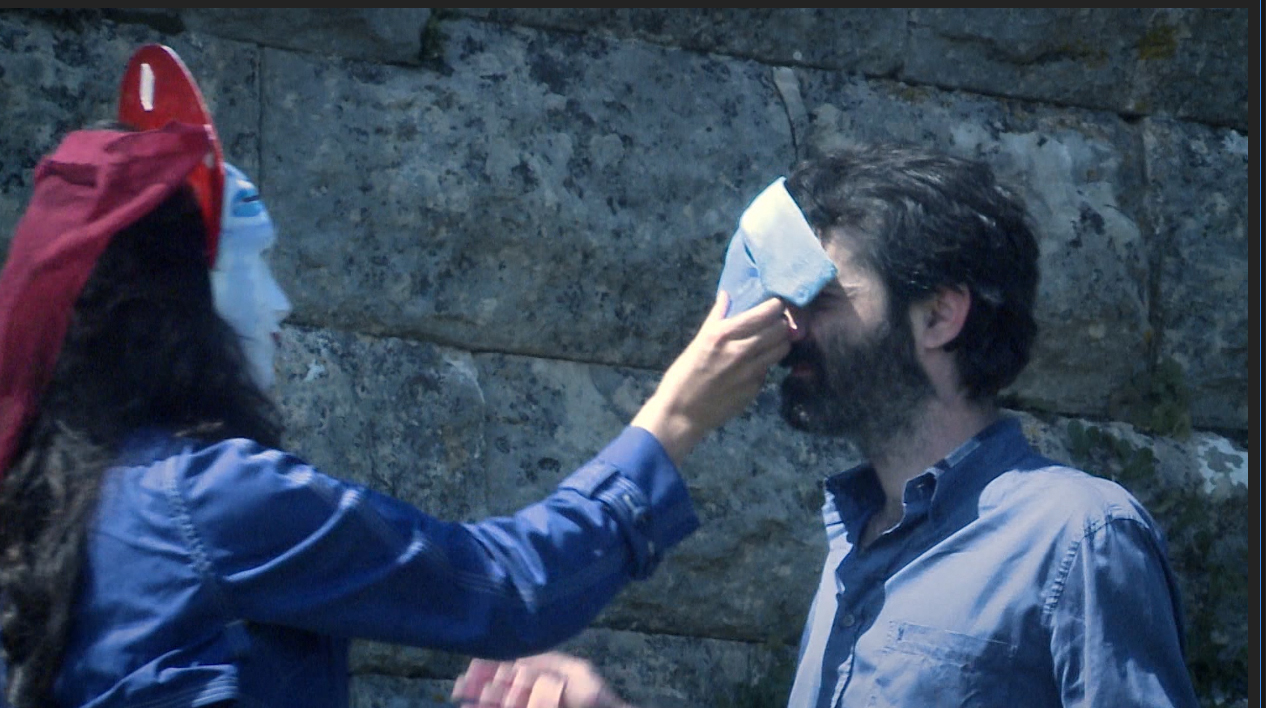
Selected frames from the film.
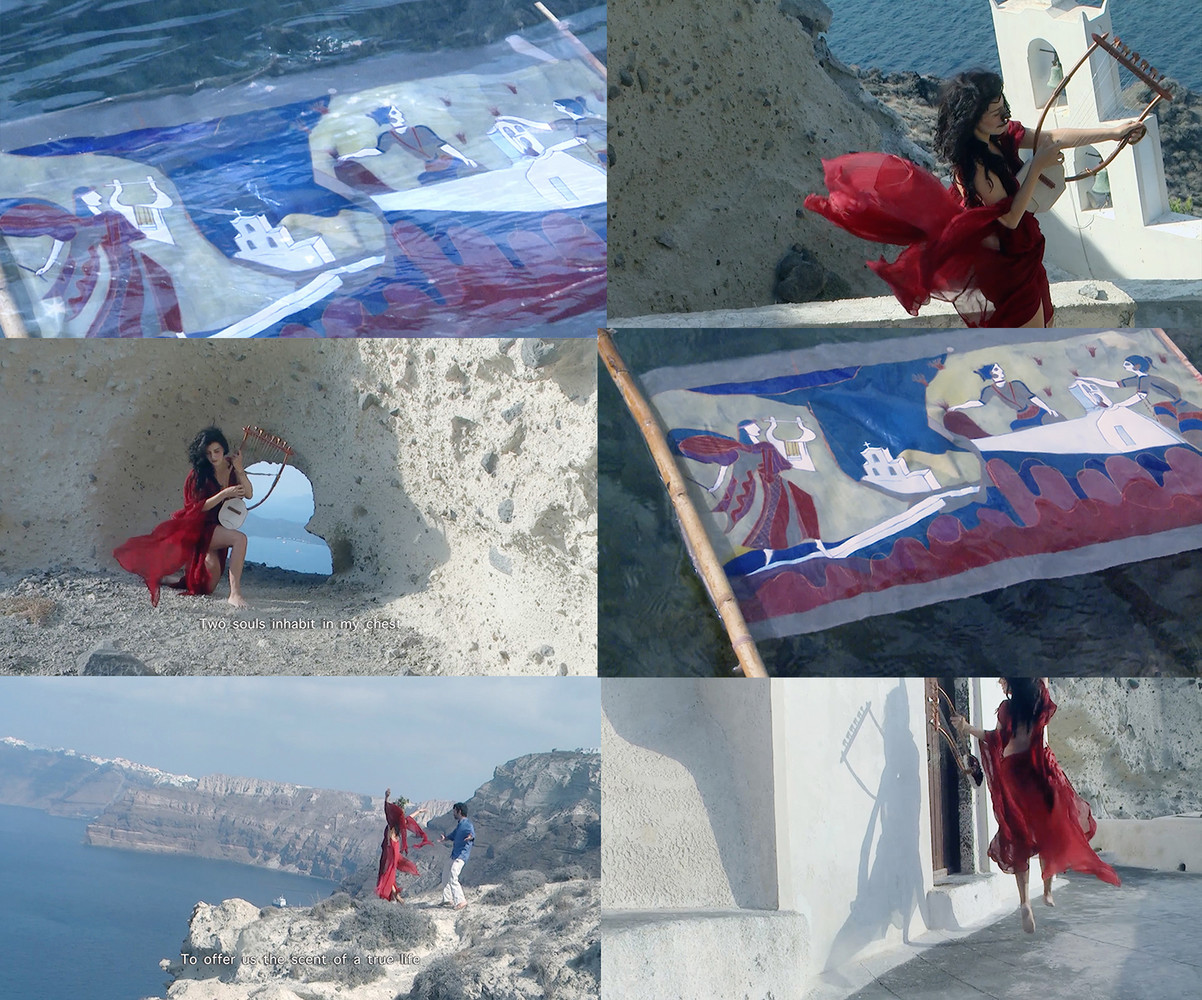
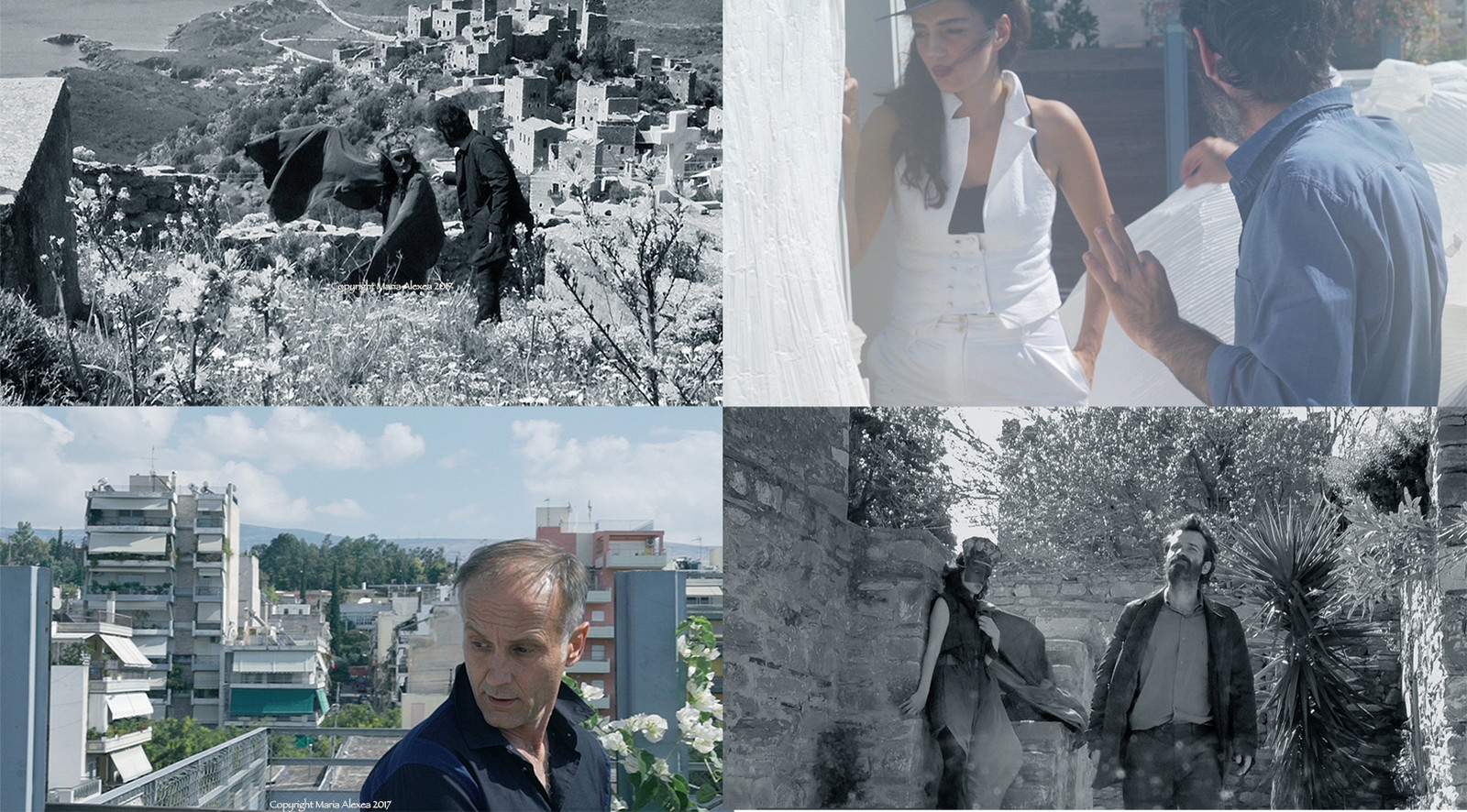
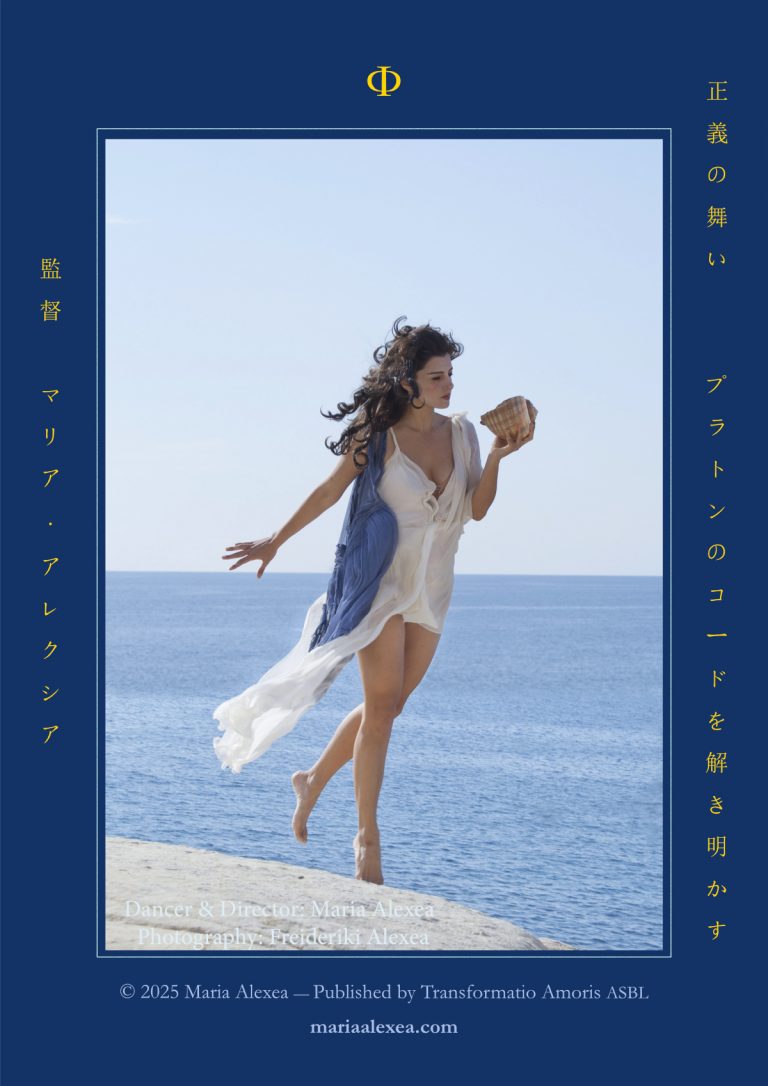
Fine Art Photography
Staged and composed within the film’s vision, these works form a parallel body of art.
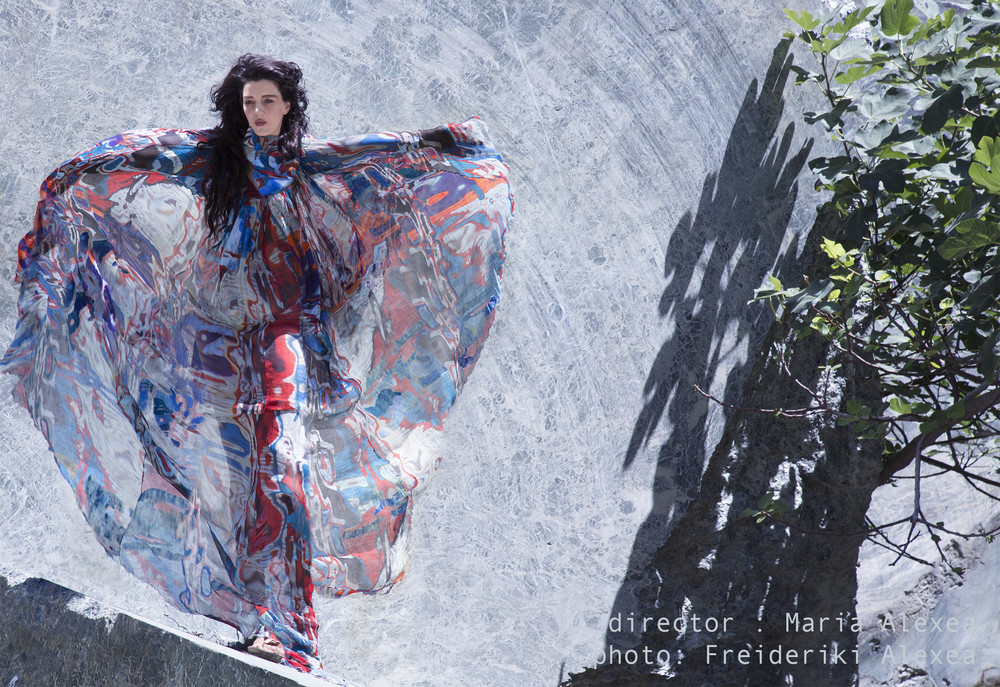
Director & Dancer: Maria Alexea — Photography: Freideriki Alexea
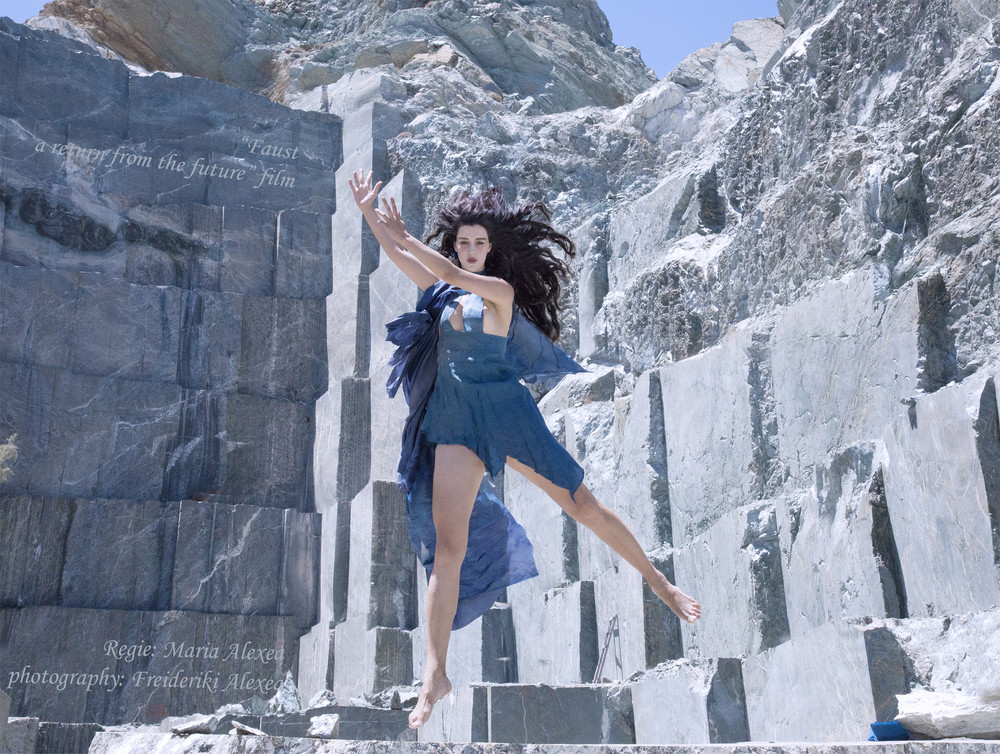
Director & Dancer: Maria Alexea — Photography: Freideriki Alexea
Poetic fragments
“O genius
Whom you never abandon,
Neither blinding rain nor storm
Breathes upon his heart a chill.
Whom you never abandon, O Genius,
To the lowering clouds,
To the beating hail,
He raises his song to the heights
Like a lark soaring…”
— Goethe, “Wanderer’s Storm Song”
“Sisters!
We spirits of nimble, ever-running senses,
Hurrying forwards with the rivers
Because the far-off flowered hills tempt us with their beauty
Ever deeper, like Meandrous flowing,
We water now the meadow, then the pastures, then the garden with the house.
There the slender spires of cypresses rising skywards
Marking the landscape’s watery mirror over seashore.”
— Goethe, Faust II, vv. 10005–10010
“All that is transient
— Goethe, Faust II, vv. 12104–12111
Is but a parable;
The unattainable
Here is fulfilled;
The indescribable
Here is done;
The Eternal-Feminine
Draws us upward.”
Credits & Technical Details
- Director
- Maria Alexea
- Scenario & Dialogues
- Maria Alexea — with contribution by Panagiotis Tsimpris
- Cinematography & Art Direction
- Maria Alexea
- Choreography, Stage & Visual Design
-
Choreography and Stage Direction — Maria Alexea
Scenography, Costumes, Masks, Styling, and Make-up — Maria Alexea & Freideriki Alexea
Costume processes by Maria Alexea, originally designed by Cavalli, Vivienne Westwood & Martin Silverstein - Original Music
-
Composition, Orchestration, and Sound Design — Maria Alexea
Ancient Greek Lyre (“Therai”), Cello, Tambourine, Gong — Maria Alexea & Panagiotis Tsimpris
Additional sound design — Kostas Phylaktidis (friendly participation)
Bach transcriptions — Maria Alexea (cello) - Leading Cast
-
Maria Alexea — Helen / Helen of Faust / Spirit of Earth
Panagiotis Tsimpris — Faust / Odysseus
Makis Kountourelis — Alexandrou
Freideriki Alexea — High Priestess of the Mothers - Voices
-
Kali Davri — “Shadow Supervisor” of Alexandrou
Freideriki Alexea — High Priestess of the Mothers, Ariel, Chorus of Angels
Additional voices — Maria Alexea, Panagiotis Tsimpris, Makis Kountourelis - Editing & Post-production
-
Initial editing (Director’s cut) — Maria Alexea
Final editing — Nikos Hantzeas & Maria Alexea (assistant: Panagiotis Tsimpris)
Color grading — Dimitris Karteris (supervision: Maria Alexea)
Sound engineer — Panagiotis Tsimpris - Production
-
Film production — Maria Alexea
Co-production — Freideriki Alexea, Panagiotis Tsimpris, Christos Efthymiou - Year / Runtime
- Original version 2017; Festival master 2018; Remastered edition 2025 — 81 min
- Master Format
-
HD 1080p / 24 fps (International master), 5.1 sound mix
Delivery HD 1080p / 25 fps (VOD / Festival master – EU), 5.1 sound mix (stereo downmix available)
Secure private screening available upon request - Languages / Subtitles
- Original: Greek — Subtitles: English, Spanish, French, German, Japanese (revised 2025; more languages coming)
- Rating
- Suitable for all audiences.
- External References
- IMDb
- Contact
- [email protected]