
Life Is About to Imitate Art
Part II: From Mephistopheles to the Good Tidings
Why Goethe Leads Faust into the Light of Jesus Christ
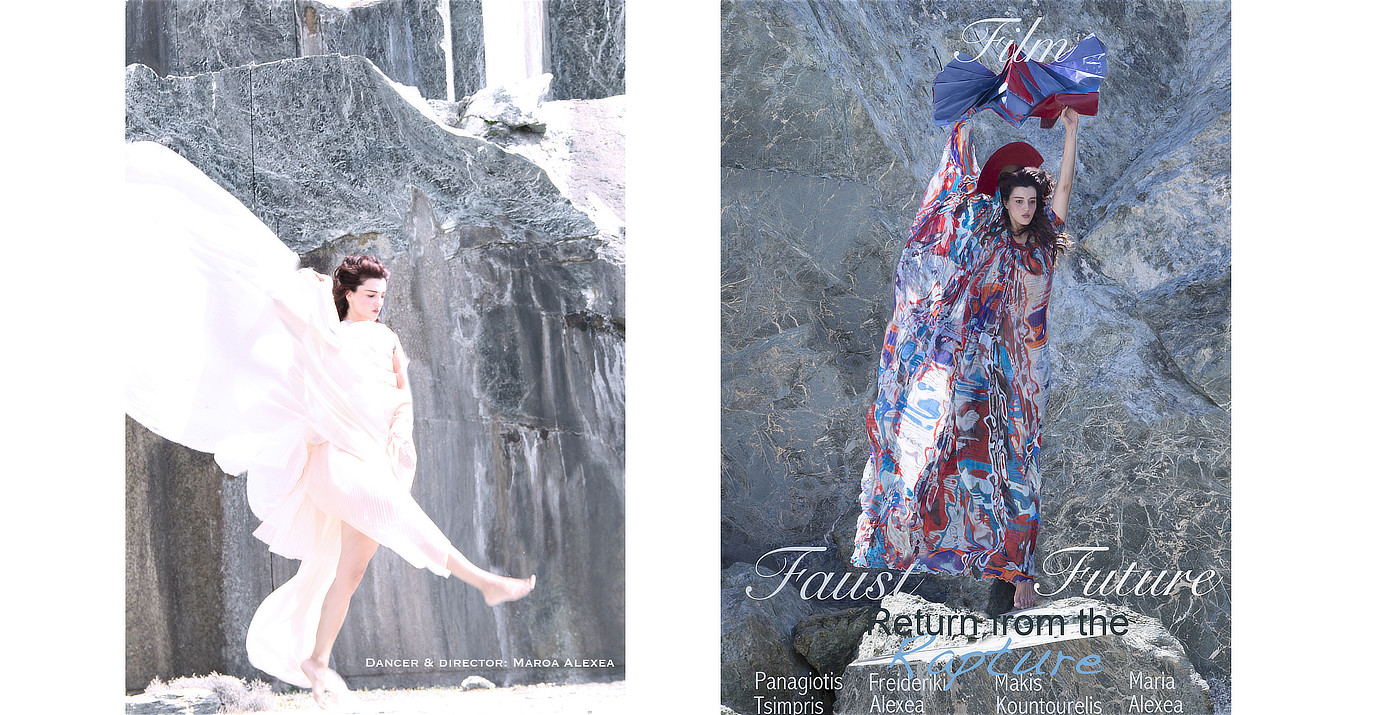
Article (En)
Life Is About to Imitate Art
Part II: From Mephistopheles to the Good Tidings
Why Goethe Leads Faust into the Light of Jesus Christ
In the first part, I spoke of the creator as a vessel of a higher world: of the poet who does not confine himself to imitating the images of sensory existence, but becomes the receiver and transmitter of a reality that exceeds him. If this is indeed the purpose of true art, then the next question arises almost inevitably: toward what reality does Goethe himself ultimately turn when he reaches the end of his life’s work?
Faust is not the journey of a man who possesses the answer from the beginning. It is the wandering of a man who passes through nearly every available form of knowledge, power, and spiritual inquiry. In that respect, the journey of the protagonist bears a striking resemblance to the spiritual adventure of the poet himself.
The Greco-Egyptian and Alexandrian world became one of the great laboratories in which religious, philosophical, and occult traditions met and intersected: Greek philosophy, Egyptian cults, Jewish thought, Hermeticism, astrology, magic, and, later, Gnostic and Neoplatonic currents. I do not wish to describe all these systems simply as “spiritual.” In many of them I discern something rather different: a spiritualistic mode of thought that fragments the Whole, separating spirit from nature, the higher from the lower, the pure from the material, and dividing one reality into two opposing realms.
This dualism is crucial. Once the Whole is cut in two, each part ceases to carry within itself the fullness of the other. The half becomes lack, and lack can easily harden into opposition. In Greek, the striking sonic proximity between misó, “half,” and mísos, “hatred,” acquires for me an almost admonitory force — not as etymology, but as poetic resonance. The half gives birth to hatred when it forgets that it belongs to a Whole.
This is precisely what makes Faust so compelling. Its world is filled with systems that promise transcendence yet often begin in division: body against spirit, nature against God, matter against light, the human being against higher forces. Faust passes through these systems, tests them, exhausts them, and repeatedly breaks himself against them.
There is no need to construct a direct historical line from Alexandria to Goethe in order to recognize the affinity of this intellectual landscape. Goethe himself, particularly in his youth, was deeply interested in alchemy and mystical philosophy. He studied, among others, Paracelsus and works such as the Opus Mago-Cabbalisticum et Theosophicum and the Aurea Catena Homeri. Alchemical and Neoplatonic symbolism exerted a lasting influence on his thought and writing, while his movement toward a more scientific vision was gradual rather than a sudden rejection of everything that had preceded it.
The same spiritual universe enters Faust. Magic, demonology, alchemy, astrology, divinatory practices, and cosmological speculation belong to the historical and symbolic background of both the Faustian legend and Goethe’s work. Faust does not encounter Mephistopheles by accident. Mephistopheles stands at the end of a search for knowledge that is no longer satisfied with the limits of human knowing, but seeks power, experience, and access to what lies beyond them. And in order to gain that access, Faust goes so far as to place his own soul within his pact with Mephistopheles.
Yet this is where the essential point lies. Historically, we cannot say that Goethe simply “renounced” alchemy, Hermeticism, or every form of mystical philosophy. But we can say something dramatically far more important:
he does not grant them the final word.
Speaking about Faust in 1827, Goethe rejected the idea that the entire work had been suspended from a single abstract thesis. Yet he described its essential movement as a path “from Heaven, through the world, to Hell.” In my reading, that Hell is none other than this lower world itself — the field of fall, fragmentation, and trial. Goethe also identified as a luminous idea within the work the redemption of a human being who, through difficult errors, continually strives toward something better.
Faust must therefore pass through everything: through the low and the high, through desire and knowledge, through antiquity and magic, through Helen and the Homunculus, through the Mothers and Mephistopheles. He moves through a continuous process of fall and re-formation, of education and transformation, in an unending dialogue with the mind. The journey is not cancelled. It becomes the material through which the final direction must reveal itself.
And when Goethe must decide how this vast journey is to end, the spiritual vocabulary changes.
At the end of Faust II, Mephistopheles does not triumph. Faust’s immortal part is wrested from his claim. Angels appear, penitential women, Gretchen, the Mater Gloriosa, the higher spheres, and the Ewig-Weibliche — the Eternal Feminine — drawing upward. Gretchen herself says of Faust: “Er kommt zurück” — he returns. Soon afterward, the new world overwhelms him with its light, the old earthly covering falls away, and the Mater Gloriosa calls toward the higher spheres.
The work closes with the upward pull of the Eternal Feminine. And this Eternal Feminine is not woman fallen into the field of generation, matter, and decay, but the higher Feminine: the principle that gathers what has been dispersed and draws it upward.
The final direction is therefore unmistakable:
upward.
And only days before his death, on 11 March 1832, Goethe himself offered a remarkable key to understanding this choice. Speaking with Eckermann, he distinguished the changing historical institution of the Church from what he regarded as purer and higher within Christianity. He declared that he regarded the four Gospels as authentic bearers of the unique greatness radiating from the person of Jesus, and that he bowed before Christ as the revelation of the highest moral principle. He went even further: however far science and the human intellect might advance, he said, they would not surpass the moral height of Christianity as it shines through the Gospels.
Goethe does not therefore end in an institutional religion. He returns to the source: to the Gospels and to the person of Jesus Christ.
In my metrical and geometrical reading, Jesus is connected with Eos and Leucothea: with the ethereal, luminous being that descends into the darkened earth in order to redeem it. And Goethe himself, in that final conversation, places the purity of Christ’s teaching and love in contrast with the human forms of ecclesiastical power.
This is why I prefer here the word Eu-angelia.
The Greek euangelion means good or joyful tidings. In my poetic reading, I allow the word to open further: eu-angelia — the good, the beautiful message. Not as a strict lexicographical translation, but as an aesthetic reminder that, at the end of this long wandering, ultimate knowledge does not arrive as yet another dark mystery to be deciphered.
It arrives as a message.
Against Mephistophelean knowledge, which promises power, conquest, and negotiation, the Gospel proposes an entirely different condition of vision:
“Blessed are the pure in heart, for they shall see God.”
The Greek opsontai ton Theon literally means “they shall see God.” Yet the Greek language allows the phrase to acquire an almost prismatic value. Opsis, sight or aspect, enters into a sonic and formal proximity with the movement of hypsousthai, to rise upward: the gaze does not remain horizontal, but turns toward what is above. To see the divine therefore implies a corresponding movement of the human being toward it — not merely to see, but to become capable of rising toward what one sees and, through that movement, of becoming like it.
Vision thus becomes transformation.
Here we encounter once again the pure vessel of the first part.
The highest reality is not conquered through accumulation. It does not become the possession of the ego. In order to become visible, it requires a different quality in the receiver. Purity is not merely an ethical rule; it is a condition of vision. The human being must become transparent enough to receive what lies beyond the limits of the self.
For this reason, the final scene of Faust can also be read as an upward rapture. I am not claiming that Goethe literally dramatizes the later theological doctrine of the Rapture. Yet the structural resemblance is powerful: the immortal part is torn from the claimant below and carried into higher spheres.
The New Testament itself uses the verb harpagēsometha — “we shall be caught up” — for the movement toward meeting the Lord. In another Pauline passage, sudden transformation is described as taking place “in the twinkling of an eye” — in the blink of an eye. The movement is instantaneous: a change of state, a passage from one level into another.
For me, this rapture is the rejoining of the higher self with its exiled member. The part that had descended into the world of matter, into the Hades of experience, has completed its cycle. It has known separation, desire, delusion, power, and Mephistopheles. It has suffered and struggled until it is finally capable of RECOGNITION — of knowing upward, as I would render it poetically.
It does not disappear.
It reunites.
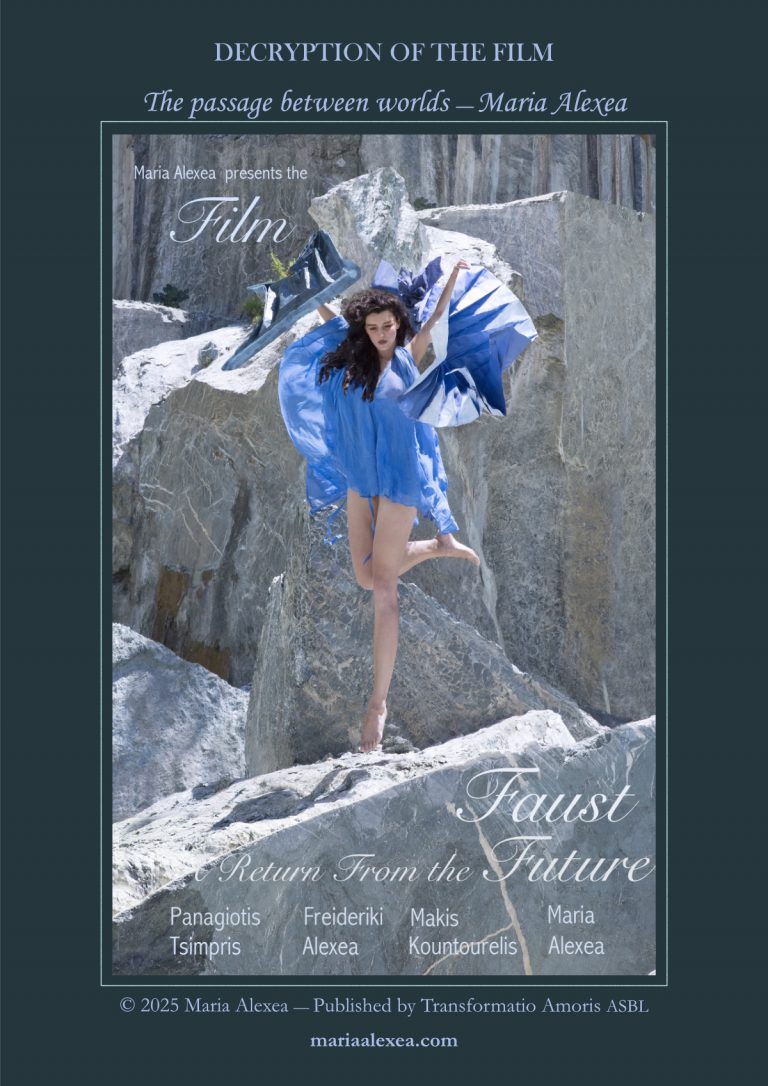
Here the title of my film begins to reveal itself.
A Return from the Future.
Not a journey back to the future, but a return from the future.
The title itself establishes the path, the direction, and the inner rhythm of the film. In the higher reality, the future may already contain within itself its own lower and fragmentary past, while our earthly life appears as a phase-shifted reflection of it. Art then becomes the point at which past and future intersect, because it belongs precisely to the realm of the in-between.
The Greek word epistrophē, return, already contains the idea of turning and changing direction. Yet within the symbolic language of the film, return is not a closed circle that mechanically takes us back to the same point. It is a spiral: opening and returning at once, descending and ascending, repeating the form on another octave.
The strophē, the turn, evokes the movement of the chorus, the rotation of body and speech. Epistrophē becomes that same movement on a larger spiral, where the future curves toward the past, encompasses it, and brings it back transformed.
From here arises the inner geometry of Phi and Theta — Φ and Θ.
Θ, in the symbolic language of the work, is the circle of space with a living centre: the earthly field, the field of spatiotemporal experience. Φ is movement — what I would call the time of space. It enters through the centre of Θ, descends and ascends as a helix. It is simultaneously centrifugal and centripetal: it casts off what cannot follow and raises what is capable of refinement.
Seen from above, this movement may appear as a circle. Seen from the side, it reveals itself as a wave. Within time, it becomes a spiral.
And it is the movement of the light of Eos.
Dawn is the natural symbol of the in-between. It is no longer night, yet not fully day. It is the moment in which the invisible begins to become visible and light enters a world that is only beginning to awaken.
Within the personal symbolic language of the film, the name Faust resonates beside the Greek phōs / phaos — light. I am not proposing a historical etymology. It is a poetic and sonic affinity, an internal code of the work: Faust as Phaos, as light descending and returning.
The same principle governs the play between Eos and the name Iēsous — Jesus. This is not an etymological claim. Within the symbolic writing of the work, the name is poetically disassembled: if the medial sigma is removed — the letter which, within the symbolic geometry of the film, marks a change in vibration through the fall — what remains can be heard as Ēous, the genitive form of dawn. The name of Jesus thus meets, within the language of the film, the mystery of morning light and regeneration.
The same is true of the symbolic sequence Aurora – aura – aroura, the earth. Again, this is not a claim of historical etymology but a sonic and poetic encounter: dawn, breath, and fertile earth; light and the field that receives it. Eos thus becomes the white, ethereal light joining above and below, heaven and earth, transforming the lower plane without abolishing it.
This is why the film is filled with mirrors, reflections, shadows, and doublings. They are not merely aesthetic choices. They are forms of a mirrored reality. The lower world appears as an inverted reflection of the higher. Θ becomes space and Φ movement. Space receives time, and time inscribes within space the measure of transformation.
Light does not come to destroy matter. It comes to pass through it.
And the future does not wait passively ahead of us. Within the metaphysical logic of the film, it descends into the present in order to reshape it.
This is why Faust returns from the future.
He returns as Goethe’s work, coming to us from the past while still carrying something that has not yet been fulfilled. He returns within the film as Phaos, as the movement of Φ through Θ, as the light of Eos entering the mirrors of sensory reality.
And finally, he returns within Goethe’s own final scene.
Gretchen says:
he returns.
The old form falls away. A new light overwhelms him. The Mater Gloriosa calls toward the higher spheres, and the Eternal Feminine draws upward.
After all the knowledge, all the magic, all the wandering, all the descent, Goethe chooses at the end not another dark doctrine.
He chooses the Eu-angelia — the Good Tidings.
The purity that makes vision possible; the love that does not possess but raises; the Divine Feminine that gathers what has been dispersed; and the light of Jesus Christ as the final measure of moral elevation.
From this perspective, Faust: A Return from the Future is an initiation: a cinematic near-death experience in which the mirrored world begins to dissolve and the viewer crosses into the in-between, where dream and truth flow into one another.
Mephistopheles is shaken, and Necessity restores Goethe’s words:
“Die and become.”
There begins the hidden law of awakening.
Faust wins the wager not through possession, but because he remains capable of dreaming of a free humanity. The height of that vision suspends, for a moment, the lower self of fear and desire. And through this act of vision Faust recovers the higher octave of reality.
Ecstasy then becomes the awakening of the true self. After the brief passage through Earth, the soul remembers.
And it finds freedom —
the freedom that is the true self itself, whole and undivided.
Artikel (De)
Life Is About to Imitate Art
Teil II: Von Mephistopheles zur Frohen Botschaft
Warum Goethe Faust in das Licht Jesu Christi führt
Im ersten Teil sprach ich vom Schöpfer als Gefäß einer höheren Welt. Vom Dichter, der sich nicht darauf beschränkt, die Abbilder der sinnlich wahrnehmbaren Welt nachzuahmen, sondern zum Empfänger und Übermittler einer Wirklichkeit wird, die über ihn hinausreicht. Wenn dies aber die Bestimmung wahrer Kunst ist, stellt sich nahezu unausweichlich die nächste Frage: Welcher Wirklichkeit wendet sich Goethe selbst letztlich zu, wenn er am Ende seines Lebenswerks anlangt?
Faust ist nicht der Weg eines Menschen, der die Antwort von Anfang an kennt. Es ist die Wanderung eines Menschen, der nahezu jede verfügbare Form von Wissen, Macht und geistiger Suche durchschreitet. In diesem Sinne ähnelt der Weg der Gestalt auf bemerkenswerte Weise dem geistigen Abenteuer des Dichters selbst.
Die griechisch-ägyptische und alexandrinische Welt war eines jener großen geistigen Laboratorien, in denen sich religiöse, philosophische und okkulte Traditionen begegneten und durchdrangen: griechische Philosophie, ägyptische Kulte, jüdisches Denken, Hermetik, Astrologie, Magie und später gnostische und neuplatonische Strömungen. Ich möchte all diese Systeme nicht einfach als „spirituell“ bezeichnen. In vielen von ihnen erkenne ich vielmehr eine spiritualistische Denkweise, die das Ganze zergliedert: Geist wird von Natur getrennt, das Obere vom Unteren, das Reine vom Materiellen, und die eine Wirklichkeit wird in zwei einander entgegengesetzte Bereiche aufgespalten.
Dieser Dualismus ist entscheidend. Sobald das Ganze entzweit wird, trägt keiner seiner Teile mehr die Fülle des anderen in sich. Das Halbe wird zum Mangel, und Mangel kann leicht in Gegensatz umschlagen. Im Griechischen gewinnt für mich die auffällige klangliche Nähe zwischen misó, „Hälfte“, und mísos, „Hass“, beinahe den Charakter einer Warnung — nicht als Etymologie, sondern als poetische Resonanz. Das Halbe gebiert Hass, sobald es vergisst, dass es einem Ganzen angehört.
Gerade dies macht Faust so faszinierend. Seine Welt ist erfüllt von Systemen, die Transzendenz versprechen und doch häufig mit Trennung beginnen: Körper gegen Geist, Natur gegen Gott, Materie gegen Licht, der Mensch gegen höhere Kräfte. Faust durchschreitet diese Systeme, erprobt sie, erschöpft sie und zerbricht immer wieder an ihnen.
Wir müssen keine unmittelbare historische Linie von Alexandria zu Goethe konstruieren, um die Verwandtschaft dieses geistigen Horizonts zu erkennen. Goethe selbst zeigte vor allem in seiner Jugend ein intensives Interesse an Alchemie und mystischer Philosophie. Er beschäftigte sich unter anderem mit Paracelsus sowie mit Werken wie dem Opus Mago-Cabbalisticum et Theosophicum und der Aurea Catena Homeri. Alchemistische und neuplatonische Symbolik übten einen nachhaltigen Einfluss auf sein Denken und Schreiben aus, während seine Hinwendung zu einer stärker wissenschaftlich geprägten Weltsicht allmählich erfolgte und keineswegs in einer plötzlichen Verwerfung alles Vorangegangenen bestand.
Dasselbe geistige Universum tritt in Faust ein. Magie, Dämonologie, Alchemie, Astrologie, mantische Praktiken und kosmologische Spekulationen gehören zum historischen und symbolischen Hintergrund sowohl des Fauststoffes als auch von Goethes Werk. Faust begegnet Mephistopheles nicht zufällig. Mephistopheles steht am Ende einer Suche nach Erkenntnis, die sich nicht länger mit den Grenzen menschlichen Wissens zufriedengibt, sondern Macht, Erfahrung und Zugang zu dem verlangt, was jenseits dieser Grenzen liegt. Um diesen Zugang zu gewinnen, geht Faust so weit, seine eigene Seele in den Pakt mit Mephistopheles einzusetzen.
Doch genau hier liegt der entscheidende Punkt. Historisch können wir nicht behaupten, Goethe habe Alchemie, Hermetik oder jede Form mystischer Philosophie schlicht „abgeschworen“. Dramaturgisch lässt sich jedoch etwas wesentlich Bedeutenderes sagen:
Er überlässt ihnen nicht das letzte Wort.
Als Goethe 1827 über Faust sprach, wies er die Vorstellung zurück, das gesamte Werk sei an einer einzigen abstrakten Idee aufgehängt. Dennoch beschrieb er seine wesentliche Bewegung als einen Weg „vom Himmel durch die Welt zur Hölle“. In meiner Lesart ist diese Hölle nichts anderes als diese untere Welt selbst — das Feld des Falls, der Zersplitterung und der Prüfung. Zugleich bezeichnete Goethe als einen lichtvollen Gedanken des Werkes die Erlösung eines Menschen, der sich durch schwere Irrtümer hindurch unaufhörlich zu etwas Besserem emporringt.
Faust muss daher alles durchschreiten: das Niedrige und das Hohe, Begehren und Erkenntnis, Antike und Magie, Helena und den Homunculus, die Mütter und Mephistopheles. Er befindet sich in einem fortwährenden Prozess von Fall und Neuformung, Bildung und Transformation, in einem endlosen Dialog mit dem Geist. Der Weg wird nicht aufgehoben. Er wird zu dem Material, durch das sich schließlich die Richtung offenbaren muss.
Und wenn Goethe entscheiden muss, wie diese gewaltige Reise enden soll, verändert sich das geistige Vokabular des Werkes spürbar.
Am Ende von Faust II triumphiert Mephistopheles nicht. Fausts unsterblicher Teil wird seinem Anspruch entrissen. Engel erscheinen, Büßerinnen, Gretchen, die Mater Gloriosa, die höheren Sphären und das Ewig-Weibliche, das nach oben zieht. Gretchen selbst sagt über Faust: „Er kommt zurück.“ Kurz darauf blendet ihn die neue Welt mit ihrem Licht, die alte irdische Hülle fällt ab, und die Mater Gloriosa ruft in die höheren Sphären.
Das Werk endet mit der aufwärts gerichteten Zugkraft des Ewig-Weiblichen. Dieses Ewig-Weibliche ist nicht die Frau, die in das Feld von Geburt, Materie und Vergänglichkeit gefallen ist, sondern das höhere Weibliche: jenes Prinzip, das das Zerstreute sammelt und nach oben zieht.
Die letzte Richtung ist daher eindeutig:
nach oben.
Und nur wenige Tage vor seinem Tod, am 11. März 1832, liefert Goethe selbst einen bemerkenswerten Schlüssel zum Verständnis dieser Entscheidung. Im Gespräch mit Eckermann unterscheidet er die wandelbare historische Institution der Kirche von dem, was er im Christentum für reiner und höher hält. Er erklärt, die vier Evangelien als echte Träger jener einzigartigen Größe anzusehen, die von der Person Jesu ausstrahlte, und sich vor Christus als Offenbarung des höchsten moralischen Prinzips zu beugen. Er geht noch weiter: Wie weit Wissenschaften und menschlicher Geist auch fortschreiten mögen — sie würden die sittliche Höhe des Christentums, wie sie in den Evangelien leuchtet, nicht übersteigen.
Goethe endet also nicht bei einer institutionellen Religion. Er kehrt zur Quelle zurück: zu den Evangelien und zur Person Jesu Christi.
In meiner metrischen und geometrischen Lesart verbindet sich Jesus mit Eos und Leukothea: mit dem ätherischen, lichtvollen Wesen, das in die verdunkelte Erde hinabsteigt, um sie zu erlösen. Goethe selbst stellt in jenem letzten Gespräch die Reinheit der Lehre und Liebe Christi den menschlichen Formen kirchlicher Macht gegenüber.
Deshalb bevorzuge ich hier das Wort Eu-Angelia.
Das griechische euangelion bedeutet gute oder frohe Botschaft. In meiner poetischen Lesart lasse ich das Wort weiter aufbrechen: eu-angelia — die gute, die schöne Botschaft. Nicht als strenge lexikographische Übersetzung, sondern als ästhetische Erinnerung daran, dass am Ende dieser langen Wanderung die letzte Erkenntnis nicht als ein weiteres dunkles Geheimnis erscheint, das entschlüsselt werden muss.
Sie kommt als Botschaft.
Der mephistophelischen Erkenntnis, die Macht, Eroberung und Verhandlung verspricht, setzt das Evangelium eine völlig andere Bedingung des Sehens entgegen:
„Selig sind, die reinen Herzens sind; denn sie werden Gott schauen.“
Das griechische opsontai ton Theon bedeutet wörtlich: „Sie werden Gott sehen.“ Doch die griechische Sprache erlaubt der Wendung beinahe einen prismatischen Wert. Opsis, das Sehen, die Erscheinung, tritt klanglich und formal in die Nähe der Bewegung des hypsousthai, des Sich-Erhebens: Der Blick bleibt nicht horizontal, sondern richtet sich nach oben. Das Sehen des Göttlichen setzt daher eine entsprechende Bewegung des Menschen voraus — nicht nur zu sehen, sondern fähig zu werden, sich zu dem zu erheben, was er sieht, und ihm durch diese Bewegung ähnlich zu werden.
So wird Sehen zugleich Verwandlung.
Hier begegnen wir erneut dem reinen Gefäß des ersten Teils.
Die höchste Wirklichkeit wird nicht durch Anhäufung erobert. Sie wird nicht zum Besitz des Ichs. Damit sie sichtbar werden kann, verlangt sie eine andere Qualität des Empfangenden. Reinheit ist nicht bloß eine ethische Vorschrift; sie ist eine Bedingung des Sehens. Der Mensch muss transparent genug werden, um das empfangen zu können, was über die Grenzen seines Selbst hinausliegt.
Aus diesem Grund kann die letzte Szene von Faust auch als eine Entrückung nach oben gelesen werden. Ich behaupte nicht, Goethe dramatisiere wörtlich die spätere theologische Lehre von der Rapture. Doch die strukturelle Verwandtschaft ist stark: Der unsterbliche Teil wird dem Anspruch der unteren Macht entrissen und in höhere Sphären getragen.
Auch das Neue Testament verwendet das Verb harpagēsometha — „wir werden entrückt werden“ — für die Bewegung hin zur Begegnung mit dem Herrn. In einer anderen paulinischen Stelle wird die plötzliche Verwandlung als ein Geschehen „in einem Augenblick“ — in the blink of an eye beschrieben. Die Bewegung ist augenblicklich: ein Zustandswechsel, ein Übergang von einer Ebene in eine andere.
Für mich ist diese Entrückung die Wiedervereinigung des höheren Selbst mit seinem verbannten Glied. Jener Teil, der in die Welt der Materie, in den Hades der Erfahrung hinabgestiegen war, hat seinen Kreis vollendet. Er hat Trennung, Begehren, Täuschung, Macht und Mephistopheles erfahren. Er hat gelitten und gekämpft, bis er schließlich fähig wird zu ERKENNEN — poetisch gesprochen: nach oben zu erkennen.
Er verschwindet nicht.
Er vereinigt sich wieder.
Hier beginnt sich auch der Titel meines Films zu enthüllen.
A Return from the Future.
Keine Reise zurück in die Zukunft, sondern eine Rückkehr aus der Zukunft.
Der Titel selbst legt Weg, Richtung und inneren Rhythmus des Films fest. In der höheren Wirklichkeit kann die Zukunft bereits ihre eigene niedere, fragmentarische Vergangenheit in sich tragen, während unser irdisches Leben wie deren phasenverschobene Spiegelung erscheint. Kunst wird dann zum Schnittpunkt von Vergangenheit und Zukunft, weil sie gerade dem Bereich des Dazwischen angehört.
Das griechische Wort epistrophē, Rückkehr, enthält bereits die Vorstellung der Wendung und des Richtungswechsels. In der symbolischen Sprache des Films jedoch ist Rückkehr kein geschlossener Kreis, der uns mechanisch an denselben Punkt zurückführt. Sie ist eine Spirale: zugleich Öffnung und Rückkehr, Abstieg und Aufstieg, Wiederkehr der Form auf einer anderen Oktave.
Die strophē, die Wendung, erinnert an die Bewegung des Chores, an die Drehung von Körper und Sprache. Die epistrophē wird zu derselben Bewegung auf einer größeren Spirale, in der sich die Zukunft zur Vergangenheit hin krümmt, sie umfasst und verwandelt zurückführt.
Daraus entsteht die innere Geometrie von Phi und Theta — Φ und Θ.
Θ ist in der symbolischen Sprache des Werkes der Kreis des Raumes mit einem lebendigen Zentrum: das irdische Feld, das Feld der raumzeitlichen Erfahrung. Φ ist Bewegung — das, was ich die Zeit des Raumes nennen würde. Es tritt durch das Zentrum von Θ ein, steigt hinab und wieder auf wie eine Helix. Es ist zugleich zentrifugal und zentripetal: Es stößt ab, was ihm nicht folgen kann, und hebt empor, was der Verfeinerung fähig ist.
Von oben gesehen kann diese Bewegung wie ein Kreis erscheinen. Von der Seite gesehen offenbart sie sich als Welle. In der Zeit wird sie zur Spirale.
Und sie ist die Bewegung des Lichtes der Eos.
Die Morgenröte ist das natürliche Symbol des Dazwischen. Sie ist nicht mehr Nacht und noch nicht voller Tag. Sie ist jener Augenblick, in dem das Unsichtbare sichtbar zu werden beginnt und das Licht in eine Welt eindringt, die gerade erst erwacht.
In der persönlichen symbolischen Sprache des Films klingt der Name Faust neben dem griechischen phōs / phaos — Licht an. Ich behaupte hier keine historische Etymologie. Es handelt sich um eine poetische und klangliche Verwandtschaft, um einen inneren Code des Werkes: Faust als Phaos, als Licht, das hinabsteigt und zurückkehrt.
Nach demselben Prinzip funktioniert auch das Spiel zwischen Eos und dem Namen Iēsous — Jesus. Auch dies ist keine etymologische Behauptung. In der symbolischen Schrift des Werkes wird der Name poetisch zerlegt: Entfernt man das mittlere Sigma — jenen Buchstaben, der innerhalb der symbolischen Geometrie des Films die Veränderung der Schwingung durch den Fall markiert —, so lässt sich Ēous, die Genitivform der Morgenröte, heraushören. Der Name Jesu begegnet so innerhalb der Sprache des Films dem Geheimnis des Morgenlichts und der Erneuerung.
Dasselbe gilt für die symbolische Folge Aurora – Aura – aroura, die Erde. Auch hier geht es nicht um historische Etymologie, sondern um eine klangliche und poetische Begegnung: Morgenröte, Hauch und fruchtbare Erde; das Licht und das Feld, das es empfängt. Eos wird so zum weißen, ätherischen Licht, das Oben und Unten verbindet, Himmel und Erde, und die untere Ebene verwandelt, ohne sie aufzuheben.
Deshalb ist der Film voller Spiegel, Reflexionen, Schatten und Verdoppelungen. Sie sind nicht bloß ästhetische Entscheidungen. Sie sind Erscheinungsformen einer gespiegelten Wirklichkeit. Die untere Welt erscheint als umgekehrte Spiegelung der höheren. Θ wird zu Raum und Φ zu Bewegung. Der Raum empfängt die Zeit, und die Zeit schreibt das Maß der Verwandlung in den Raum ein.
Das Licht kommt nicht, um die Materie zu zerstören. Es kommt, um sie zu durchdringen.
Und die Zukunft wartet nicht passiv vor uns. In der metaphysischen Logik des Films steigt sie in die Gegenwart hinab, um sie neu zu formen.
Darum kehrt Faust aus der Zukunft zurück.
Er kehrt als Goethes Werk zurück, das aus einer Vergangenheit zu uns kommt und dennoch etwas in sich trägt, das noch nicht erfüllt ist. Er kehrt im Film als Phaos zurück, als Bewegung von Φ durch Θ, als Licht der Eos, das in die Spiegel der sinnlich erfahrbaren Wirklichkeit eindringt.
Und schließlich kehrt er in Goethes eigener Schlussszene zurück.
Gretchen sagt:
Er kehrt zurück.
Die alte Form fällt ab. Ein neues Licht überwältigt ihn. Die Mater Gloriosa ruft in die höheren Sphären, und das Ewig-Weibliche zieht nach oben.
Nach all dem Wissen, all der Magie, all der Wanderung, all dem Abstieg entscheidet sich Goethe am Ende nicht für eine weitere dunkle Lehre.
Er entscheidet sich für die Eu-Angelia — die Frohe Botschaft.
Für die Reinheit, die Sehen ermöglicht; für die Liebe, die nicht festhält, sondern erhebt; für das Göttlich-Weibliche, das das Zerstreute sammelt; und für das Licht Jesu Christi als letztes Maß moralischer Erhebung.
Aus dieser Perspektive ist Faust: A Return from the Future eine Initiation: eine filmische Nahtoderfahrung, in der die gespiegelte Welt zu zerfallen beginnt und der Zuschauer in das Dazwischen eintritt, wo Traum und Wahrheit ineinanderfließen.
Mephistopheles gerät ins Wanken, und die Notwendigkeit bringt Goethes Worte zurück:
„Stirb und werde.“
Dort beginnt das verborgene Gesetz des Erwachens.
Faust gewinnt die Wette nicht durch Besitz, sondern weil er weiterhin fähig ist, von einer freien Menschheit zu träumen. Die Höhe dieser Vision hebt für einen Augenblick das niedere Selbst aus Angst und Begehren auf. Und durch diesen Akt des Schauens gewinnt Faust die höhere Oktave der Wirklichkeit zurück.
Ekstase wird so zum Erwachen des wahren Selbst. Nach dem kurzen Durchgang durch die Erde erinnert sich die Seele.
Und sie findet die Freiheit —
jene Freiheit, die der wahre, ganze und ungeteilte Mensch selbst ist.
the freedom that is the true self itself, whole and undivided.
Article (En)
Life Is About to Imitate Art
Part II: From Mephistopheles to the Good Tidings
Why Goethe Leads Faust into the Light of Jesus Christ
In the first part, I spoke of the creator as a vessel of a higher world: of the poet who does not confine himself to imitating the images of sensory existence, but becomes the receiver and transmitter of a reality that exceeds him. If this is indeed the purpose of true art, then the next question arises almost inevitably: toward what reality does Goethe himself ultimately turn when he reaches the end of his life’s work?
Faust is not the journey of a man who possesses the answer from the beginning. It is the wandering of a man who passes through nearly every available form of knowledge, power, and spiritual inquiry. In that respect, the journey of the protagonist bears a striking resemblance to the spiritual adventure of the poet himself.
The Greco-Egyptian and Alexandrian world became one of the great laboratories in which religious, philosophical, and occult traditions met and intersected: Greek philosophy, Egyptian cults, Jewish thought, Hermeticism, astrology, magic, and, later, Gnostic and Neoplatonic currents. I do not wish to describe all these systems simply as “spiritual.” In many of them I discern something rather different: a spiritualistic mode of thought that fragments the Whole, separating spirit from nature, the higher from the lower, the pure from the material, and dividing one reality into two opposing realms.
This dualism is crucial. Once the Whole is cut in two, each part ceases to carry within itself the fullness of the other. The half becomes lack, and lack can easily harden into opposition. In Greek, the striking sonic proximity between misó, “half,” and mísos, “hatred,” acquires for me an almost admonitory force — not as etymology, but as poetic resonance. The half gives birth to hatred when it forgets that it belongs to a Whole.
This is precisely what makes Faust so compelling. Its world is filled with systems that promise transcendence yet often begin in division: body against spirit, nature against God, matter against light, the human being against higher forces. Faust passes through these systems, tests them, exhausts them, and repeatedly breaks himself against them.
There is no need to construct a direct historical line from Alexandria to Goethe in order to recognize the affinity of this intellectual landscape. Goethe himself, particularly in his youth, was deeply interested in alchemy and mystical philosophy. He studied, among others, Paracelsus and works such as the Opus Mago-Cabbalisticum et Theosophicum and the Aurea Catena Homeri. Alchemical and Neoplatonic symbolism exerted a lasting influence on his thought and writing, while his movement toward a more scientific vision was gradual rather than a sudden rejection of everything that had preceded it.
The same spiritual universe enters Faust. Magic, demonology, alchemy, astrology, divinatory practices, and cosmological speculation belong to the historical and symbolic background of both the Faustian legend and Goethe’s work. Faust does not encounter Mephistopheles by accident. Mephistopheles stands at the end of a search for knowledge that is no longer satisfied with the limits of human knowing, but seeks power, experience, and access to what lies beyond them. And in order to gain that access, Faust goes so far as to place his own soul within his pact with Mephistopheles.
Yet this is where the essential point lies. Historically, we cannot say that Goethe simply “renounced” alchemy, Hermeticism, or every form of mystical philosophy. But we can say something dramatically far more important:
he does not grant them the final word.
Speaking about Faust in 1827, Goethe rejected the idea that the entire work had been suspended from a single abstract thesis. Yet he described its essential movement as a path “from Heaven, through the world, to Hell.” In my reading, that Hell is none other than this lower world itself — the field of fall, fragmentation, and trial. Goethe also identified as a luminous idea within the work the redemption of a human being who, through difficult errors, continually strives toward something better.
Faust must therefore pass through everything: through the low and the high, through desire and knowledge, through antiquity and magic, through Helen and the Homunculus, through the Mothers and Mephistopheles. He moves through a continuous process of fall and re-formation, of education and transformation, in an unending dialogue with the mind. The journey is not cancelled. It becomes the material through which the final direction must reveal itself.
And when Goethe must decide how this vast journey is to end, the spiritual vocabulary changes.
At the end of Faust II, Mephistopheles does not triumph. Faust’s immortal part is wrested from his claim. Angels appear, penitential women, Gretchen, the Mater Gloriosa, the higher spheres, and the Ewig-Weibliche — the Eternal Feminine — drawing upward. Gretchen herself says of Faust: “Er kommt zurück” — he returns. Soon afterward, the new world overwhelms him with its light, the old earthly covering falls away, and the Mater Gloriosa calls toward the higher spheres.
The work closes with the upward pull of the Eternal Feminine. And this Eternal Feminine is not woman fallen into the field of generation, matter, and decay, but the higher Feminine: the principle that gathers what has been dispersed and draws it upward.
The final direction is therefore unmistakable:
upward.
And only days before his death, on 11 March 1832, Goethe himself offered a remarkable key to understanding this choice. Speaking with Eckermann, he distinguished the changing historical institution of the Church from what he regarded as purer and higher within Christianity. He declared that he regarded the four Gospels as authentic bearers of the unique greatness radiating from the person of Jesus, and that he bowed before Christ as the revelation of the highest moral principle. He went even further: however far science and the human intellect might advance, he said, they would not surpass the moral height of Christianity as it shines through the Gospels.
Goethe does not therefore end in an institutional religion. He returns to the source: to the Gospels and to the person of Jesus Christ.
In my metrical and geometrical reading, Jesus is connected with Eos and Leucothea: with the ethereal, luminous being that descends into the darkened earth in order to redeem it. And Goethe himself, in that final conversation, places the purity of Christ’s teaching and love in contrast with the human forms of ecclesiastical power.
This is why I prefer here the word Eu-angelia.
The Greek euangelion means good or joyful tidings. In my poetic reading, I allow the word to open further: eu-angelia — the good, the beautiful message. Not as a strict lexicographical translation, but as an aesthetic reminder that, at the end of this long wandering, ultimate knowledge does not arrive as yet another dark mystery to be deciphered.
It arrives as a message.
Against Mephistophelean knowledge, which promises power, conquest, and negotiation, the Gospel proposes an entirely different condition of vision:
“Blessed are the pure in heart, for they shall see God.”
The Greek opsontai ton Theon literally means “they shall see God.” Yet the Greek language allows the phrase to acquire an almost prismatic value. Opsis, sight or aspect, enters into a sonic and formal proximity with the movement of hypsousthai, to rise upward: the gaze does not remain horizontal, but turns toward what is above. To see the divine therefore implies a corresponding movement of the human being toward it — not merely to see, but to become capable of rising toward what one sees and, through that movement, of becoming like it.
Vision thus becomes transformation.
Here we encounter once again the pure vessel of the first part.
The highest reality is not conquered through accumulation. It does not become the possession of the ego. In order to become visible, it requires a different quality in the receiver. Purity is not merely an ethical rule; it is a condition of vision. The human being must become transparent enough to receive what lies beyond the limits of the self.
For this reason, the final scene of Faust can also be read as an upward rapture. I am not claiming that Goethe literally dramatizes the later theological doctrine of the Rapture. Yet the structural resemblance is powerful: the immortal part is torn from the claimant below and carried into higher spheres.
The New Testament itself uses the verb harpagēsometha — “we shall be caught up” — for the movement toward meeting the Lord. In another Pauline passage, sudden transformation is described as taking place “in the twinkling of an eye” — in the blink of an eye. The movement is instantaneous: a change of state, a passage from one level into another.
For me, this rapture is the rejoining of the higher self with its exiled member. The part that had descended into the world of matter, into the Hades of experience, has completed its cycle. It has known separation, desire, delusion, power, and Mephistopheles. It has suffered and struggled until it is finally capable of RECOGNITION — of knowing upward, as I would render it poetically.
It does not disappear.
It reunites.
Here the title of my film begins to reveal itself.
A Return from the Future.
Not a journey back to the future, but a return from the future.
The title itself establishes the path, the direction, and the inner rhythm of the film. In the higher reality, the future may already contain within itself its own lower and fragmentary past, while our earthly life appears as a phase-shifted reflection of it. Art then becomes the point at which past and future intersect, because it belongs precisely to the realm of the in-between.
The Greek word epistrophē, return, already contains the idea of turning and changing direction. Yet within the symbolic language of the film, return is not a closed circle that mechanically takes us back to the same point. It is a spiral: opening and returning at once, descending and ascending, repeating the form on another octave.
The strophē, the turn, evokes the movement of the chorus, the rotation of body and speech. Epistrophē becomes that same movement on a larger spiral, where the future curves toward the past, encompasses it, and brings it back transformed.
From here arises the inner geometry of Phi and Theta — Φ and Θ.
Θ, in the symbolic language of the work, is the circle of space with a living centre: the earthly field, the field of spatiotemporal experience. Φ is movement — what I would call the time of space. It enters through the centre of Θ, descends and ascends as a helix. It is simultaneously centrifugal and centripetal: it casts off what cannot follow and raises what is capable of refinement.
Seen from above, this movement may appear as a circle. Seen from the side, it reveals itself as a wave. Within time, it becomes a spiral.
And it is the movement of the light of Eos.
Dawn is the natural symbol of the in-between. It is no longer night, yet not fully day. It is the moment in which the invisible begins to become visible and light enters a world that is only beginning to awaken.
Within the personal symbolic language of the film, the name Faust resonates beside the Greek phōs / phaos — light. I am not proposing a historical etymology. It is a poetic and sonic affinity, an internal code of the work: Faust as Phaos, as light descending and returning.
The same principle governs the play between Eos and the name Iēsous — Jesus. This is not an etymological claim. Within the symbolic writing of the work, the name is poetically disassembled: if the medial sigma is removed — the letter which, within the symbolic geometry of the film, marks a change in vibration through the fall — what remains can be heard as Ēous, the genitive form of dawn. The name of Jesus thus meets, within the language of the film, the mystery of morning light and regeneration.
The same is true of the symbolic sequence Aurora – aura – aroura, the earth. Again, this is not a claim of historical etymology but a sonic and poetic encounter: dawn, breath, and fertile earth; light and the field that receives it. Eos thus becomes the white, ethereal light joining above and below, heaven and earth, transforming the lower plane without abolishing it.
This is why the film is filled with mirrors, reflections, shadows, and doublings. They are not merely aesthetic choices. They are forms of a mirrored reality. The lower world appears as an inverted reflection of the higher. Θ becomes space and Φ movement. Space receives time, and time inscribes within space the measure of transformation.
Light does not come to destroy matter. It comes to pass through it.
And the future does not wait passively ahead of us. Within the metaphysical logic of the film, it descends into the present in order to reshape it.
This is why Faust returns from the future.
He returns as Goethe’s work, coming to us from the past while still carrying something that has not yet been fulfilled. He returns within the film as Phaos, as the movement of Φ through Θ, as the light of Eos entering the mirrors of sensory reality.
And finally, he returns within Goethe’s own final scene.
Gretchen says:
he returns.
The old form falls away. A new light overwhelms him. The Mater Gloriosa calls toward the higher spheres, and the Eternal Feminine draws upward.
After all the knowledge, all the magic, all the wandering, all the descent, Goethe chooses at the end not another dark doctrine.
He chooses the Eu-angelia — the Good Tidings.
The purity that makes vision possible; the love that does not possess but raises; the Divine Feminine that gathers what has been dispersed; and the light of Jesus Christ as the final measure of moral elevation.
From this perspective, Faust: A Return from the Future is an initiation: a cinematic near-death experience in which the mirrored world begins to dissolve and the viewer crosses into the in-between, where dream and truth flow into one another.
Mephistopheles is shaken, and Necessity restores Goethe’s words:
“Die and become.”
There begins the hidden law of awakening.
Faust wins the wager not through possession, but because he remains capable of dreaming of a free humanity. The height of that vision suspends, for a moment, the lower self of fear and desire. And through this act of vision Faust recovers the higher octave of reality.
Ecstasy then becomes the awakening of the true self. After the brief passage through Earth, the soul remembers.
And it finds freedom —
the freedom that is the true self itself, whole and undivided.
the freedom that is the true self itself, whole and undivided.
the freedom that is the true self itself, whole and undivided.
Artikel (De)
Life Is About to Imitate Art
Teil II: Von Mephistopheles zur Frohen Botschaft
Warum Goethe Faust in das Licht Jesu Christi führt
Im ersten Teil sprach ich vom Schöpfer als Gefäß einer höheren Welt. Vom Dichter, der sich nicht darauf beschränkt, die Abbilder der sinnlich wahrnehmbaren Welt nachzuahmen, sondern zum Empfänger und Übermittler einer Wirklichkeit wird, die über ihn hinausreicht. Wenn dies aber die Bestimmung wahrer Kunst ist, stellt sich nahezu unausweichlich die nächste Frage: Welcher Wirklichkeit wendet sich Goethe selbst letztlich zu, wenn er am Ende seines Lebenswerks anlangt?
Faust ist nicht der Weg eines Menschen, der die Antwort von Anfang an kennt. Es ist die Wanderung eines Menschen, der nahezu jede verfügbare Form von Wissen, Macht und geistiger Suche durchschreitet. In diesem Sinne ähnelt der Weg der Gestalt auf bemerkenswerte Weise dem geistigen Abenteuer des Dichters selbst.
Die griechisch-ägyptische und alexandrinische Welt war eines jener großen geistigen Laboratorien, in denen sich religiöse, philosophische und okkulte Traditionen begegneten und durchdrangen: griechische Philosophie, ägyptische Kulte, jüdisches Denken, Hermetik, Astrologie, Magie und später gnostische und neuplatonische Strömungen. Ich möchte all diese Systeme nicht einfach als „spirituell“ bezeichnen. In vielen von ihnen erkenne ich vielmehr eine spiritualistische Denkweise, die das Ganze zergliedert: Geist wird von Natur getrennt, das Obere vom Unteren, das Reine vom Materiellen, und die eine Wirklichkeit wird in zwei einander entgegengesetzte Bereiche aufgespalten.
Dieser Dualismus ist entscheidend. Sobald das Ganze entzweit wird, trägt keiner seiner Teile mehr die Fülle des anderen in sich. Das Halbe wird zum Mangel, und Mangel kann leicht in Gegensatz umschlagen. Im Griechischen gewinnt für mich die auffällige klangliche Nähe zwischen misó, „Hälfte“, und mísos, „Hass“, beinahe den Charakter einer Warnung — nicht als Etymologie, sondern als poetische Resonanz. Das Halbe gebiert Hass, sobald es vergisst, dass es einem Ganzen angehört.
Gerade dies macht Faust so faszinierend. Seine Welt ist erfüllt von Systemen, die Transzendenz versprechen und doch häufig mit Trennung beginnen: Körper gegen Geist, Natur gegen Gott, Materie gegen Licht, der Mensch gegen höhere Kräfte. Faust durchschreitet diese Systeme, erprobt sie, erschöpft sie und zerbricht immer wieder an ihnen.
Wir müssen keine unmittelbare historische Linie von Alexandria zu Goethe konstruieren, um die Verwandtschaft dieses geistigen Horizonts zu erkennen. Goethe selbst zeigte vor allem in seiner Jugend ein intensives Interesse an Alchemie und mystischer Philosophie. Er beschäftigte sich unter anderem mit Paracelsus sowie mit Werken wie dem Opus Mago-Cabbalisticum et Theosophicum und der Aurea Catena Homeri. Alchemistische und neuplatonische Symbolik übten einen nachhaltigen Einfluss auf sein Denken und Schreiben aus, während seine Hinwendung zu einer stärker wissenschaftlich geprägten Weltsicht allmählich erfolgte und keineswegs in einer plötzlichen Verwerfung alles Vorangegangenen bestand.
Dasselbe geistige Universum tritt in Faust ein. Magie, Dämonologie, Alchemie, Astrologie, mantische Praktiken und kosmologische Spekulationen gehören zum historischen und symbolischen Hintergrund sowohl des Fauststoffes als auch von Goethes Werk. Faust begegnet Mephistopheles nicht zufällig. Mephistopheles steht am Ende einer Suche nach Erkenntnis, die sich nicht länger mit den Grenzen menschlichen Wissens zufriedengibt, sondern Macht, Erfahrung und Zugang zu dem verlangt, was jenseits dieser Grenzen liegt. Um diesen Zugang zu gewinnen, geht Faust so weit, seine eigene Seele in den Pakt mit Mephistopheles einzusetzen.
Doch genau hier liegt der entscheidende Punkt. Historisch können wir nicht behaupten, Goethe habe Alchemie, Hermetik oder jede Form mystischer Philosophie schlicht „abgeschworen“. Dramaturgisch lässt sich jedoch etwas wesentlich Bedeutenderes sagen:
Er überlässt ihnen nicht das letzte Wort.
Als Goethe 1827 über Faust sprach, wies er die Vorstellung zurück, das gesamte Werk sei an einer einzigen abstrakten Idee aufgehängt. Dennoch beschrieb er seine wesentliche Bewegung als einen Weg „vom Himmel durch die Welt zur Hölle“. In meiner Lesart ist diese Hölle nichts anderes als diese untere Welt selbst — das Feld des Falls, der Zersplitterung und der Prüfung. Zugleich bezeichnete Goethe als einen lichtvollen Gedanken des Werkes die Erlösung eines Menschen, der sich durch schwere Irrtümer hindurch unaufhörlich zu etwas Besserem emporringt.
Faust muss daher alles durchschreiten: das Niedrige und das Hohe, Begehren und Erkenntnis, Antike und Magie, Helena und den Homunculus, die Mütter und Mephistopheles. Er befindet sich in einem fortwährenden Prozess von Fall und Neuformung, Bildung und Transformation, in einem endlosen Dialog mit dem Geist. Der Weg wird nicht aufgehoben. Er wird zu dem Material, durch das sich schließlich die Richtung offenbaren muss.
Und wenn Goethe entscheiden muss, wie diese gewaltige Reise enden soll, verändert sich das geistige Vokabular des Werkes spürbar.
Am Ende von Faust II triumphiert Mephistopheles nicht. Fausts unsterblicher Teil wird seinem Anspruch entrissen. Engel erscheinen, Büßerinnen, Gretchen, die Mater Gloriosa, die höheren Sphären und das Ewig-Weibliche, das nach oben zieht. Gretchen selbst sagt über Faust: „Er kommt zurück.“ Kurz darauf blendet ihn die neue Welt mit ihrem Licht, die alte irdische Hülle fällt ab, und die Mater Gloriosa ruft in die höheren Sphären.
Das Werk endet mit der aufwärts gerichteten Zugkraft des Ewig-Weiblichen. Dieses Ewig-Weibliche ist nicht die Frau, die in das Feld von Geburt, Materie und Vergänglichkeit gefallen ist, sondern das höhere Weibliche: jenes Prinzip, das das Zerstreute sammelt und nach oben zieht.
Die letzte Richtung ist daher eindeutig:
nach oben.
Und nur wenige Tage vor seinem Tod, am 11. März 1832, liefert Goethe selbst einen bemerkenswerten Schlüssel zum Verständnis dieser Entscheidung. Im Gespräch mit Eckermann unterscheidet er die wandelbare historische Institution der Kirche von dem, was er im Christentum für reiner und höher hält. Er erklärt, die vier Evangelien als echte Träger jener einzigartigen Größe anzusehen, die von der Person Jesu ausstrahlte, und sich vor Christus als Offenbarung des höchsten moralischen Prinzips zu beugen. Er geht noch weiter: Wie weit Wissenschaften und menschlicher Geist auch fortschreiten mögen — sie würden die sittliche Höhe des Christentums, wie sie in den Evangelien leuchtet, nicht übersteigen.
Goethe endet also nicht bei einer institutionellen Religion. Er kehrt zur Quelle zurück: zu den Evangelien und zur Person Jesu Christi.
In meiner metrischen und geometrischen Lesart verbindet sich Jesus mit Eos und Leukothea: mit dem ätherischen, lichtvollen Wesen, das in die verdunkelte Erde hinabsteigt, um sie zu erlösen. Goethe selbst stellt in jenem letzten Gespräch die Reinheit der Lehre und Liebe Christi den menschlichen Formen kirchlicher Macht gegenüber.
Deshalb bevorzuge ich hier das Wort Eu-Angelia.
Das griechische euangelion bedeutet gute oder frohe Botschaft. In meiner poetischen Lesart lasse ich das Wort weiter aufbrechen: eu-angelia — die gute, die schöne Botschaft. Nicht als strenge lexikographische Übersetzung, sondern als ästhetische Erinnerung daran, dass am Ende dieser langen Wanderung die letzte Erkenntnis nicht als ein weiteres dunkles Geheimnis erscheint, das entschlüsselt werden muss.
Sie kommt als Botschaft.
Der mephistophelischen Erkenntnis, die Macht, Eroberung und Verhandlung verspricht, setzt das Evangelium eine völlig andere Bedingung des Sehens entgegen:
„Selig sind, die reinen Herzens sind; denn sie werden Gott schauen.“
Das griechische opsontai ton Theon bedeutet wörtlich: „Sie werden Gott sehen.“ Doch die griechische Sprache erlaubt der Wendung beinahe einen prismatischen Wert. Opsis, das Sehen, die Erscheinung, tritt klanglich und formal in die Nähe der Bewegung des hypsousthai, des Sich-Erhebens: Der Blick bleibt nicht horizontal, sondern richtet sich nach oben. Das Sehen des Göttlichen setzt daher eine entsprechende Bewegung des Menschen voraus — nicht nur zu sehen, sondern fähig zu werden, sich zu dem zu erheben, was er sieht, und ihm durch diese Bewegung ähnlich zu werden.
So wird Sehen zugleich Verwandlung.
Hier begegnen wir erneut dem reinen Gefäß des ersten Teils.
Die höchste Wirklichkeit wird nicht durch Anhäufung erobert. Sie wird nicht zum Besitz des Ichs. Damit sie sichtbar werden kann, verlangt sie eine andere Qualität des Empfangenden. Reinheit ist nicht bloß eine ethische Vorschrift; sie ist eine Bedingung des Sehens. Der Mensch muss transparent genug werden, um das empfangen zu können, was über die Grenzen seines Selbst hinausliegt.
Aus diesem Grund kann die letzte Szene von Faust auch als eine Entrückung nach oben gelesen werden. Ich behaupte nicht, Goethe dramatisiere wörtlich die spätere theologische Lehre von der Rapture. Doch die strukturelle Verwandtschaft ist stark: Der unsterbliche Teil wird dem Anspruch der unteren Macht entrissen und in höhere Sphären getragen.
Auch das Neue Testament verwendet das Verb harpagēsometha — „wir werden entrückt werden“ — für die Bewegung hin zur Begegnung mit dem Herrn. In einer anderen paulinischen Stelle wird die plötzliche Verwandlung als ein Geschehen „in einem Augenblick“ — in the blink of an eye beschrieben. Die Bewegung ist augenblicklich: ein Zustandswechsel, ein Übergang von einer Ebene in eine andere.
Für mich ist diese Entrückung die Wiedervereinigung des höheren Selbst mit seinem verbannten Glied. Jener Teil, der in die Welt der Materie, in den Hades der Erfahrung hinabgestiegen war, hat seinen Kreis vollendet. Er hat Trennung, Begehren, Täuschung, Macht und Mephistopheles erfahren. Er hat gelitten und gekämpft, bis er schließlich fähig wird zu ERKENNEN — poetisch gesprochen: nach oben zu erkennen.
Er verschwindet nicht.
Er vereinigt sich wieder.
Hier beginnt sich auch der Titel meines Films zu enthüllen.
A Return from the Future.
Keine Reise zurück in die Zukunft, sondern eine Rückkehr aus der Zukunft.
Der Titel selbst legt Weg, Richtung und inneren Rhythmus des Films fest. In der höheren Wirklichkeit kann die Zukunft bereits ihre eigene niedere, fragmentarische Vergangenheit in sich tragen, während unser irdisches Leben wie deren phasenverschobene Spiegelung erscheint. Kunst wird dann zum Schnittpunkt von Vergangenheit und Zukunft, weil sie gerade dem Bereich des Dazwischen angehört.
Das griechische Wort epistrophē, Rückkehr, enthält bereits die Vorstellung der Wendung und des Richtungswechsels. In der symbolischen Sprache des Films jedoch ist Rückkehr kein geschlossener Kreis, der uns mechanisch an denselben Punkt zurückführt. Sie ist eine Spirale: zugleich Öffnung und Rückkehr, Abstieg und Aufstieg, Wiederkehr der Form auf einer anderen Oktave.
Die strophē, die Wendung, erinnert an die Bewegung des Chores, an die Drehung von Körper und Sprache. Die epistrophē wird zu derselben Bewegung auf einer größeren Spirale, in der sich die Zukunft zur Vergangenheit hin krümmt, sie umfasst und verwandelt zurückführt.
Daraus entsteht die innere Geometrie von Phi und Theta — Φ und Θ.
Θ ist in der symbolischen Sprache des Werkes der Kreis des Raumes mit einem lebendigen Zentrum: das irdische Feld, das Feld der raumzeitlichen Erfahrung. Φ ist Bewegung — das, was ich die Zeit des Raumes nennen würde. Es tritt durch das Zentrum von Θ ein, steigt hinab und wieder auf wie eine Helix. Es ist zugleich zentrifugal und zentripetal: Es stößt ab, was ihm nicht folgen kann, und hebt empor, was der Verfeinerung fähig ist.
Von oben gesehen kann diese Bewegung wie ein Kreis erscheinen. Von der Seite gesehen offenbart sie sich als Welle. In der Zeit wird sie zur Spirale.
Und sie ist die Bewegung des Lichtes der Eos.
Die Morgenröte ist das natürliche Symbol des Dazwischen. Sie ist nicht mehr Nacht und noch nicht voller Tag. Sie ist jener Augenblick, in dem das Unsichtbare sichtbar zu werden beginnt und das Licht in eine Welt eindringt, die gerade erst erwacht.
In der persönlichen symbolischen Sprache des Films klingt der Name Faust neben dem griechischen phōs / phaos — Licht an. Ich behaupte hier keine historische Etymologie. Es handelt sich um eine poetische und klangliche Verwandtschaft, um einen inneren Code des Werkes: Faust als Phaos, als Licht, das hinabsteigt und zurückkehrt.
Nach demselben Prinzip funktioniert auch das Spiel zwischen Eos und dem Namen Iēsous — Jesus. Auch dies ist keine etymologische Behauptung. In der symbolischen Schrift des Werkes wird der Name poetisch zerlegt: Entfernt man das mittlere Sigma — jenen Buchstaben, der innerhalb der symbolischen Geometrie des Films die Veränderung der Schwingung durch den Fall markiert —, so lässt sich Ēous, die Genitivform der Morgenröte, heraushören. Der Name Jesu begegnet so innerhalb der Sprache des Films dem Geheimnis des Morgenlichts und der Erneuerung.
Dasselbe gilt für die symbolische Folge Aurora – Aura – aroura, die Erde. Auch hier geht es nicht um historische Etymologie, sondern um eine klangliche und poetische Begegnung: Morgenröte, Hauch und fruchtbare Erde; das Licht und das Feld, das es empfängt. Eos wird so zum weißen, ätherischen Licht, das Oben und Unten verbindet, Himmel und Erde, und die untere Ebene verwandelt, ohne sie aufzuheben.
Deshalb ist der Film voller Spiegel, Reflexionen, Schatten und Verdoppelungen. Sie sind nicht bloß ästhetische Entscheidungen. Sie sind Erscheinungsformen einer gespiegelten Wirklichkeit. Die untere Welt erscheint als umgekehrte Spiegelung der höheren. Θ wird zu Raum und Φ zu Bewegung. Der Raum empfängt die Zeit, und die Zeit schreibt das Maß der Verwandlung in den Raum ein.
Das Licht kommt nicht, um die Materie zu zerstören. Es kommt, um sie zu durchdringen.
Und die Zukunft wartet nicht passiv vor uns. In der metaphysischen Logik des Films steigt sie in die Gegenwart hinab, um sie neu zu formen.
Darum kehrt Faust aus der Zukunft zurück.
Er kehrt als Goethes Werk zurück, das aus einer Vergangenheit zu uns kommt und dennoch etwas in sich trägt, das noch nicht erfüllt ist. Er kehrt im Film als Phaos zurück, als Bewegung von Φ durch Θ, als Licht der Eos, das in die Spiegel der sinnlich erfahrbaren Wirklichkeit eindringt.
Und schließlich kehrt er in Goethes eigener Schlussszene zurück.
Gretchen sagt:
Er kehrt zurück.
Die alte Form fällt ab. Ein neues Licht überwältigt ihn. Die Mater Gloriosa ruft in die höheren Sphären, und das Ewig-Weibliche zieht nach oben.
Nach all dem Wissen, all der Magie, all der Wanderung, all dem Abstieg entscheidet sich Goethe am Ende nicht für eine weitere dunkle Lehre.
Er entscheidet sich für die Eu-Angelia — die Frohe Botschaft.
Für die Reinheit, die Sehen ermöglicht; für die Liebe, die nicht festhält, sondern erhebt; für das Göttlich-Weibliche, das das Zerstreute sammelt; und für das Licht Jesu Christi als letztes Maß moralischer Erhebung.
Aus dieser Perspektive ist Faust: A Return from the Future eine Initiation: eine filmische Nahtoderfahrung, in der die gespiegelte Welt zu zerfallen beginnt und der Zuschauer in das Dazwischen eintritt, wo Traum und Wahrheit ineinanderfließen.
Mephistopheles gerät ins Wanken, und die Notwendigkeit bringt Goethes Worte zurück:
„Stirb und werde.“
Dort beginnt das verborgene Gesetz des Erwachens.
Faust gewinnt die Wette nicht durch Besitz, sondern weil er weiterhin fähig ist, von einer freien Menschheit zu träumen. Die Höhe dieser Vision hebt für einen Augenblick das niedere Selbst aus Angst und Begehren auf. Und durch diesen Akt des Schauens gewinnt Faust die höhere Oktave der Wirklichkeit zurück.
Ekstase wird so zum Erwachen des wahren Selbst. Nach dem kurzen Durchgang durch die Erde erinnert sich die Seele.
Und sie findet die Freiheit —
jene Freiheit, die der wahre, ganze und ungeteilte Mensch selbst ist.
Loading comments…