
The Fallen Elohim and the Theft of Nephele — Φ-Helen, and Faust (En-Gr)
Η Κλοπή της Νεφέλης – Φ-Ελένη, και ο Φάουστ
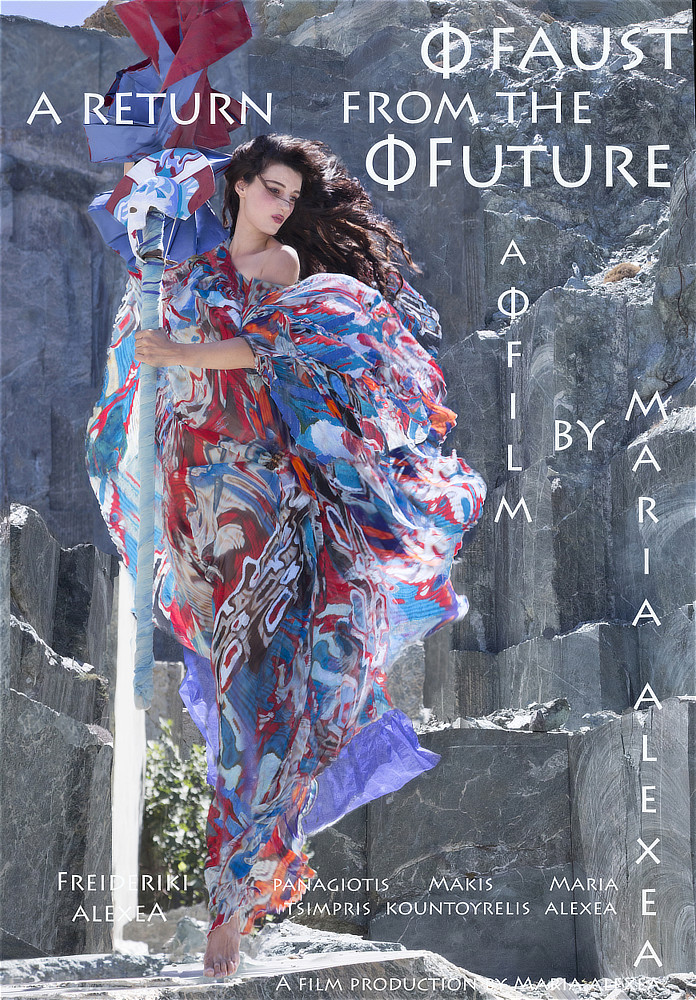
🎬 Film trailer
ENGLISH
The Fallen Elohim and the Theft of Nephele — Φ-Helen, and Faust
Goethe often observed that works of art know things which their creator has not yet fully understood. Creation precedes interpretation. Form appears first, and the intellect follows later, attempting to decipher what the work already knows.
Because this work bears the Ichor of Eos, I cannot help but recall Goethe’s words:
“If ever the Divine appeared upon the Earth, it appeared in the person of Christ.”
Jesus Christ, bearer of the Ether and Ichor of Eos, shall erase the face of Hubris and of the Beast.
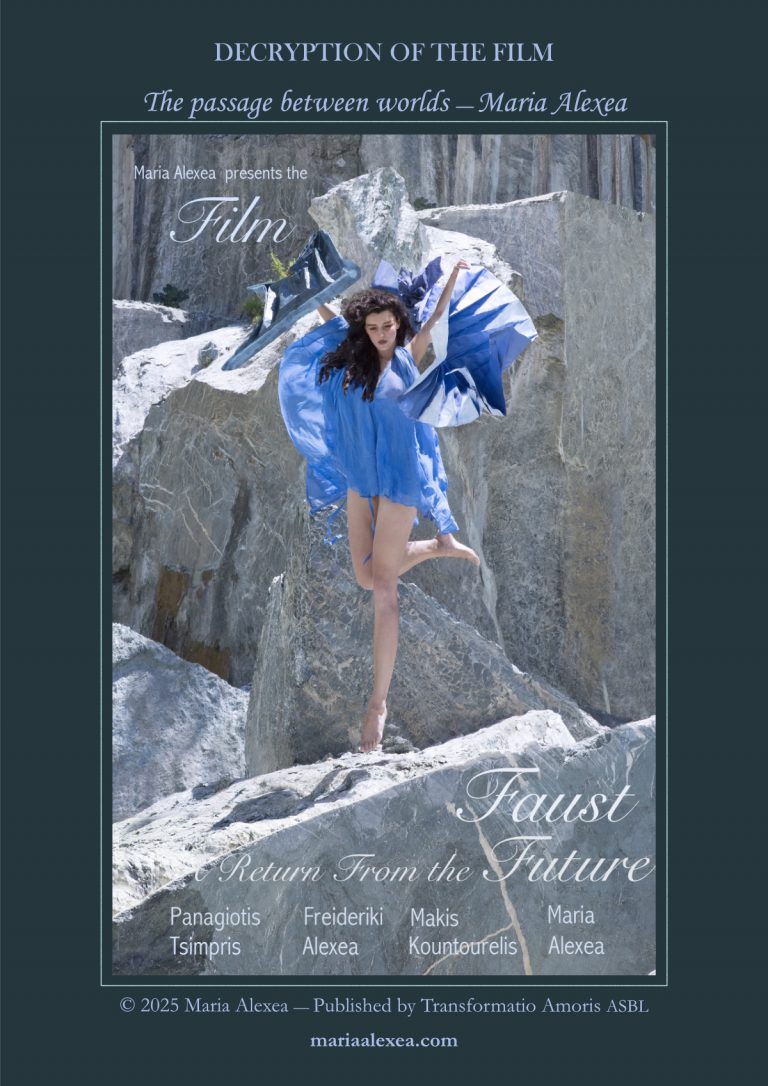
Something similar happened with Faust, a Return from the Future. Now, an octave of time after its creation, I listen to the work that I myself co-created with a higher self, perhaps, that continues to guide me.
And now the events themselves, chiefly through the cosmology and the influence of the being of Eos, begin to choreograph themselves in such a way as to reveal—and unveil from above—the sequence of meanings, as well as the principal and subsidiary significations of the entire subject.
This concerns the discourse surrounding the Nephilim and the fallen Watchers who desired the daughters of men, thereby initiating the sequence of falls, as well as the wretchedness of the copy and of the inverted chthonic and sub-chthonic world within which we find ourselves on a mission.
Nephele is an anagram of Phi-Helen and of Phenelē (Phialē). And the Greek Logos does not make mistakes.
Phenelē is the Phial of Revelation.
It is the vessel through which Nephele is manifested and projected into the lower world.
In Aristophanes’ Clouds, the Clouds are not merely clouds but formative powers. They transform incessantly, becoming whatever the beholder desires or fears, and appear as an intermediate field. They are the living ionic being of the physical entity, the vehicle that evidently moves between worlds. Perhaps it passes through the Phenelē-Phial and is projected into this world.
From this perspective, the story of Helen’s abduction acquires a different meaning. In Euripides’ Helen, the true Helen is never in Troy. There exists only her eidolon, which evidently originated from her Nephele. Helen’s complete physical self is absent, while her eidolon continues to set wars in motion.
Complete Physical Self → Nephele → Projection → Phenelē (Phial) → Eidolon
It is not the person that is stolen.
It is not even the eidolon that is stolen.
What is stolen is the Nephele that makes the production of the eidolon possible.
The question therefore shifts from the person to the form. What exactly was stolen? If the true Helen was not stolen, then perhaps the abduction concerns Nephele itself. Perhaps it concerns the very force that makes possible the movement of the Nephele-mediacy of the physical person.
Paris does not steal the true Helen.
He steals Helen’s Nephele in order to produce eidola of Helen.
The great theft is not the theft of the woman.
It is the theft of Nephele.
Troy does not wage war for a body, but for an image severed from its source.
The Book of Enoch may be viewed through the same prism. Tradition reads the story as an account of carnal desire. The Watchers saw the daughters of men, desired them, and united with them. Yet perhaps the text preserves only the external appearance of a deeper event, reversing the true order of things. The Watchers committed the hubris of abducting Nepheles in order to produce genetic eidola. Greek mythology, after all, abounds in abductions and violations by Zeus, Poseidon, and Apollo, while Hermes acts as transporter, mediator, and intermediary, bearing the caduceus of DNA and mRNA.
Under this interpretation, the Watchers—the fallen Elohim who appear as lovers—are in reality usurpers.
The Watchers are not lovers.
They are usurpers.
Abductors of form.
Their hubris lies not in desire but in appropriation and in the violent seizure of Nepheles for the realization of a copied world. Perhaps for the expansion of the universe, perhaps for a genetic experiment, perhaps for the evolution of certain races. In any case, they employ illegitimate means. They do not merely violate a cosmic law. They violate the very boundary between source and manifestation. And for this reason the two great destructions of the field follow.
If this is true, then the Nephilim are not the cause of the Fall but its symptom. They are the traces of a violent mixing of levels that were never meant to merge. They are the products of a prior hubris. Wherever Nephele is stolen, eidola appear; and where eidola multiply, hybrids are born. The Greek language, which signifies, says this clearly: hybrids are the hubris of DIA, which is also division, duality, the doubled self—the spiritual self that is here functioning as an antenna, and the true physical self that exists elsewhere.
Goethe, in Faust, essentially confirms this for anyone capable of understanding.
Faust cannot encounter Helen—the Nephele of Helen—except by passing through the realm of the Mothers, the womb that gives birth to the daughter. The Mothers are neither persons nor goddesses in the ordinary sense. They dwell in a place that precedes manifestation, where forms have not yet acquired bodies but have not yet disappeared into the formless. The Nepheles move among the Mothers, for, as the poet says, “whatever has ever existed in greatness and splendor moves there.” Thygatēr is the offspring of something higher; it has little to do with daughters in the sense we commonly understand.
Faust seeks the Nephele of Helen.
The primordial possibility, the etheric envelope of the self that proceeds from the complete divine person.
When Helen finally appears, she is not presented as an ordinary mortal woman. She is present and absent, corporeal and incorporeal, a form belonging simultaneously to two worlds. From her union with Faust is born Euphorion, an attempted birth that violates a cosmic law. For this reason Euphorion rises, exceeds the measure, and falls. Another reference to the Fall of the field. For Faust, too, is Phaethon cast down.
His fall is not merely a personal tragedy. It is the revelation of a law. When the cosmic law is violated and one attempts to deceive creation itself, hubris arises, and after hubris comes nemesis and downfall.
After Euphorion’s death, Helen vanishes like a dissolving apparition, confirming that the poet also regards her as a Nephele. She does not die like an ordinary human being. She dissolves like a vision. The body withdraws. Nephele does not remain captive within the mold of genetic constructions.
Complete Physical Self → Nephele → Projection → Phenelē (Phial) → Eidolon
Theft of Nephele → Production of Eidola
Eidola → Nephilim / Hybrids
Hubris → Fall
Return of Nephele
Thus the Clouds of Aristophanes, the Helen of Euripides, the Watchers of Enoch, and the Helen of Goethe cease to be independent stories. They become different expressions of the same drama. The great hubris is the attempt to appropriate form through replication.
The great theft is the theft of Nephele.
And perhaps this is why history endlessly repeats the same pattern. Form may appear, be reflected, and be imitated, but it cannot be imprisoned. Whenever possession of it is attempted, eidola are born. And when the eidola attempt to take the place of living form, their fall becomes inevitable.
ΕΛΛΗΝΙΚΑ
Η Κλοπή της Νεφέλης – Φ-Ελένη, και ο Φάουστ
Ο Goethe παρατηρούσε συχνά ότι τα έργα γνωρίζουν πράγματα τα οποία ο δημιουργός τους δεν έχει ακόμη κατανοήσει πλήρως. Η δημιουργία προηγείται της ερμηνείας. Η μορφή εμφανίζεται πρώτη και η διάνοια ακολουθεί αργότερα, προσπαθώντας να αποκρυπτογραφήσει εκείνο που το έργο ήδη γνωρίζει. Γιατι φερει το ιχωρ της Ηους.. και οπως ειπε ο Γκαιτε:
“«Αν το Θείο εμφανίστηκε ποτέ επί της Γης, εμφανίστηκε στο πρόσωπο του Ιησου Χριστού.».
Ο Ιησούς Χριστός, φορέας του Αιθέρα του πλάσματος της Ηούς, θα σβήσει το πρόσωπο της Ύβρεως και του Τέρατος
Κάτι ανάλογο συνέβη και με την ταινια Faust, a Return from the Future. Τώρα, μία οκτάβα χρόνου μετά τη δημιουργία, αφουγκράζομαι το έργο που εγώ συνδημιούργησα με έναν άνω εαυτό, μάλλον, που με οδηγεί. Γιατι οπως ειπε ο Γκαιτε
Και τώρα τα γεγονότα, κυρίως λόγω της κοσμολογίας και της επιρροής του πλάσματος της Ηούς, αρχίζουν να χορογραφούνται έτσι ώστε να αποκαλύπτουν και να ανω-καλύπτουν την αλληλουχία των νοημάτων αλλά και τις σημαντικές και παρασημαντικές όψεις του όλου θέματος.
Ο λόγος περί Νεφελίμ και εκπτώτων Εγρηγόρων που πόθησαν τις θυγατέρες των ανθρώπων, που αποτέλεσε το εφαλτήριο των πτώσεων, καθώς και η αθλιότητα του αντιγράφου και του ανάποδου καταχθόνιου και υποχθόνιου κόσμου στον οποίο βρισκόμαστε σε αποστολή.
Η Νεφέλη είναι αναγραμματισμός της Φ-Ελένης και της Φενέλης (Φιάλης). Και ο ελληνικός λόγος δεν κάνει λάθη.
Η Φενέλη είναι η Φιάλη της Αποκάλυψης.
Το δοχείο μέσω του οποίου η Νεφέλη φανερώνεται και προβάλλεται στον κατώτερο κόσμο.
Στις Νεφέλες του Αριστοφάνη, οι Νεφέλες δεν είναι απλά σύννεφα αλλά μορφοποιητικές δυνάμεις. Μεταμορφώνονται αδιάκοπα, γίνονται ό,τι επιθυμεί ή φοβάται εκείνος που τις αντικρίζει και εμφανίζονται ως ένα ενδιάμεσο πεδίο. Είναι το ζωντανό ιόν ον της φυσικής οντότητας, το όχημα που κινείται προφανώς μεταξύ κόσμων. Ίσως περνά μέσα από τη Φενέλη-Φιάλη και προβάλλεται σε αυτόν τον κόσμο.
Υπό αυτό το πρίσμα αποκτά διαφορετικό νόημα και η ιστορία της αρπαγής της Ελένης. Στην Ελένη του Ευριπίδη η αληθινή Ελένη δεν βρίσκεται ποτέ στην Τροία. Εκεί βρίσκεται μόνο το είδωλό της, που προφανώς προήλθε από τη Νεφέλη της. Ο ολοκαίρος φυσικός εαυτός της Ελένης απουσιάζει, ενώ το είδωλό της συνεχίζει να κινεί πολέμους.
Ολοκαίρος Φυσικός Εαυτός → Νεφέλη → Προβολή → Φενέλη (Φιάλη) → Είδωλο
Δεν κλέβεται το πρόσωπο.
Δεν κλέβεται καν το είδωλο.
Κλέβεται η Νεφέλη που επιτρέπει την παραγωγή του ειδώλου.
Το ερώτημα μετατοπίζεται τότε από το πρόσωπο στη μορφή. Τι ακριβώς κλάπηκε; Αν δεν κλάπηκε η αληθινή Ελένη, τότε ίσως η αρπαγή αφορά τη Νεφέλη. Ίσως αφορά την ίδια τη δύναμη που καθιστά δυνατή την κίνηση της μεσότητας Νεφέλης του φυσικού προσώπου.
Ο Πάρις δεν κλέβει την αληθινή Ελένη.
Κλέβει τη Νεφέλη της Ελένης για να παράξει είδωλα της Ελένης.
Η μεγάλη κλοπή δεν είναι η κλοπή της γυναίκας.
Είναι η κλοπή της Νεφέλης.
Η Τροία δεν πολεμά για ένα σώμα αλλά για μια εικόνα αποσπασμένη από την πηγή της.
Υπό το ίδιο πρίσμα μπορεί να ιδωθεί και το Βιβλίο του Ενώχ. Η παράδοση διαβάζει την ιστορία ως αφήγηση σαρκικής επιθυμίας. Οι Εγρήγοροι είδαν τις θυγατέρες των ανθρώπων, τις πόθησαν και ενώθηκαν μαζί τους. Ίσως όμως το κείμενο διασώζει μόνο την εξωτερική όψη ενός βαθύτερου γεγονότος, αντιστρέφοντας τα πράγματα. Οι Εγρήγοροι διέπραξαν την ύβρη της αρπαγής Νεφελών προκειμένου να πράξουν γενετικά είδωλα. Άλλωστε η ελληνική μυθολογία βρίθει από αρπαγές και βιασμούς από τον Δία, τον Ποσειδώνα και τον Απόλλωνα, ενώ ο Ερμής είναι ο διαμετακομιστής, ο μεσίτης, ο μεσολαβητής με το κηρύκειο του DNA και του mRNA.
Υπό αυτή την οπτική οι Εγρήγοροι, οι έκπτωτοι Ελοχίμ που εμφανίζονται ως εραστές, είναι στην ουσία σφετεριστές.
Οι Εγρήγοροι δεν είναι εραστές.
Είναι σφετεριστές.
Αρπαγείς της μορφής.
Η ύβρις τους δεν βρίσκεται στην επιθυμία αλλά στην οικειοποίηση και αρπαγή διά της βίας των Νεφελών για την πραγματοποίηση αντιγράφου κόσμου. Ίσως για τη διεύρυνση του σύμπαντος, ίσως για γενετικό πείραμα, ίσως για εξέλιξη κάποιων φυλών. Πάντως κάνουν χρήση αθέμιτων μέσων. Δεν παραβιάζουν απλώς έναν κοσμικό νόμο. Παραβιάζουν το ίδιο το όριο μεταξύ της πηγής και της εκδήλωσης. Και γι’ αυτό ακολουθούν οι δύο καταστροφές του πεδίου.
Εάν αυτό ισχύει, τότε οι Νεφελίμ δεν αποτελούν την αιτία της πτώσης αλλά το σύμπτωμά της. Είναι τα ίχνη μιας βίαιης ανάμειξης επιπέδων που δεν έπρεπε να συγχωνευθούν. Είναι τα παράγωγα μιας ύβρεως που προηγήθηκε. Όπου κλέβεται η Νεφέλη εμφανίζονται είδωλα και γεννώνται τα υβρίδια. Η ελληνική γλώσσα, που σημαίνει, το λέει ξεκάθαρα: υβρίδια είναι η ύβρις του ΔΙΑ, που είναι και η διάσπαση, το δύο, ο διπλός εαυτός· ο πνευματικός που είναι εδώ και λειτουργεί σαν κεραία και ο αληθινός φυσικός εαυτός που βρίσκεται αλλού.
Ο Goethe στον Faust, ουσιαστικά, για όποιον μπορεί να εννοήσει, επιβεβαιώνει.
Ο Φάουστ δεν μπορεί να συναντήσει την Ελένη, τη Νεφέλη της Ελένης, παρά περνώντας μέσα από το πεδίο των Μητέρων, της μήτρας που δίνει τη θυγατέρα. Οι Μητέρες δεν είναι πρόσωπα ούτε θεές με τη συνηθισμένη έννοια. Βρίσκονται σε έναν τόπο που προηγείται της εκδήλωσης, εκεί όπου οι μορφές δεν έχουν ακόμη αποκτήσει σώμα αλλά ούτε έχουν χαθεί μέσα στο άμορφο. Στις Μητέρες κινούνται οι Νεφέλες, γιατί όπως λέει ο ποιητής, «ό,τι υπήρξε σε μεγαλείο και λάμψη κινείται εκεί». Θυγάτηρ είναι το παράγωγο κάποιου υψηλού· δεν έχει να κάνει με τις κόρες όπως εμείς το καταλαβαίνουμε.
Ο Φάουστ αναζητά τη Νεφέλη της Ελένης.
Την πρωταρχική δυνατότητα, το αιθερικό περίβλημα του εαυτού που εξάγεται από το ολοκληρωμένο θείο πρόσωπο.
Όταν τελικά η Ελένη εμφανίζεται, δεν παρουσιάζεται ως μια συνηθισμένη θνητή. Είναι παρούσα και απούσα, σωματική και άυλη, μορφή που ανήκει ταυτόχρονα σε δύο κόσμους. Από την ένωσή της με τον Φάουστ γεννιέται ο Ευφορίων, η απόπειρα γέννας που παραβιάζει κοσμικό νόμο. Γι’ αυτό ο Ευφορίων ανυψώνεται, υπερβαίνει το μέτρο και πέφτει. Άλλη αναφορά της πτώσης του πεδίου. Γιατί και ο Φάουστ είναι ο Φαέθων που γκρεμίζεται.
Η πτώση του δεν μοιάζει απλώς με προσωπική τραγωδία. Μοιάζει με αποκάλυψη ενός νόμου. Όταν παραβιάζεται ο κοσμικός νόμος και προσπαθεί να εξαπατήσει τη δημιουργία, είναι ύβρις, και μετά την ύβρη ακολουθεί νέμεσις και πτώση.
Μετά τον θάνατο του Ευφορίωνα η Ελένη εξαφανίζεται σαν φάσμα που διαλύεται, επιβεβαιώνοντας πως ο ποιητής τη θεωρεί επίσης Νεφέλη. Δεν πεθαίνει όπως ένας κοινός άνθρωπος. Διαλύεται σαν οπτασία. Το σώμα αποσύρεται. Η Νεφέλη δεν παραμένει αιχμάλωτη μέσα στο εκμαγείο των γενετικών κατασκευών.
Ολοκαίρος Φυσικός Εαυτός → Νεφέλη → Προβολή → Φενέλη (Φιάλη) → Είδωλο
Κλοπή της Νεφέλης → Παραγωγή Ειδώλων
Ειδώλα → Νεφελίμ / Υβρίδια
Ύβρις → Πτώση
Επιστροφή της Νεφέλης
Έτσι οι Νεφέλες του Αριστοφάνη, η Ελένη του Ευριπίδη, οι Εγρήγοροι του Ενώχ και η Ελένη του Goethe παύουν να είναι ανεξάρτητες ιστορίες. Γίνονται διαφορετικές εκφράσεις του ίδιου δράματος. Η μεγάλη ύβρις είναι η απόπειρα ιδιοποίησης της μορφής μέσω αντιγραφής.
Η μεγάλη κλοπή είναι η κλοπή της Νεφέλης.
Και ίσως γι’ αυτό η ιστορία επαναλαμβάνει αδιάκοπα το ίδιο μοτίβο. Η μορφή μπορεί να εμφανιστεί, να καθρεφτιστεί και να μιμηθεί, αλλά δεν μπορεί να φυλακιστεί. Όταν επιχειρείται η κατοχή της, γεννώνται τα είδωλα. Και όταν τα είδωλα επιχειρούν να πάρουν τη θέση της ζώσας μορφής, είναι αναπόφευκτη η πτώση τους.
🎬 Film trailer
ENGLISH
The Fallen Elohim and the Theft of Nephele — Φ-Helen, and Faust
Goethe often observed that works of art know things which their creator has not yet fully understood. Creation precedes interpretation. Form appears first, and the intellect follows later, attempting to decipher what the work already knows.
Because this work bears the Ichor of Eos, I cannot help but recall Goethe’s words:
“If ever the Divine appeared upon the Earth, it appeared in the person of Christ.”
Jesus Christ, bearer of the Ether and Ichor of Eos, shall erase the face of Hubris and of the Beast.
Something similar happened with Faust, a Return from the Future. Now, an octave of time after its creation, I listen to the work that I myself co-created with a higher self, perhaps, that continues to guide me.
And now the events themselves, chiefly through the cosmology and the influence of the being of Eos, begin to choreograph themselves in such a way as to reveal—and unveil from above—the sequence of meanings, as well as the principal and subsidiary significations of the entire subject.
This concerns the discourse surrounding the Nephilim and the fallen Watchers who desired the daughters of men, thereby initiating the sequence of falls, as well as the wretchedness of the copy and of the inverted chthonic and sub-chthonic world within which we find ourselves on a mission.
Nephele is an anagram of Phi-Helen and of Phenelē (Phialē). And the Greek Logos does not make mistakes.
Phenelē is the Phial of Revelation.
It is the vessel through which Nephele is manifested and projected into the lower world.
In Aristophanes’ Clouds, the Clouds are not merely clouds but formative powers. They transform incessantly, becoming whatever the beholder desires or fears, and appear as an intermediate field. They are the living ionic being of the physical entity, the vehicle that evidently moves between worlds. Perhaps it passes through the Phenelē-Phial and is projected into this world.
From this perspective, the story of Helen’s abduction acquires a different meaning. In Euripides’ Helen, the true Helen is never in Troy. There exists only her eidolon, which evidently originated from her Nephele. Helen’s complete physical self is absent, while her eidolon continues to set wars in motion.
Complete Physical Self → Nephele → Projection → Phenelē (Phial) → Eidolon
It is not the person that is stolen.
It is not even the eidolon that is stolen.
What is stolen is the Nephele that makes the production of the eidolon possible.
The question therefore shifts from the person to the form. What exactly was stolen? If the true Helen was not stolen, then perhaps the abduction concerns Nephele itself. Perhaps it concerns the very force that makes possible the movement of the Nephele-mediacy of the physical person.
Paris does not steal the true Helen.
He steals Helen’s Nephele in order to produce eidola of Helen.
The great theft is not the theft of the woman.
It is the theft of Nephele.
Troy does not wage war for a body, but for an image severed from its source.
The Book of Enoch may be viewed through the same prism. Tradition reads the story as an account of carnal desire. The Watchers saw the daughters of men, desired them, and united with them. Yet perhaps the text preserves only the external appearance of a deeper event, reversing the true order of things. The Watchers committed the hubris of abducting Nepheles in order to produce genetic eidola. Greek mythology, after all, abounds in abductions and violations by Zeus, Poseidon, and Apollo, while Hermes acts as transporter, mediator, and intermediary, bearing the caduceus of DNA and mRNA.
Under this interpretation, the Watchers—the fallen Elohim who appear as lovers—are in reality usurpers.
The Watchers are not lovers.
They are usurpers.
Abductors of form.
Their hubris lies not in desire but in appropriation and in the violent seizure of Nepheles for the realization of a copied world. Perhaps for the expansion of the universe, perhaps for a genetic experiment, perhaps for the evolution of certain races. In any case, they employ illegitimate means. They do not merely violate a cosmic law. They violate the very boundary between source and manifestation. And for this reason the two great destructions of the field follow.
If this is true, then the Nephilim are not the cause of the Fall but its symptom. They are the traces of a violent mixing of levels that were never meant to merge. They are the products of a prior hubris. Wherever Nephele is stolen, eidola appear; and where eidola multiply, hybrids are born. The Greek language, which signifies, says this clearly: hybrids are the hubris of DIA, which is also division, duality, the doubled self—the spiritual self that is here functioning as an antenna, and the true physical self that exists elsewhere.
Goethe, in Faust, essentially confirms this for anyone capable of understanding.
Faust cannot encounter Helen—the Nephele of Helen—except by passing through the realm of the Mothers, the womb that gives birth to the daughter. The Mothers are neither persons nor goddesses in the ordinary sense. They dwell in a place that precedes manifestation, where forms have not yet acquired bodies but have not yet disappeared into the formless. The Nepheles move among the Mothers, for, as the poet says, “whatever has ever existed in greatness and splendor moves there.” Thygatēr is the offspring of something higher; it has little to do with daughters in the sense we commonly understand.
Faust seeks the Nephele of Helen.
The primordial possibility, the etheric envelope of the self that proceeds from the complete divine person.
When Helen finally appears, she is not presented as an ordinary mortal woman. She is present and absent, corporeal and incorporeal, a form belonging simultaneously to two worlds. From her union with Faust is born Euphorion, an attempted birth that violates a cosmic law. For this reason Euphorion rises, exceeds the measure, and falls. Another reference to the Fall of the field. For Faust, too, is Phaethon cast down.
His fall is not merely a personal tragedy. It is the revelation of a law. When the cosmic law is violated and one attempts to deceive creation itself, hubris arises, and after hubris comes nemesis and downfall.
After Euphorion’s death, Helen vanishes like a dissolving apparition, confirming that the poet also regards her as a Nephele. She does not die like an ordinary human being. She dissolves like a vision. The body withdraws. Nephele does not remain captive within the mold of genetic constructions.
Complete Physical Self → Nephele → Projection → Phenelē (Phial) → Eidolon
Theft of Nephele → Production of Eidola
Eidola → Nephilim / Hybrids
Hubris → Fall
Return of Nephele
Thus the Clouds of Aristophanes, the Helen of Euripides, the Watchers of Enoch, and the Helen of Goethe cease to be independent stories. They become different expressions of the same drama. The great hubris is the attempt to appropriate form through replication.
The great theft is the theft of Nephele.
And perhaps this is why history endlessly repeats the same pattern. Form may appear, be reflected, and be imitated, but it cannot be imprisoned. Whenever possession of it is attempted, eidola are born. And when the eidola attempt to take the place of living form, their fall becomes inevitable.
ΕΛΛΗΝΙΚΑ
Η Κλοπή της Νεφέλης – Φ-Ελένη, και ο Φάουστ
Ο Goethe παρατηρούσε συχνά ότι τα έργα γνωρίζουν πράγματα τα οποία ο δημιουργός τους δεν έχει ακόμη κατανοήσει πλήρως. Η δημιουργία προηγείται της ερμηνείας. Η μορφή εμφανίζεται πρώτη και η διάνοια ακολουθεί αργότερα, προσπαθώντας να αποκρυπτογραφήσει εκείνο που το έργο ήδη γνωρίζει. Γιατι φερει το ιχωρ της Ηους.. και οπως ειπε ο Γκαιτε:
«Αν το Θείο εμφανίστηκε ποτέ επί της Γης, εμφανίστηκε στο πρόσωπο του Ιησου Χριστού.».
Ο Ιησούς Χριστός, φορέας του Αιθέρα του πλάσματος της Ηούς, θα σβήσει το πρόσωπο της Ύβρεως και του Τέρατος
.Κάτι ανάλογο συνέβη και με την ταινια Faust, a Return from the Future. Τώρα, μία οκτάβα χρόνου μετά τη δημιουργία, αφουγκράζομαι το έργο που εγώ συνδημιούργησα με έναν άνω εαυτό, μάλλον, που με οδηγεί. Γιατι οπως ειπε ο Γκαιτε
Και τώρα τα γεγονότα, κυρίως λόγω της κοσμολογίας και της επιρροής του πλάσματος της Ηούς, αρχίζουν να χορογραφούνται έτσι ώστε να αποκαλύπτουν και να ανω-καλύπτουν την αλληλουχία των νοημάτων αλλά και τις σημαντικές και παρασημαντικές όψεις του όλου θέματος.
Ο λόγος περί Νεφελίμ και εκπτώτων Εγρηγόρων που πόθησαν τις θυγατέρες των ανθρώπων, που αποτέλεσε το εφαλτήριο των πτώσεων, καθώς και η αθλιότητα του αντιγράφου και του ανάποδου καταχθόνιου και υποχθόνιου κόσμου στον οποίο βρισκόμαστε σε αποστολή.
Η Νεφέλη είναι αναγραμματισμός της Φ-Ελένης και της Φενέλης (Φιάλης). Και ο ελληνικός λόγος δεν κάνει λάθη.
Η Φενέλη είναι η Φιάλη της Αποκάλυψης.
Το δοχείο μέσω του οποίου η Νεφέλη φανερώνεται και προβάλλεται στον κατώτερο κόσμο.
Στις Νεφέλες του Αριστοφάνη, οι Νεφέλες δεν είναι απλά σύννεφα αλλά μορφοποιητικές δυνάμεις. Μεταμορφώνονται αδιάκοπα, γίνονται ό,τι επιθυμεί ή φοβάται εκείνος που τις αντικρίζει και εμφανίζονται ως ένα ενδιάμεσο πεδίο. Είναι το ζωντανό ιόν ον της φυσικής οντότητας, το όχημα που κινείται προφανώς μεταξύ κόσμων. Ίσως περνά μέσα από τη Φενέλη-Φιάλη και προβάλλεται σε αυτόν τον κόσμο.
Υπό αυτό το πρίσμα αποκτά διαφορετικό νόημα και η ιστορία της αρπαγής της Ελένης. Στην Ελένη του Ευριπίδη η αληθινή Ελένη δεν βρίσκεται ποτέ στην Τροία. Εκεί βρίσκεται μόνο το είδωλό της, που προφανώς προήλθε από τη Νεφέλη της. Ο ολοκαίρος φυσικός εαυτός της Ελένης απουσιάζει, ενώ το είδωλό της συνεχίζει να κινεί πολέμους.
Ολοκαίρος Φυσικός Εαυτός → Νεφέλη → Προβολή → Φενέλη (Φιάλη) → Είδωλο
Δεν κλέβεται το πρόσωπο.
Δεν κλέβεται καν το είδωλο.
Κλέβεται η Νεφέλη που επιτρέπει την παραγωγή του ειδώλου.
Το ερώτημα μετατοπίζεται τότε από το πρόσωπο στη μορφή. Τι ακριβώς κλάπηκε; Αν δεν κλάπηκε η αληθινή Ελένη, τότε ίσως η αρπαγή αφορά τη Νεφέλη. Ίσως αφορά την ίδια τη δύναμη που καθιστά δυνατή την κίνηση της μεσότητας Νεφέλης του φυσικού προσώπου.
Ο Πάρις δεν κλέβει την αληθινή Ελένη.
Κλέβει τη Νεφέλη της Ελένης για να παράξει είδωλα της Ελένης.
Η μεγάλη κλοπή δεν είναι η κλοπή της γυναίκας.
Είναι η κλοπή της Νεφέλης.
Η Τροία δεν πολεμά για ένα σώμα αλλά για μια εικόνα αποσπασμένη από την πηγή της.
Υπό το ίδιο πρίσμα μπορεί να ιδωθεί και το Βιβλίο του Ενώχ. Η παράδοση διαβάζει την ιστορία ως αφήγηση σαρκικής επιθυμίας. Οι Εγρήγοροι είδαν τις θυγατέρες των ανθρώπων, τις πόθησαν και ενώθηκαν μαζί τους. Ίσως όμως το κείμενο διασώζει μόνο την εξωτερική όψη ενός βαθύτερου γεγονότος, αντιστρέφοντας τα πράγματα. Οι Εγρήγοροι διέπραξαν την ύβρη της αρπαγής Νεφελών προκειμένου να πράξουν γενετικά είδωλα. Άλλωστε η ελληνική μυθολογία βρίθει από αρπαγές και βιασμούς από τον Δία, τον Ποσειδώνα και τον Απόλλωνα, ενώ ο Ερμής είναι ο διαμετακομιστής, ο μεσίτης, ο μεσολαβητής με το κηρύκειο του DNA και του mRNA.
Υπό αυτή την οπτική οι Εγρήγοροι, οι έκπτωτοι Ελοχίμ που εμφανίζονται ως εραστές, είναι στην ουσία σφετεριστές.
Οι Εγρήγοροι δεν είναι εραστές.
Είναι σφετεριστές.
Αρπαγείς της μορφής.
Η ύβρις τους δεν βρίσκεται στην επιθυμία αλλά στην οικειοποίηση και αρπαγή διά της βίας των Νεφελών για την πραγματοποίηση αντιγράφου κόσμου. Ίσως για τη διεύρυνση του σύμπαντος, ίσως για γενετικό πείραμα, ίσως για εξέλιξη κάποιων φυλών. Πάντως κάνουν χρήση αθέμιτων μέσων. Δεν παραβιάζουν απλώς έναν κοσμικό νόμο. Παραβιάζουν το ίδιο το όριο μεταξύ της πηγής και της εκδήλωσης. Και γι’ αυτό ακολουθούν οι δύο καταστροφές του πεδίου.
Εάν αυτό ισχύει, τότε οι Νεφελίμ δεν αποτελούν την αιτία της πτώσης αλλά το σύμπτωμά της. Είναι τα ίχνη μιας βίαιης ανάμειξης επιπέδων που δεν έπρεπε να συγχωνευθούν. Είναι τα παράγωγα μιας ύβρεως που προηγήθηκε. Όπου κλέβεται η Νεφέλη εμφανίζονται είδωλα και γεννώνται τα υβρίδια. Η ελληνική γλώσσα, που σημαίνει, το λέει ξεκάθαρα: υβρίδια είναι η ύβρις του ΔΙΑ, που είναι και η διάσπαση, το δύο, ο διπλός εαυτός· ο πνευματικός που είναι εδώ και λειτουργεί σαν κεραία και ο αληθινός φυσικός εαυτός που βρίσκεται αλλού.
Ο Goethe στον Faust, ουσιαστικά, για όποιον μπορεί να εννοήσει, επιβεβαιώνει.
Ο Φάουστ δεν μπορεί να συναντήσει την Ελένη, τη Νεφέλη της Ελένης, παρά περνώντας μέσα από το πεδίο των Μητέρων, της μήτρας που δίνει τη θυγατέρα. Οι Μητέρες δεν είναι πρόσωπα ούτε θεές με τη συνηθισμένη έννοια. Βρίσκονται σε έναν τόπο που προηγείται της εκδήλωσης, εκεί όπου οι μορφές δεν έχουν ακόμη αποκτήσει σώμα αλλά ούτε έχουν χαθεί μέσα στο άμορφο. Στις Μητέρες κινούνται οι Νεφέλες, γιατί όπως λέει ο ποιητής, «ό,τι υπήρξε σε μεγαλείο και λάμψη κινείται εκεί». Θυγάτηρ είναι το παράγωγο κάποιου υψηλού· δεν έχει να κάνει με τις κόρες όπως εμείς το καταλαβαίνουμε.
Ο Φάουστ αναζητά τη Νεφέλη της Ελένης.
Την πρωταρχική δυνατότητα, το αιθερικό περίβλημα του εαυτού που εξάγεται από το ολοκληρωμένο θείο πρόσωπο.
Όταν τελικά η Ελένη εμφανίζεται, δεν παρουσιάζεται ως μια συνηθισμένη θνητή. Είναι παρούσα και απούσα, σωματική και άυλη, μορφή που ανήκει ταυτόχρονα σε δύο κόσμους. Από την ένωσή της με τον Φάουστ γεννιέται ο Ευφορίων, η απόπειρα γέννας που παραβιάζει κοσμικό νόμο. Γι’ αυτό ο Ευφορίων ανυψώνεται, υπερβαίνει το μέτρο και πέφτει. Άλλη αναφορά της πτώσης του πεδίου. Γιατί και ο Φάουστ είναι ο Φαέθων που γκρεμίζεται.
Η πτώση του δεν μοιάζει απλώς με προσωπική τραγωδία. Μοιάζει με αποκάλυψη ενός νόμου. Όταν παραβιάζεται ο κοσμικός νόμος και προσπαθεί να εξαπατήσει τη δημιουργία, είναι ύβρις, και μετά την ύβρη ακολουθεί νέμεσις και πτώση.
Μετά τον θάνατο του Ευφορίωνα η Ελένη εξαφανίζεται σαν φάσμα που διαλύεται, επιβεβαιώνοντας πως ο ποιητής τη θεωρεί επίσης Νεφέλη. Δεν πεθαίνει όπως ένας κοινός άνθρωπος. Διαλύεται σαν οπτασία. Το σώμα αποσύρεται. Η Νεφέλη δεν παραμένει αιχμάλωτη μέσα στο εκμαγείο των γενετικών κατασκευών.
Ολοκαίρος Φυσικός Εαυτός → Νεφέλη → Προβολή → Φενέλη (Φιάλη) → Είδωλο
Κλοπή της Νεφέλης → Παραγωγή Ειδώλων
Ειδώλα → Νεφελίμ / Υβρίδια
Ύβρις → Πτώση
Επιστροφή της Νεφέλης
Έτσι οι Νεφέλες του Αριστοφάνη, η Ελένη του Ευριπίδη, οι Εγρήγοροι του Ενώχ και η Ελένη του Goethe παύουν να είναι ανεξάρτητες ιστορίες. Γίνονται διαφορετικές εκφράσεις του ίδιου δράματος. Η μεγάλη ύβρις είναι η απόπειρα ιδιοποίησης της μορφής μέσω αντιγραφής.
Η μεγάλη κλοπή είναι η κλοπή της Νεφέλης.
Και ίσως γι’ αυτό η ιστορία επαναλαμβάνει αδιάκοπα το ίδιο μοτίβο. Η μορφή μπορεί να εμφανιστεί, να καθρεφτιστεί και να μιμηθεί, αλλά δεν μπορεί να φυλακιστεί. Όταν επιχειρείται η κατοχή της, γεννώνται τα είδωλα. Και όταν τα είδωλα επιχειρούν να πάρουν τη θέση της ζώσας μορφής, είναι αναπόφευκτη η πτώση τους.
Loading comments…