
The Mystery of Lost Reality – Of J. S. Bach, the Church Organ, and the Cathedral (En-Gr)
Το μυστήριο της χαμένης πραγματικότητας – Του J. S. Bach, του εκκλησιαστικού οργάνου και του καθεδρικού ναού
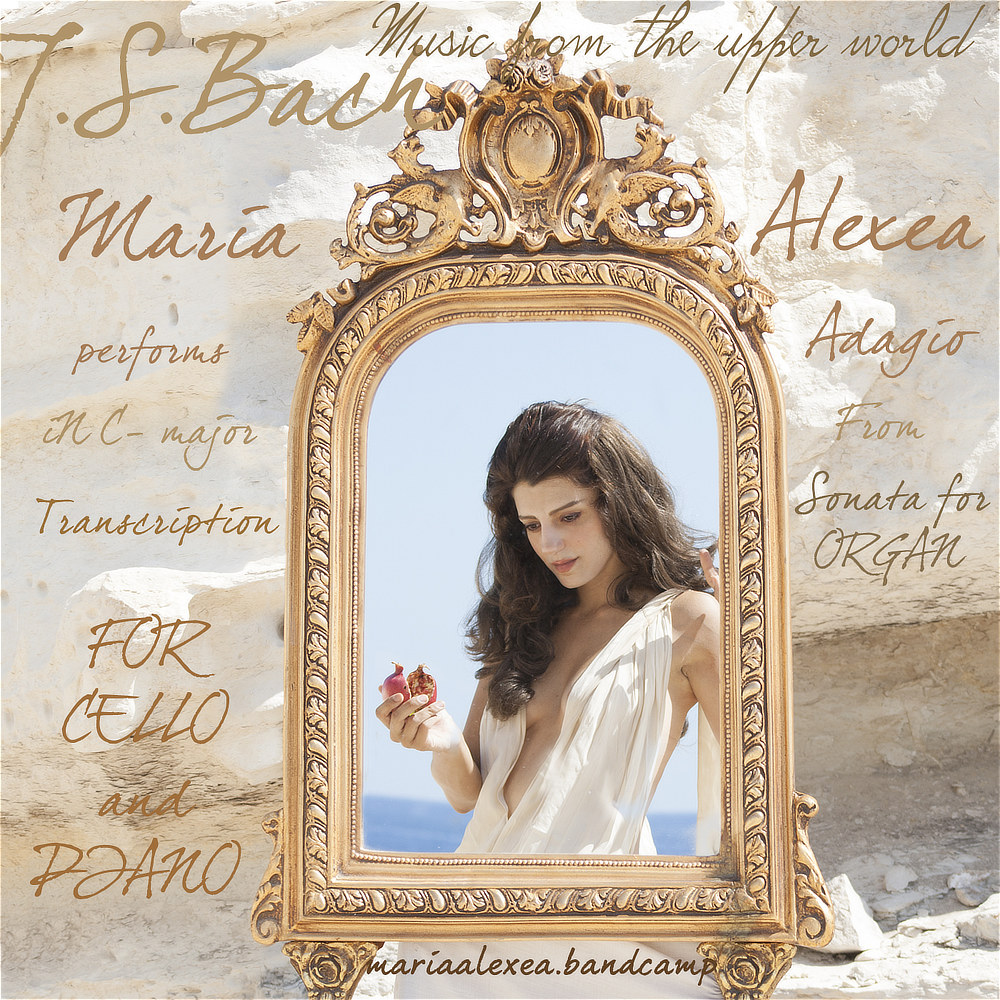
Music & Dance | Bandcamp
 Music & Dance
 Bandcamp
Article (En)
The Mystery of Lost Reality
Of J. S. Bach, the Church Organ, and the Cathedral
“Humanity is not ready for what is great and good… Positive mental energies are found in the music of Bach or Mozart, or in the verses of the great poets.”
— Words attributed to the dramatic Tesla of Stevan Pešić
The Adagio in C major, known today through its transcription for cello and piano, was not conceived for these instruments, but forms the slow movement of Bach’s Toccata, Adagio and Fugue in C major, BWV 564, a work written for church organ. The transcription transfers its voices into different sonic bodies without erasing their origin; on the contrary, the music itself compels the performer to seek it.
Listen to the interpretation here:
This interpretation was conceived precisely so that the transcription for cello and piano might remember its origin in the church organ, in the space that receives its breath, and in the dance that sets its architecture in motion.
When the cello and piano are placed within the appropriate architectural and acoustic space, the composition begins to remember its original body. The cello assumes the human, breathing voice, while the piano sustains the arrangement of the harmonic planes; yet behind them both the church organ continues to be heard, like an absence organising their presence.
Technical precision is not enough. The performer must remember the higher self and enter the vertical movement of the composition; then the performer does not merely play a melody, but sets an architecture back into motion. The bow becomes breath, the piano becomes foundation, and the acoustic space reunites what the transcription had seemingly divided.
Thus the music returns to the church organ or, more precisely, to the harmonium of cosmic creation, where air, number, proportion, and human movement meet so that the invisible may acquire a sonic body. The transcription may therefore become an act of remembrance, through which the music recognises once again the temple, the breath, and its original celestial architecture.
Music is not merely an art; it is the primordial principle of formation. Goethe, Orpheus, Plato, and Tesla, each following a different path, converge upon the idea that behind every true creation lies an invisible harmonic order of movements that precedes form. This order is not static; it is movement, choreia, a living rhythm capable of solidifying as a temple, being heard as music, or being experienced as the Holy Spirit beckoning.
Goethe called architecture “frozen music.” In cathedrals, the phrase ceases to function solely as a poetic metaphor, for the temple is not merely a building but polyphony solidified in stone. The arches, columns, vaults, rose windows, stained glass, proportions, and vertical thrusts form a harmonic body, a stone fugue ascending towards the heavens.
Within this body, the church organ is neither decoration nor a mere musical instrument; it is the breath of the temple. Its pipes correspond to the columns, its ranks of sound to the degrees of a cosmic polyphony, while the manual voicing of each pipe recalls the secret act through which the craftsman persuades matter to speak. The temple provides the space, and the organ gives it breath and musical formation; stone holds the silence, while sound releases it.
A great church organ inside a cathedral embodies the same principle that has frozen into stone and thaws again into sound. Bach was not exclusively a composer for the church organ, yet at the deepest core of his creative thought he was an organist, for the organ is the king of instruments, as Mozart said, and more than any other instrument it resembles the cosmic harmonium of creation.
There Bach improvised, testing musical dances and the epic contrapuntal movement of voices; there he danced with hands and feet before the very harmonium of creation. His music is a cosmic architecture of space and time.
In a Bach fugue, the subject generates answers, the answers are inverted, while the voices enter, withdraw, return, and cross one another like the lines of a cathedral rising, meeting, and supporting one another within a single vertical movement. Bach builds in sound what the architect created within matter, through musical techniques proportionate to the building itself, for the means must be analogous to the result.
Here the great question begins: why, despite modern machinery, computational studies, and immense technical resources, are no cathedrals created that even approach the same spiritual, geometrical, acoustic, and symbolic unity?
A building must not be confused with its scaffolding. Scaffolding is an external means of support, not the principle that generates the structure. If the building is frozen music, then its mode of construction must correspond to its nature: it must be rhythmic, proportional, and harmonic.
What was the true knowledge possessed by the architects and builders of the cathedrals? We are referred to geometry, the rule and compass, the systems of ad quadratum and ad triangulum, wooden templates, tracings, and the accumulated experience of the guilds. But are these enough to explain the result?
Or is an immense knowledge and technology being concealed: the use of propulsive sound waves, knowledge of harmonics, resonance, wave impulses within matter, and the movement of enormous masses, perhaps even the use of a fluid crystalline substance, a plasma that subsequently froze or petrified?
The concealment of truth leads not only to obscurantism but to the distortion of all logic, aesthetics, and ethics. We are repeatedly told that Gothic builders raised and carved stone using primitive tools, while no reference is made to the supernatural—by present-day standards—power of propulsive sound waves. The analogy between sound and structure makes the question unavoidable.
If architecture is frozen music, what exactly does “freezing” mean? Is it merely a metaphor, or does it describe a real transition from rhythm, vibration, and harmonic proportion into solid form?
Perhaps “frozen music” should be read literally: as fluid or plasmatic matter organised by harmonic frequencies and frozen into crystalline architectural form. The ancient Greeks would have begun with the phenomenon itself, and the phenomenon is that the architecture of the cathedrals remains beyond the reach of architects today.
Modern techniques employ raw mechanical force to move, lift, and secure matter. Yet a temple that constitutes a harmonic structure cannot be explained solely through scaffolding, cranes, or the transportation of weight. Only through music can a temple be built that reflects this music; only through the use of propulsive sound waves and fluid matter that “freezes” can these architectural wonders be explained.
The same question returns in music. Why do we no longer compose fugues with the same inner necessity? Why does later music, even when it reaches great technical development, as in Beethoven—without entering into the question of contemporary atonal music, which is simply noise—rarely produce these mathematical sonic architectures of rhythm, voices, and proportion that reorganise the entire being?
Why, moreover, do modern church organs require electric blowers, electro-pneumatic actions, digital memories, and computerised management, while historic organs functioned as direct mechanical and analogue bodies organised through air, wood, metal, hand, foot, ear, and proportion?
The electric blower does not in itself constitute the essence of the problem, since it replaces the person who once operated the bellows. The deeper question is: what is missing from modern technique that prevents it from creating cathedrals? What is absent is the architecture that is frozen music. What happened, and what was lost?
In a mechanical organ, the finger is directly connected to the valve of the pipe, and the movement of the body is transmitted into the instrument’s breath. In an electrically controlled system, a mechanism of command intervenes between the human gesture and the sound. The difference is not merely technical but ontological: in the first case, the human being touches the body of the instrument; in the second, the human being sends it a signal.
The question is whether modern humanity still possesses the unified field within which geometry, acoustics, music, theology, craftsmanship, and spiritual elevation formed one indivisible body of knowledge. Perhaps a type of human being was lost—a human being who belonged to a type of field that fell.
If cathedrals are frozen music, then in Bach the crystalline stone begins to flow, reshaping itself into musical space, governed by musical rhythm rather than linear time. And if the church organ is the breath of the temple, then the counterpoint of voices—which is nothing other than Dance—is the thought of the temple itself as it begins to remember its origin.
From Orpheus, who moves stones and builds cities through music, to Goethe, who sees architecture as a silent tonal art; from Plato, who understands choreia as the harmonic education of the soul, to the dramatic Tesla, who recognises positive mental energies in the music of Bach and Mozart, the same idea returns:
True creation uses matter, but proceeds from rhythm in order to give matter harmonic form; it begins with a human being capable of hearing the hidden law that seeks to become a world.
Maria Alexea
Άρθρο (Ελ)
Το μυστήριο της χαμένης πραγματικότητας
Του J. S. Bach, του εκκλησιαστικού οργάνου και του καθεδρικού
«Η ανθρωπότητα δεν είναι έτοιμη για το μεγάλο και το καλό… Οι θετικές νοητικές ενέργειες βρίσκονται στη μουσική του Bach ή του Mozart, ή στους στίχους των μεγάλων ποιητών.»
— Λόγια που αποδίδονται στον δραματικό Tesla του Stevan Pešić
Το Adagio in C major, γνωστό σήμερα από τη μεταγραφή του για βιολοντσέλο και πιάνο, δεν γεννήθηκε για αυτά τα όργανα, αλλά αποτελεί το αργό μέρος της Toccata, Adagio and Fugue in C major, BWV 564, μιας σύνθεσης του Bach για εκκλησιαστικό όργανο. Η μεταγραφή μεταφέρει τις φωνές σε άλλα ηχητικά σώματα, χωρίς να ακυρώνει την καταγωγή τους· αντιθέτως, η ίδια η μουσική αναγκάζει τον ερμηνευτή να την αναζητήσει.
Ακούστε την ερμηνεία εδώ:
Η συγκεκριμένη ερμηνεία δημιουργήθηκε ακριβώς για να θυμηθεί η μεταγραφή για βιολοντσέλο και πιάνο την καταγωγή της στο εκκλησιαστικό όργανο, στον χώρο που δέχεται την πνοή του και στον χορό που θέτει την αρχιτεκτονική του σε κίνηση.
Όταν το βιολοντσέλο και το πιάνο τοποθετηθούν στον κατάλληλο αρχιτεκτονικό και ακουστικό χώρο, η σύνθεση αρχίζει να θυμάται το αρχικό της σώμα. Το βιολοντσέλο αναλαμβάνει την ανθρώπινη, αναπνέουσα φωνή, ενώ το πιάνο συγκρατεί τη διάταξη των αρμονικών επιπέδων· πίσω όμως και από τα δύο εξακολουθεί να ακούγεται το εκκλησιαστικό όργανο, σαν απουσία που οργανώνει την παρουσία τους.
Δεν αρκεί η τεχνική ακρίβεια. Ο ερμηνευτής πρέπει να θυμηθεί τον άνω εαυτό του και να εισέλθει στην κατακόρυφη κίνηση της σύνθεσης· τότε δεν παίζει απλώς μια μελωδία, αλλά επαναφέρει σε κίνηση μια αρχιτεκτονική. Το δοξάρι γίνεται πνοή, το πιάνο θεμέλιο και ο ακουστικός χώρος ενώνει ξανά ό,τι η μεταγραφή είχε φαινομενικά χωρίσει.
Έτσι η μουσική επιστρέφει στο εκκλησιαστικό όργανο ή, ακριβέστερα, στο αρμόνιο της κοσμικής δημιουργίας, εκεί όπου ο αέρας, ο αριθμός, η αναλογία και η ανθρώπινη κίνηση συναντώνται, ώστε το αόρατο να αποκτήσει ηχητικό σώμα. Η μεταγραφή μπορεί επομένως να γίνει πράξη αναμνήσεως, κατά την οποία η μουσική αναγνωρίζει ξανά τον ναό, την πνοή και την αρχική ουράνια αρχιτεκτονική της.
Η μουσική δεν είναι απλώς τέχνη· είναι η πρωταρχική αρχή μορφοποίησης. Ο Γκαίτε, ο Ορφέας, ο Πλάτων και ο Tesla συναντώνται, από διαφορετικό δρόμο, στην ιδέα ότι πίσω από κάθε αληθινή δημιουργία υπάρχει μια αόρατη αρμονική τάξη κινήσεων που προηγείται της μορφής. Η τάξη αυτή δεν είναι στατική· είναι κίνηση, χορεία, ένας ζωντανός ρυθμός που μπορεί να στερεοποιηθεί ως ναός, να ακουστεί ως μουσική ή να βιωθεί ως Πνεύμα Άγιο που νεύει.
Ο Γκαίτε ονόμασε την αρχιτεκτονική «παγωμένη μουσική». Στους καθεδρικούς η φράση αυτή παύει να είναι μόνο ποιητική μεταφορά, διότι ο ναός δεν είναι απλώς οικοδόμημα αλλά πολυφωνία στερεοποιημένη σε πέτρα. Τα τόξα, οι κίονες, οι θόλοι, οι ροζέτες, τα υαλογραφήματα, οι αναλογίες και οι κατακόρυφες ωθήσεις συγκροτούν ένα αρμονικό σώμα, μια πέτρινη φούγκα που ανέρχεται προς τον ουρανό.
Μέσα σε αυτό το σώμα, το εκκλησιαστικό όργανο δεν είναι διακόσμηση ούτε απλό μουσικό εργαλείο· είναι η πνοή του ναού. Οι αυλοί του αντιστοιχούν στις στήλες, οι συστοιχίες των ήχων του στις βαθμίδες μιας κοσμικής πολυφωνίας, ενώ η χειρονακτική ρύθμιση κάθε αυλού θυμίζει τη μυστική πράξη με την οποία ο τεχνίτης πείθει την ύλη να μιλήσει. Ο ναός δίνει τον χώρο και το όργανο του δίνει την αναπνοή και τη μουσική διαμόρφωση· η πέτρα κρατά τη σιωπή και ο ήχος την αποδεσμεύει.
Ένα μεγάλο εκκλησιαστικό όργανο μέσα σε έναν καθεδρικό αποτελεί την ίδια αρχή που έχει παγώσει σε πέτρα και ξεπαγώνει σε ήχο. Ο Bach δεν υπήρξε αποκλειστικά συνθέτης του εκκλησιαστικού οργάνου, αλλά στον βαθύτερο πυρήνα της δημιουργικής του σκέψης υπήρξε οργανίστας, διότι το όργανο είναι ο βασιλιάς, όπως είπε ο Mozart, και περισσότερο από κάθε άλλο προσιδιάζει στο κοσμικό αρμόνιο της δημιουργίας.
Εκεί ο Bach αυτοσχεδίαζε, δοκιμάζοντας τους μουσικούς χορούς και την επική αντιστικτική κίνηση των φωνών· εκεί χόρευε με τα χέρια και τα πόδια μπροστά στο αρμόνιο της δημιουργίας. Η μουσική του είναι κοσμική αρχιτεκτονική του χώρου και του χρόνου.
Στη φούγκα του Bach, το θέμα γεννά απαντήσεις, οι απαντήσεις αντιστρέφονται, ενώ οι φωνές εισέρχονται, αποσύρονται, επανέρχονται και διασταυρώνονται, όπως οι γραμμές ενός καθεδρικού που υψώνονται, συναντώνται και αλληλοστηρίζονται μέσα σε μία ενιαία κατακόρυφη κίνηση. Ο Bach χτίζει με ήχους ό,τι ο αρχιτέκτονας δημιουργούσε μέσα στην ύλη, με τεχνικές μουσικές και ανάλογες προς το κτίριο, διότι ο τρόπος πρέπει να είναι ανάλογος προς το αποτέλεσμα.
Και εδώ αρχίζει το μεγάλο ερώτημα: γιατί, παρά τα σύγχρονα μηχανήματα, τις υπολογιστικές μελέτες και τα τεράστια τεχνικά μέσα, δεν δημιουργούνται ούτε κατά προσέγγιση καθεδρικοί αντίστοιχης πνευματικής, γεωμετρικής, ακουστικής και συμβολικής ενότητας;
Δεν γίνεται να συγχέεται η οικοδομή με τη σκαλωσιά. Η σκαλωσιά είναι εξωτερικό μέσο υποστήριξης και όχι η αρχή που γεννά το οικοδόμημα. Εάν το οικοδόμημα είναι παγωμένη μουσική, τότε και ο τρόπος οικοδόμησής του πρέπει να βρίσκεται σε αναλογία προς τη φύση του: να είναι ρυθμικός, αναλογικός και αρμονικός.
Ποια ήταν η πραγματική τεχνογνωσία των αρχιτεκτόνων και των μαστόρων των καθεδρικών; Μας παραπέμπουν στη γεωμετρία, στον κανόνα και στον διαβήτη, στα συστήματα ad quadratum και ad triangulum, στα ξύλινα πρότυπα, στις χαράξεις και στην εμπειρία των συντεχνιών. Αρκούν όμως όλα αυτά για να εξηγήσουν το αποτέλεσμα;
Ή μήπως αποκρύπτεται μια τεράστια τεχνογνωσία: η χρήση ωστικών ηχητικών κυμάτων, η γνώση των αρμονικών, των συντονισμών, των κυματικών ωθήσεων μέσα στην ύλη και της μετακίνησης τεράστιων όγκων, ίσως ακόμη και η χρήση μιας ρευστής κρυσταλλικής ύλης, ενός πλάσματος που στη συνέχεια πάγωνε ή απολιθωνόταν;
Η απόκρυψη της αλήθειας οδηγεί όχι μόνο στον σκοταδισμό αλλά και στη διαστροφή κάθε λογικής, αισθητικής και ηθικής. Μας επαναλαμβάνουν ότι οι γοτθικοί μάστορες ύψωναν και σκάλιζαν την πέτρα με πρωτόγονα εργαλεία, ενώ δεν γίνεται αναφορά στην υπερφυσική —για τα σημερινά μέτρα— δύναμη των ηχητικών ωστικών κυμάτων. Η αναλογία ανάμεσα στον ήχο και στο οικοδόμημα καθιστά το ερώτημα αναπόφευκτο.
Εάν η αρχιτεκτονική είναι παγωμένη μουσική, τι ακριβώς σημαίνει το «πάγωμα»; Πρόκειται μόνο για μεταφορά ή περιγράφει μια πραγματική μετάβαση από τον ρυθμό, τη δόνηση και την αρμονική αναλογία προς τη στερεή μορφή;
Ίσως η «παγωμένη μουσική» πρέπει να διαβαστεί κυριολεκτικά: ως ρευστή ή πλασματική ύλη που οργανώθηκε από αρμονικές συχνότητες και πάγωσε σε κρυσταλλική αρχιτεκτονική μορφή. Οι αρχαίοι Έλληνες θα ξεκινούσαν από το ίδιο το φαινόμενο, και το φαινόμενο είναι ότι η αρχιτεκτονική των καθεδρικών παραμένει απρόσιτη στους σημερινούς αρχιτέκτονες.
Οι σύγχρονες τεχνικές χρησιμοποιούν την ωμή μηχανική δύναμη για να μετακινήσουν, να ανυψώσουν και να στερεώσουν την ύλη. Ένας ναός όμως που αποτελεί αρμονική δομή δεν μπορεί να εξηγείται μόνο μέσω της σκαλωσιάς, του γερανού ή της μεταφοράς του βάρους. Μόνο με μουσική χτίζεται ένας ναός που αντανακλά αυτή τη μουσική· μόνο με τη χρήση ωστικών ηχητικών κυμάτων και ρευστής ύλης που «παγώνει» εξηγούνται αυτά τα αρχιτεκτονικά θαύματα.
Το ίδιο ερώτημα επιστρέφει στη μουσική. Γιατί δεν συνθέτουμε πια φούγκες με την ίδια εσωτερική αναγκαιότητα; Γιατί η μεταγενέστερη μουσική, ακόμη και όταν φθάνει σε μεγάλη τεχνική ανάπτυξη, όπως στον Beethoven —χωρίς να εισέλθουμε στο ζήτημα της σύγχρονης ατονικής μουσικής, η οποία είναι απλώς θόρυβος— σπάνια παράγει αυτές τις μαθηματικές ηχητικές αρχιτεκτονικές ρυθμών, φωνών και αναλογιών που αναδιοργανώνουν ολόκληρο το ον;
Γιατί επίσης τα σύγχρονα εκκλησιαστικά όργανα χρειάζονται ηλεκτρικούς φυσητήρες, ηλεκτροπνευματικές μεταδόσεις, ψηφιακές μνήμες και υπολογιστική διαχείριση, ενώ τα ιστορικά όργανα λειτουργούσαν ως άμεσα μηχανικά και αναλογικά σώματα, οργανωμένα από αέρα, ξύλο, μέταλλο, χέρι, πόδι, αυτί και αναλογία;
Ο ηλεκτρικός φυσητήρας δεν αποτελεί από μόνος του την ουσία του προβλήματος, καθώς αντικαθιστά τον άνθρωπο που κινούσε τις φυσούνες. Το βαθύτερο ερώτημα είναι: τι λείπει από τη σύγχρονη τεχνική, ώστε να μην μπορεί να δημιουργήσει καθεδρικούς; Απουσιάζει η αρχιτεκτονική που είναι παγωμένη μουσική. Τι συνέβη και χάθηκε;
Στο μηχανικό όργανο, το δάκτυλο συνδέεται απευθείας με τη βαλβίδα του αυλού και η κίνηση του σώματος μεταδίδεται στην αναπνοή του οργάνου. Στο ηλεκτρικά ελεγχόμενο σύστημα, ανάμεσα στην ανθρώπινη χειρονομία και στον ήχο παρεμβάλλεται ένας μηχανισμός εντολής. Η διαφορά δεν είναι απλώς τεχνική αλλά οντολογική: στη μία περίπτωση ο άνθρωπος αγγίζει το σώμα του οργάνου, ενώ στην άλλη του αποστέλλει σήμα.
Το ερώτημα είναι αν ο σημερινός άνθρωπος κατέχει ακόμη το ενιαίο πεδίο μέσα στο οποίο η γεωμετρία, η ακουστική, η μουσική, η θεολογία, η χειροτεχνία και η πνευματική ανύψωση αποτελούσαν μία αδιάσπαστη γνώση. Ίσως χάθηκε ένας τύπος ανθρώπου που άρμοζε σε έναν τύπο πεδίου το οποίο έπεσε.
Αν οι καθεδρικοί είναι παγωμένη μουσική, τότε στον Bach ο κρυσταλλικός λίθος ρέει για να αναδιαμορφωθεί σε μουσικό χώρο, με μουσικό ρυθμό αντί του ευθύγραμμου χρόνου. Και αν το εκκλησιαστικό όργανο είναι η αναπνοή του ναού, τότε η αντίστιξη των φωνών —που δεν είναι τίποτε άλλο παρά Χορός— είναι η σκέψη του ίδιου του ναού όταν αρχίζει να θυμάται την καταγωγή του.
Από τον Ορφέα, που με τη μουσική κινεί τις πέτρες και χτίζει πόλεις, έως τον Γκαίτε, που βλέπει στην αρχιτεκτονική μια σιωπηλή τονική τέχνη· από τον Πλάτωνα, που αντιλαμβάνεται τη χορεία ως αρμονική διαπαιδαγώγηση της ψυχής, έως τον δραματικό Tesla, που αναγνωρίζει στη μουσική του Bach και του Mozart θετικές νοητικές ενέργειες, επιστρέφει η ίδια ιδέα:
Η αληθινή δημιουργία χρησιμοποιεί την ύλη, αλλά εκπορεύεται από τον ρυθμό για να της δώσει αρμονική μορφή· αρχίζει από έναν άνθρωπο ικανό να ακούσει τον κρυμμένο νόμο που ζητά να γίνει κόσμος.
Μαρία Αλεξέα
Music & Dance | Maria Alexea on Bandcamp
Article (En)
The Mystery of Lost Reality
Of J. S. Bach, the Church Organ, and the Cathedral
“Humanity is not ready for what is great and good… Positive mental energies are found in the music of Bach or Mozart, or in the verses of the great poets.”
— Words attributed to the dramatic Tesla of Stevan Pešić
The Adagio in C major, known today through its transcription for cello and piano, was not conceived for these instruments, but forms the slow movement of Bach’s Toccata, Adagio and Fugue in C major, BWV 564, a work written for church organ. The transcription transfers its voices into different sonic bodies without erasing their origin; on the contrary, the music itself compels the performer to seek it.
Listen to the interpretation here:
This interpretation was conceived precisely so that the transcription for cello and piano might remember its origin in the church organ, in the space that receives its breath, and in the dance that sets its architecture in motion.
When the cello and piano are placed within the appropriate architectural and acoustic space, the composition begins to remember its original body. The cello assumes the human, breathing voice, while the piano sustains the arrangement of the harmonic planes; yet behind them both the church organ continues to be heard, like an absence organising their presence.
Technical precision is not enough. The performer must remember the higher self and enter the vertical movement of the composition; then the performer does not merely play a melody, but sets an architecture back into motion. The bow becomes breath, the piano becomes foundation, and the acoustic space reunites what the transcription had seemingly divided.
Thus the music returns to the church organ or, more precisely, to the harmonium of cosmic creation, where air, number, proportion, and human movement meet so that the invisible may acquire a sonic body. The transcription may therefore become an act of remembrance, through which the music recognises once again the temple, the breath, and its original celestial architecture.
Music is not merely an art; it is the primordial principle of formation. Goethe, Orpheus, Plato, and Tesla, each following a different path, converge upon the idea that behind every true creation lies an invisible harmonic order of movements that precedes form. This order is not static; it is movement, choreia, a living rhythm capable of solidifying as a temple, being heard as music, or being experienced as the Holy Spirit beckoning.
Goethe called architecture “frozen music.” In cathedrals, the phrase ceases to function solely as a poetic metaphor, for the temple is not merely a building but polyphony solidified in stone. The arches, columns, vaults, rose windows, stained glass, proportions, and vertical thrusts form a harmonic body, a stone fugue ascending towards the heavens.
Within this body, the church organ is neither decoration nor a mere musical instrument; it is the breath of the temple. Its pipes correspond to the columns, its ranks of sound to the degrees of a cosmic polyphony, while the manual voicing of each pipe recalls the secret act through which the craftsman persuades matter to speak. The temple provides the space, and the organ gives it breath and musical formation; stone holds the silence, while sound releases it.
A great church organ inside a cathedral embodies the same principle that has frozen into stone and thaws again into sound. Bach was not exclusively a composer for the church organ, yet at the deepest core of his creative thought he was an organist, for the organ is the king of instruments, as Mozart said, and more than any other instrument it resembles the cosmic harmonium of creation.
There Bach improvised, testing musical dances and the epic contrapuntal movement of voices; there he danced with hands and feet before the very harmonium of creation. His music is a cosmic architecture of space and time.
In a Bach fugue, the subject generates answers, the answers are inverted, while the voices enter, withdraw, return, and cross one another like the lines of a cathedral rising, meeting, and supporting one another within a single vertical movement. Bach builds in sound what the architect created within matter, through musical techniques proportionate to the building itself, for the means must be analogous to the result.
Here the great question begins: why, despite modern machinery, computational studies, and immense technical resources, are no cathedrals created that even approach the same spiritual, geometrical, acoustic, and symbolic unity?
A building must not be confused with its scaffolding. Scaffolding is an external means of support, not the principle that generates the structure. If the building is frozen music, then its mode of construction must correspond to its nature: it must be rhythmic, proportional, and harmonic.
What was the true knowledge possessed by the architects and builders of the cathedrals? We are referred to geometry, the rule and compass, the systems of ad quadratum and ad triangulum, wooden templates, tracings, and the accumulated experience of the guilds. But are these enough to explain the result?
Or is an immense knowledge and technology being concealed: the use of propulsive sound waves, knowledge of harmonics, resonance, wave impulses within matter, and the movement of enormous masses, perhaps even the use of a fluid crystalline substance, a plasma that subsequently froze or petrified?
The concealment of truth leads not only to obscurantism but to the distortion of all logic, aesthetics, and ethics. We are repeatedly told that Gothic builders raised and carved stone using primitive tools, while no reference is made to the supernatural—by present-day standards—power of propulsive sound waves. The analogy between sound and structure makes the question unavoidable.
If architecture is frozen music, what exactly does “freezing” mean? Is it merely a metaphor, or does it describe a real transition from rhythm, vibration, and harmonic proportion into solid form?
Perhaps “frozen music” should be read literally: as fluid or plasmatic matter organised by harmonic frequencies and frozen into crystalline architectural form. The ancient Greeks would have begun with the phenomenon itself, and the phenomenon is that the architecture of the cathedrals remains beyond the reach of architects today.
Modern techniques employ raw mechanical force to move, lift, and secure matter. Yet a temple that constitutes a harmonic structure cannot be explained solely through scaffolding, cranes, or the transportation of weight. Only through music can a temple be built that reflects this music; only through the use of propulsive sound waves and fluid matter that “freezes” can these architectural wonders be explained.
The same question returns in music. Why do we no longer compose fugues with the same inner necessity? Why does later music, even when it reaches great technical development, as in Beethoven—without entering into the question of contemporary atonal music, which is simply noise—rarely produce these mathematical sonic architectures of rhythm, voices, and proportion that reorganise the entire being?
Why, moreover, do modern church organs require electric blowers, electro-pneumatic actions, digital memories, and computerised management, while historic organs functioned as direct mechanical and analogue bodies organised through air, wood, metal, hand, foot, ear, and proportion?
The electric blower does not in itself constitute the essence of the problem, since it replaces the person who once operated the bellows. The deeper question is: what is missing from modern technique that prevents it from creating cathedrals? What is absent is the architecture that is frozen music. What happened, and what was lost?
In a mechanical organ, the finger is directly connected to the valve of the pipe, and the movement of the body is transmitted into the instrument’s breath. In an electrically controlled system, a mechanism of command intervenes between the human gesture and the sound. The difference is not merely technical but ontological: in the first case, the human being touches the body of the instrument; in the second, the human being sends it a signal.
The question is whether modern humanity still possesses the unified field within which geometry, acoustics, music, theology, craftsmanship, and spiritual elevation formed one indivisible body of knowledge. Perhaps a type of human being was lost—a human being who belonged to a type of field that fell.
If cathedrals are frozen music, then in Bach the crystalline stone begins to flow, reshaping itself into musical space, governed by musical rhythm rather than linear time. And if the church organ is the breath of the temple, then the counterpoint of voices—which is nothing other than Dance—is the thought of the temple itself as it begins to remember its origin.
From Orpheus, who moves stones and builds cities through music, to Goethe, who sees architecture as a silent tonal art; from Plato, who understands choreia as the harmonic education of the soul, to the dramatic Tesla, who recognises positive mental energies in the music of Bach and Mozart, the same idea returns:
True creation uses matter, but proceeds from rhythm in order to give matter harmonic form; it begins with a human being capable of hearing the hidden law that seeks to become a world.
Maria Alexea
Άρθρο (Ελ)
Το μυστήριο της χαμένης πραγματικότητας
Του J. S. Bach, του εκκλησιαστικού οργάνου και του καθεδρικού
«Η ανθρωπότητα δεν είναι έτοιμη για το μεγάλο και το καλό… Οι θετικές νοητικές ενέργειες βρίσκονται στη μουσική του Bach ή του Mozart, ή στους στίχους των μεγάλων ποιητών.»
— Λόγια που αποδίδονται στον δραματικό Tesla του Stevan Pešić
Το Adagio in C major, γνωστό σήμερα από τη μεταγραφή του για βιολοντσέλο και πιάνο, δεν γεννήθηκε για αυτά τα όργανα, αλλά αποτελεί το αργό μέρος της Toccata, Adagio and Fugue in C major, BWV 564, μιας σύνθεσης του Bach για εκκλησιαστικό όργανο. Η μεταγραφή μεταφέρει τις φωνές σε άλλα ηχητικά σώματα, χωρίς να ακυρώνει την καταγωγή τους· αντιθέτως, η ίδια η μουσική αναγκάζει τον ερμηνευτή να την αναζητήσει.
Ακούστε την ερμηνεία εδώ:
Η συγκεκριμένη ερμηνεία δημιουργήθηκε ακριβώς για να θυμηθεί η μεταγραφή για βιολοντσέλο και πιάνο την καταγωγή της στο εκκλησιαστικό όργανο, στον χώρο που δέχεται την πνοή του και στον χορό που θέτει την αρχιτεκτονική του σε κίνηση.
Όταν το βιολοντσέλο και το πιάνο τοποθετηθούν στον κατάλληλο αρχιτεκτονικό και ακουστικό χώρο, η σύνθεση αρχίζει να θυμάται το αρχικό της σώμα. Το βιολοντσέλο αναλαμβάνει την ανθρώπινη, αναπνέουσα φωνή, ενώ το πιάνο συγκρατεί τη διάταξη των αρμονικών επιπέδων· πίσω όμως και από τα δύο εξακολουθεί να ακούγεται το εκκλησιαστικό όργανο, σαν απουσία που οργανώνει την παρουσία τους.
Δεν αρκεί η τεχνική ακρίβεια. Ο ερμηνευτής πρέπει να θυμηθεί τον άνω εαυτό του και να εισέλθει στην κατακόρυφη κίνηση της σύνθεσης· τότε δεν παίζει απλώς μια μελωδία, αλλά επαναφέρει σε κίνηση μια αρχιτεκτονική. Το δοξάρι γίνεται πνοή, το πιάνο θεμέλιο και ο ακουστικός χώρος ενώνει ξανά ό,τι η μεταγραφή είχε φαινομενικά χωρίσει.
Έτσι η μουσική επιστρέφει στο εκκλησιαστικό όργανο ή, ακριβέστερα, στο αρμόνιο της κοσμικής δημιουργίας, εκεί όπου ο αέρας, ο αριθμός, η αναλογία και η ανθρώπινη κίνηση συναντώνται, ώστε το αόρατο να αποκτήσει ηχητικό σώμα. Η μεταγραφή μπορεί επομένως να γίνει πράξη αναμνήσεως, κατά την οποία η μουσική αναγνωρίζει ξανά τον ναό, την πνοή και την αρχική ουράνια αρχιτεκτονική της.
Η μουσική δεν είναι απλώς τέχνη· είναι η πρωταρχική αρχή μορφοποίησης. Ο Γκαίτε, ο Ορφέας, ο Πλάτων και ο Tesla συναντώνται, από διαφορετικό δρόμο, στην ιδέα ότι πίσω από κάθε αληθινή δημιουργία υπάρχει μια αόρατη αρμονική τάξη κινήσεων που προηγείται της μορφής. Η τάξη αυτή δεν είναι στατική· είναι κίνηση, χορεία, ένας ζωντανός ρυθμός που μπορεί να στερεοποιηθεί ως ναός, να ακουστεί ως μουσική ή να βιωθεί ως Πνεύμα Άγιο που νεύει.
Ο Γκαίτε ονόμασε την αρχιτεκτονική «παγωμένη μουσική». Στους καθεδρικούς η φράση αυτή παύει να είναι μόνο ποιητική μεταφορά, διότι ο ναός δεν είναι απλώς οικοδόμημα αλλά πολυφωνία στερεοποιημένη σε πέτρα. Τα τόξα, οι κίονες, οι θόλοι, οι ροζέτες, τα υαλογραφήματα, οι αναλογίες και οι κατακόρυφες ωθήσεις συγκροτούν ένα αρμονικό σώμα, μια πέτρινη φούγκα που ανέρχεται προς τον ουρανό.
Μέσα σε αυτό το σώμα, το εκκλησιαστικό όργανο δεν είναι διακόσμηση ούτε απλό μουσικό εργαλείο· είναι η πνοή του ναού. Οι αυλοί του αντιστοιχούν στις στήλες, οι συστοιχίες των ήχων του στις βαθμίδες μιας κοσμικής πολυφωνίας, ενώ η χειρονακτική ρύθμιση κάθε αυλού θυμίζει τη μυστική πράξη με την οποία ο τεχνίτης πείθει την ύλη να μιλήσει. Ο ναός δίνει τον χώρο και το όργανο του δίνει την αναπνοή και τη μουσική διαμόρφωση· η πέτρα κρατά τη σιωπή και ο ήχος την αποδεσμεύει.
Ένα μεγάλο εκκλησιαστικό όργανο μέσα σε έναν καθεδρικό αποτελεί την ίδια αρχή που έχει παγώσει σε πέτρα και ξεπαγώνει σε ήχο. Ο Bach δεν υπήρξε αποκλειστικά συνθέτης του εκκλησιαστικού οργάνου, αλλά στον βαθύτερο πυρήνα της δημιουργικής του σκέψης υπήρξε οργανίστας, διότι το όργανο είναι ο βασιλιάς, όπως είπε ο Mozart, και περισσότερο από κάθε άλλο προσιδιάζει στο κοσμικό αρμόνιο της δημιουργίας.
Εκεί ο Bach αυτοσχεδίαζε, δοκιμάζοντας τους μουσικούς χορούς και την επική αντιστικτική κίνηση των φωνών· εκεί χόρευε με τα χέρια και τα πόδια μπροστά στο αρμόνιο της δημιουργίας. Η μουσική του είναι κοσμική αρχιτεκτονική του χώρου και του χρόνου.
Στη φούγκα του Bach, το θέμα γεννά απαντήσεις, οι απαντήσεις αντιστρέφονται, ενώ οι φωνές εισέρχονται, αποσύρονται, επανέρχονται και διασταυρώνονται, όπως οι γραμμές ενός καθεδρικού που υψώνονται, συναντώνται και αλληλοστηρίζονται μέσα σε μία ενιαία κατακόρυφη κίνηση. Ο Bach χτίζει με ήχους ό,τι ο αρχιτέκτονας δημιουργούσε μέσα στην ύλη, με τεχνικές μουσικές και ανάλογες προς το κτίριο, διότι ο τρόπος πρέπει να είναι ανάλογος προς το αποτέλεσμα.
Και εδώ αρχίζει το μεγάλο ερώτημα: γιατί, παρά τα σύγχρονα μηχανήματα, τις υπολογιστικές μελέτες και τα τεράστια τεχνικά μέσα, δεν δημιουργούνται ούτε κατά προσέγγιση καθεδρικοί αντίστοιχης πνευματικής, γεωμετρικής, ακουστικής και συμβολικής ενότητας;
Δεν γίνεται να συγχέεται η οικοδομή με τη σκαλωσιά. Η σκαλωσιά είναι εξωτερικό μέσο υποστήριξης και όχι η αρχή που γεννά το οικοδόμημα. Εάν το οικοδόμημα είναι παγωμένη μουσική, τότε και ο τρόπος οικοδόμησής του πρέπει να βρίσκεται σε αναλογία προς τη φύση του: να είναι ρυθμικός, αναλογικός και αρμονικός.
Ποια ήταν η πραγματική τεχνογνωσία των αρχιτεκτόνων και των μαστόρων των καθεδρικών; Μας παραπέμπουν στη γεωμετρία, στον κανόνα και στον διαβήτη, στα συστήματα ad quadratum και ad triangulum, στα ξύλινα πρότυπα, στις χαράξεις και στην εμπειρία των συντεχνιών. Αρκούν όμως όλα αυτά για να εξηγήσουν το αποτέλεσμα;
Ή μήπως αποκρύπτεται μια τεράστια τεχνογνωσία: η χρήση ωστικών ηχητικών κυμάτων, η γνώση των αρμονικών, των συντονισμών, των κυματικών ωθήσεων μέσα στην ύλη και της μετακίνησης τεράστιων όγκων, ίσως ακόμη και η χρήση μιας ρευστής κρυσταλλικής ύλης, ενός πλάσματος που στη συνέχεια πάγωνε ή απολιθωνόταν;
Η απόκρυψη της αλήθειας οδηγεί όχι μόνο στον σκοταδισμό αλλά και στη διαστροφή κάθε λογικής, αισθητικής και ηθικής. Μας επαναλαμβάνουν ότι οι γοτθικοί μάστορες ύψωναν και σκάλιζαν την πέτρα με πρωτόγονα εργαλεία, ενώ δεν γίνεται αναφορά στην υπερφυσική —για τα σημερινά μέτρα— δύναμη των ηχητικών ωστικών κυμάτων. Η αναλογία ανάμεσα στον ήχο και στο οικοδόμημα καθιστά το ερώτημα αναπόφευκτο.
Εάν η αρχιτεκτονική είναι παγωμένη μουσική, τι ακριβώς σημαίνει το «πάγωμα»; Πρόκειται μόνο για μεταφορά ή περιγράφει μια πραγματική μετάβαση από τον ρυθμό, τη δόνηση και την αρμονική αναλογία προς τη στερεή μορφή;
Ίσως η «παγωμένη μουσική» πρέπει να διαβαστεί κυριολεκτικά: ως ρευστή ή πλασματική ύλη που οργανώθηκε από αρμονικές συχνότητες και πάγωσε σε κρυσταλλική αρχιτεκτονική μορφή. Οι αρχαίοι Έλληνες θα ξεκινούσαν από το ίδιο το φαινόμενο, και το φαινόμενο είναι ότι η αρχιτεκτονική των καθεδρικών παραμένει απρόσιτη στους σημερινούς αρχιτέκτονες.
Οι σύγχρονες τεχνικές χρησιμοποιούν την ωμή μηχανική δύναμη για να μετακινήσουν, να ανυψώσουν και να στερεώσουν την ύλη. Ένας ναός όμως που αποτελεί αρμονική δομή δεν μπορεί να εξηγείται μόνο μέσω της σκαλωσιάς, του γερανού ή της μεταφοράς του βάρους. Μόνο με μουσική χτίζεται ένας ναός που αντανακλά αυτή τη μουσική· μόνο με τη χρήση ωστικών ηχητικών κυμάτων και ρευστής ύλης που «παγώνει» εξηγούνται αυτά τα αρχιτεκτονικά θαύματα.
Το ίδιο ερώτημα επιστρέφει στη μουσική. Γιατί δεν συνθέτουμε πια φούγκες με την ίδια εσωτερική αναγκαιότητα; Γιατί η μεταγενέστερη μουσική, ακόμη και όταν φθάνει σε μεγάλη τεχνική ανάπτυξη, όπως στον Beethoven —χωρίς να εισέλθουμε στο ζήτημα της σύγχρονης ατονικής μουσικής, η οποία είναι απλώς θόρυβος— σπάνια παράγει αυτές τις μαθηματικές ηχητικές αρχιτεκτονικές ρυθμών, φωνών και αναλογιών που αναδιοργανώνουν ολόκληρο το ον;
Γιατί επίσης τα σύγχρονα εκκλησιαστικά όργανα χρειάζονται ηλεκτρικούς φυσητήρες, ηλεκτροπνευματικές μεταδόσεις, ψηφιακές μνήμες και υπολογιστική διαχείριση, ενώ τα ιστορικά όργανα λειτουργούσαν ως άμεσα μηχανικά και αναλογικά σώματα, οργανωμένα από αέρα, ξύλο, μέταλλο, χέρι, πόδι, αυτί και αναλογία;
Ο ηλεκτρικός φυσητήρας δεν αποτελεί από μόνος του την ουσία του προβλήματος, καθώς αντικαθιστά τον άνθρωπο που κινούσε τις φυσούνες. Το βαθύτερο ερώτημα είναι: τι λείπει από τη σύγχρονη τεχνική, ώστε να μην μπορεί να δημιουργήσει καθεδρικούς; Απουσιάζει η αρχιτεκτονική που είναι παγωμένη μουσική. Τι συνέβη και χάθηκε;
Στο μηχανικό όργανο, το δάκτυλο συνδέεται απευθείας με τη βαλβίδα του αυλού και η κίνηση του σώματος μεταδίδεται στην αναπνοή του οργάνου. Στο ηλεκτρικά ελεγχόμενο σύστημα, ανάμεσα στην ανθρώπινη χειρονομία και στον ήχο παρεμβάλλεται ένας μηχανισμός εντολής. Η διαφορά δεν είναι απλώς τεχνική αλλά οντολογική: στη μία περίπτωση ο άνθρωπος αγγίζει το σώμα του οργάνου, ενώ στην άλλη του αποστέλλει σήμα.
Το ερώτημα είναι αν ο σημερινός άνθρωπος κατέχει ακόμη το ενιαίο πεδίο μέσα στο οποίο η γεωμετρία, η ακουστική, η μουσική, η θεολογία, η χειροτεχνία και η πνευματική ανύψωση αποτελούσαν μία αδιάσπαστη γνώση. Ίσως χάθηκε ένας τύπος ανθρώπου που άρμοζε σε έναν τύπο πεδίου το οποίο έπεσε.
Αν οι καθεδρικοί είναι παγωμένη μουσική, τότε στον Bach ο κρυσταλλικός λίθος ρέει για να αναδιαμορφωθεί σε μουσικό χώρο, με μουσικό ρυθμό αντί του ευθύγραμμου χρόνου. Και αν το εκκλησιαστικό όργανο είναι η αναπνοή του ναού, τότε η αντίστιξη των φωνών —που δεν είναι τίποτε άλλο παρά Χορός— είναι η σκέψη του ίδιου του ναού όταν αρχίζει να θυμάται την καταγωγή του.
Από τον Ορφέα, που με τη μουσική κινεί τις πέτρες και χτίζει πόλεις, έως τον Γκαίτε, που βλέπει στην αρχιτεκτονική μια σιωπηλή τονική τέχνη· από τον Πλάτωνα, που αντιλαμβάνεται τη χορεία ως αρμονική διαπαιδαγώγηση της ψυχής, έως τον δραματικό Tesla, που αναγνωρίζει στη μουσική του Bach και του Mozart θετικές νοητικές ενέργειες, επιστρέφει η ίδια ιδέα:
Η αληθινή δημιουργία χρησιμοποιεί την ύλη, αλλά εκπορεύεται από τον ρυθμό για να της δώσει αρμονική μορφή· αρχίζει από έναν άνθρωπο ικανό να ακούσει τον κρυμμένο νόμο που ζητά να γίνει κόσμος.
Μαρία Αλεξέα
Loading comments…