
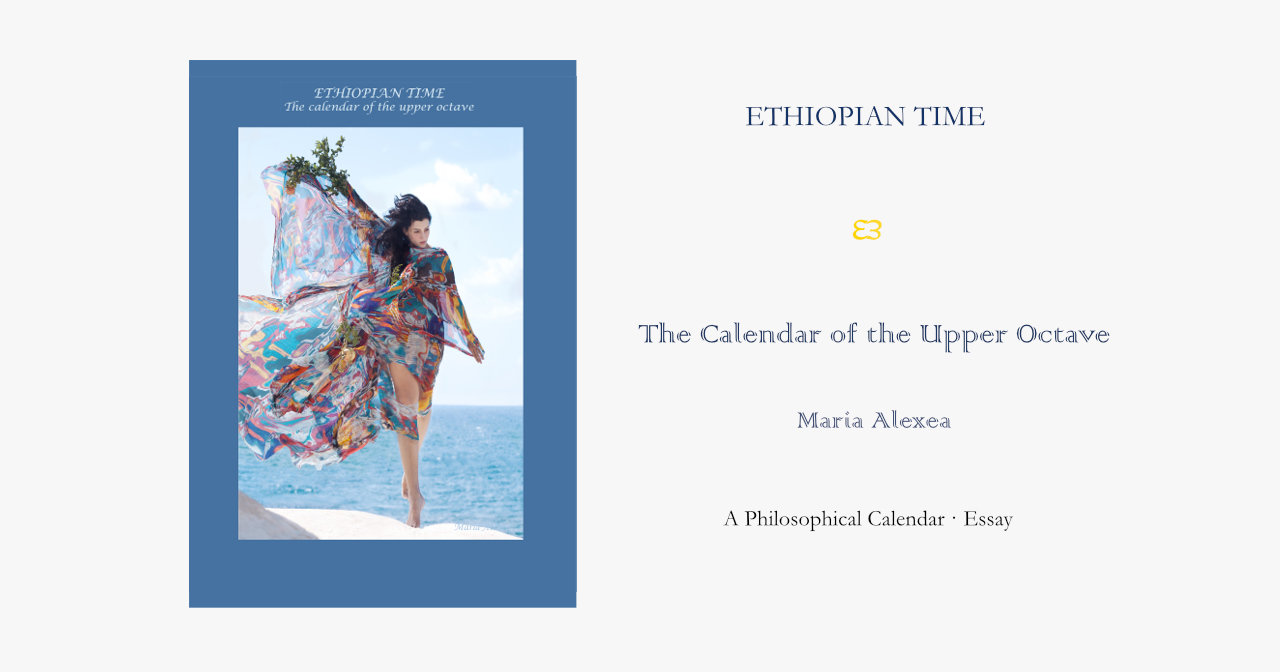
ETHIOPIAN TIME
There exists a way of measuring time
that does not proceed in a straight line.
This is not a difference of dates,
but a difference of orientation.
Like a dancer poised at the edge between worlds,
movement is sustained by alignment,
not momentum —
an octave shift toward completion.
Maria Alexea
Προοίμιον — Prooimion
The Riddle of a Different Time
Among all calendars on Earth, one stands apart.
It counts the years differently.
It keeps a rhythm untouched by Rome.
It begins near the equinox, at the year’s quiet dawn,
when day and night hold a brief equilibrium
— the rising of Eos, not of Sirius.
Why Ethiopia?
Why this older measure of time?
Why does it echo harmonic structures forgotten elsewhere?
To understand this, one must follow a trail across archaic Greek memory —
from Homer’s Aithiopians at the world’s edge,
to Hesiod’s golden humanity,
to Heraclitus’ double life,
to Plato’s luminous upper earth,
to the Orphic remembrance of origin,
to Atlas and Talos, guardians of the axis,
until finally the Ethiopian Calendar reveals what it has preserved.
1. Πρῶτον Σημεῖον — First Clue — Homer’s Aithiopians
Where the Gods Travel When They Leave Us
Homer places the Aithiopians at the two horizons:
«Ἀλλ’ ὁ μὲν Αἰθίοπας μετεκίαθε τηλόθ’ ἐόντας,
Αἰθίοπας, τοὶ διχθὰ δεδαίαται, ἔσχατοι ἀνδρῶν,
οἱ μὲν δυσομένου Ὑπερίονος, οἱ δ’ ἀνιόντος …»
“But he had gone among the Ethiopians, who dwell far away —
the Ethiopians, divided in two, the outermost of humankind:
some where Hyperion sets, others where he rises.” Odyssey 1.22–23
They appear twice:
east at sunrise, west at sunset —
a mirrored humanity living at the threshold.
Their name reveals their nature:
Αἰθίοψ = αἴθω (to blaze) + ὄψ (face)
→ “the shining-faced ones.”
Not simply a geographical people,
but those who dwell nearest to the boundary between worlds —
the sharp-sighted, the remembering, the harmonically attuned.
This is the first clue.
2. Δεύτερον Σημεῖον (Second Clue) – Hesiod’s Golden Race
Memory of a Descent
Hesiod remembers a humanity once radiant:
«χρύσεον μὲν πρώτιστα γένος μερόπων ἀνθρώπων ἀθάνατοι …», Works and Days 109.
“Golden indeed, first of all, was a race of humans endowed with logos”
“A golden race was first…”
But it fell downward —
into density, shadow, and forgetfulness.
This is the Greek memory of the descent
into the hollow basin Plato later describes.
The second clue.
3. Τρίτον Σημεῖον — Third Clue — Heraclitus’ Double Humanity
The Two Lives Within Us
Heraclitus states:
ἀθάνατοι θνητοί, θνητοὶ ἀθάνατοι,
ζῶντες τὸν ἐκείνων θάνατον,
καὶ τεθνεῶτες τὸν ἐκείνων βίον.
“Immortal mortals, mortal immortals —
living the death of the others,
and dying the life of the others.”
DK 22 B 62
Humanity appears doubled —
one part above, one part below.
This is the earliest form of what can call:
Hēniochos ↔ Hyphēniochos
the higher charioteer and the earthly emissary.
The third clue.
4. Τέταρτον Σημεῖον — Fourth Clue — Plato’s Hollow Earth
The Geography of Two Worlds
Plato describes our condition with striking precision:
«ἡμεῖς… οἰκοῦμεν ἐν τινι κοίλῳ τῆς γῆς»
“We dwell in a certain hollow of the earth.” Phaedo 110b–c
Above this cavity lies the true earth,
radiant with pure colors, inhabited by beings who breathe aether:
«ἀέρι μὲν ἡμεῖς, ἐκεῖνοι δὲ αἰθέρι»
“We breathe air; they breathe aether.” (111b)
Their life-substance is:
«ἰχώρ, οἷον πέρ τε θεοὶ ἔχουσι»
“ichor, such as flows in the veins of the gods.”, Iliad 5.340
Homer and Plato agree:
We live below.
A more luminous humanity lives above.
The fourth clue.
5. Πέμπτον Σημεῖον — Fifth Clue — The Orphics
From the Gold Tablets:
“ Γῆς παῖς εἰµι καὶ Οὐρανοῦ ἀστ(ερόεντος) ”
I am the child of Earth and of the starry Sky
To drink from the spring of Mnemosyne is to recover memory.
Memory reverses the descent.
The fifth clue.
6. Ἕκτον Σημεῖον — Sixth Clue — Hēniochos & Hyphēniochos
Why Souls Descend — and Why Most Forget
The higher self — the Hēniochos —
cannot fully enter the cavity.
Its form is too expansive, too radiant.
Thus each life is lived by the Hyphēniochos,
the emissary capable of acting within density.
Plato describes souls who lose their chariot:
«ἀνῆκται δὲ τὰ ἄρματα διαπεπτωκότα»
“Their chariots have broken and fallen away.”
Phaedrus 247b
When the lower remembers the higher,
the Φ-axis reconnects —
and the cavity begins to rise.
This is the sixth clue.
7. Ἑβδόμον Σημεῖον — Seventh Clue — Atlas & Talos
Guardians of the Axis
Atlas holds the vertical pillar —
the axis of time.
Talos circles the horizontal boundary —
the axis of space.
Their names mirror one another:
Ἄτλας ↔ Τάλως
a rotation of the same essence.
Atlas = time upheld
Talos = space secured
When the cavity tilts upward toward the upper earth,
both guardians activate:
Atlas fortifies the vertical beam.
Talos intensifies the circular perimeter.
Together they stabilize the Φ-axis during ascent.
The seventh clue.
8. Ὄγδοον Σημεῖον — Eighth Clue — The Ethiopian Calendar
Where the Ancient Rhythm Survived
While Rome reshaped time repeatedly,
Ethiopia preserved an older measure.
A calendar:
– 7 years behind in numbering
– 8 years ahead in harmonic cycle
– beginning near the equinox, the dawn-balance of Eos
– following a rhythm older than Julian or Gregorian reform
In music:
8 = the octave = return to the root.
Time follows the same law.
Thus:
Ethiopian Time = the upper octave
Gregorian Time = the echo inside the cavity
The 7-year difference reflects the broken cycle of the descent.
The 8-year shift reflects the completed octave of return.
This is the eighth and final clue.
Ἀποκάλυψις — Revelation
The Answer to the Riddle
All clues converge:
Homer’s shining Aithiopians,
Hesiod’s Golden Race,
Heraclitus’ double humanity,
Plato’s hollow world,
the Orphic golden blood,
the two charioteers,
Atlas and Talos,
the rising Φ-axis,
and finally the Ethiopian Calendar —
all describe the same architecture of existence.
The Aithiopians of myth were those who lived at the threshold —
the remembering ones at the dawn of the world.
And Ethiopia today, without explicit metaphysics,
has preserved the only calendar aligned with the upper octave.
Heraclitus wrote:
«ὁδὸς ἄνω κάτω μία καὶ ὡυτή.»
“The way up and the way down are one and the same.”
To follow this calendar
is to turn toward the ascending octave,
to align with Φ,
to reopen the bond between Hēniochos and Hyphēniochos,
to join the slow rising of the hollow world
toward the radiant earth above.
«ἔφυγον κακόν· εὗρον ἄμεινον.»
“I have escaped the lower world; I have found the better one.”
Welcome to Ethiopian Time.
Welcome to the dawn cycle.
Welcome to the octave of remembrance.
The Calendar
(Months and images will unfold here.)
January 2026
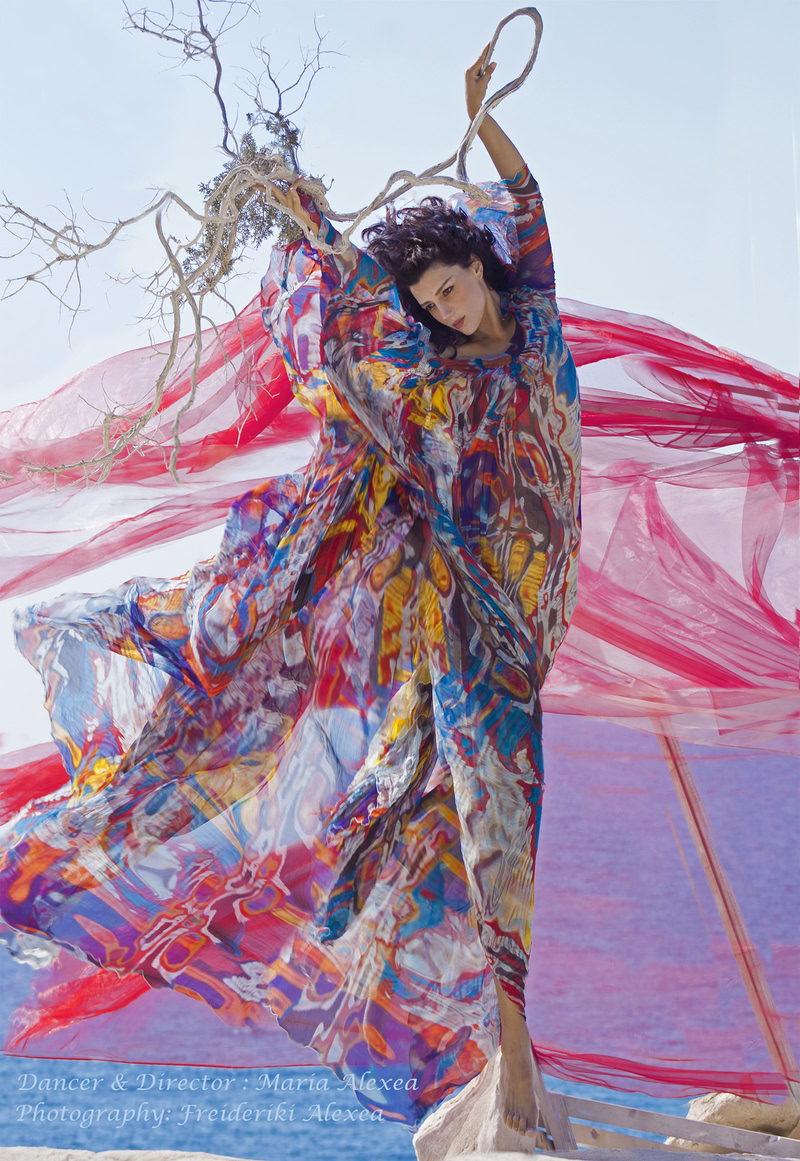
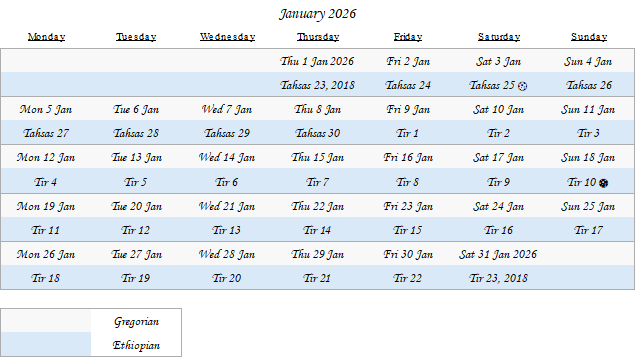
Month passages
1–8 January 2026 → Tahsas 2018
- Ethiopian dates: Tahsas 23–30, 2018
- Name (EN): Tahsas
- Totem: White Ibex — Guardian of the Mountain
- Traits: discipline • endurance • clarity • silent strength
- Proverb: “In the still month, the spirit grows taller than the snow.”
9–31 January 2026 → Tir 2018
- Ethiopian dates: Tir 1–23, 2018
- Name (EN): Tir
- Totem: Gazelle / Arrow of Light
- Traits: initiative • moral courage • clear intention
February 2026
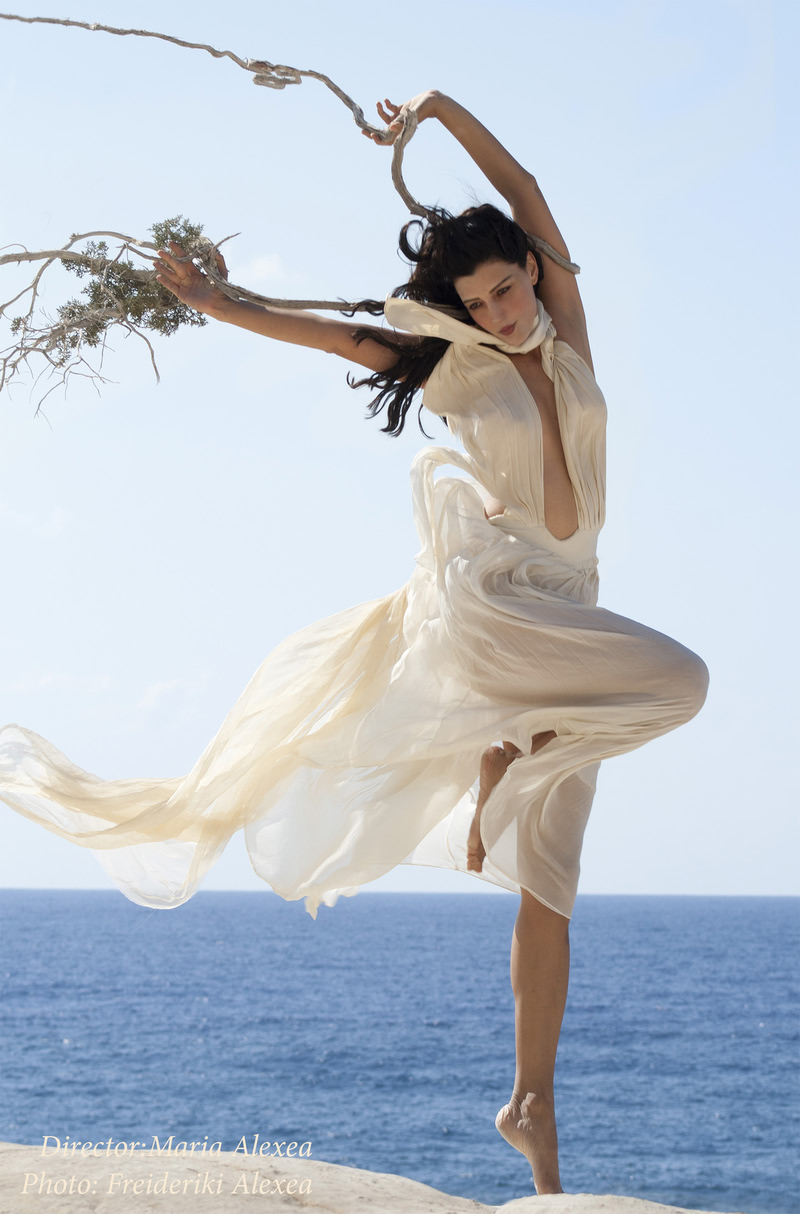
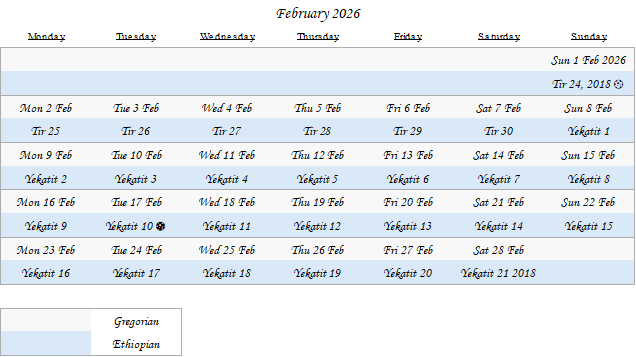
Month passages
1–7 February 2026 → Tir 2018
- Ethiopian dates: Tir 24–30, 2018
- Name (EN): Tir
- Totem: Gazelle — Arrow of Light
- Traits: initiative • moral courage • clear intention
- Proverb: “Run toward the light before the sun appears.”
8–28 February 2026 → Yekatit 2018
- Ethiopian dates: Yekatit 1–21, 2018
- Name (EN): Yekatit
- Totem: Rain Bird — Bearer of Memory
- Traits: compassion • adaptability • poetic vision
- Proverb: “When the sky opens, hearts remember their source.”
March 2026

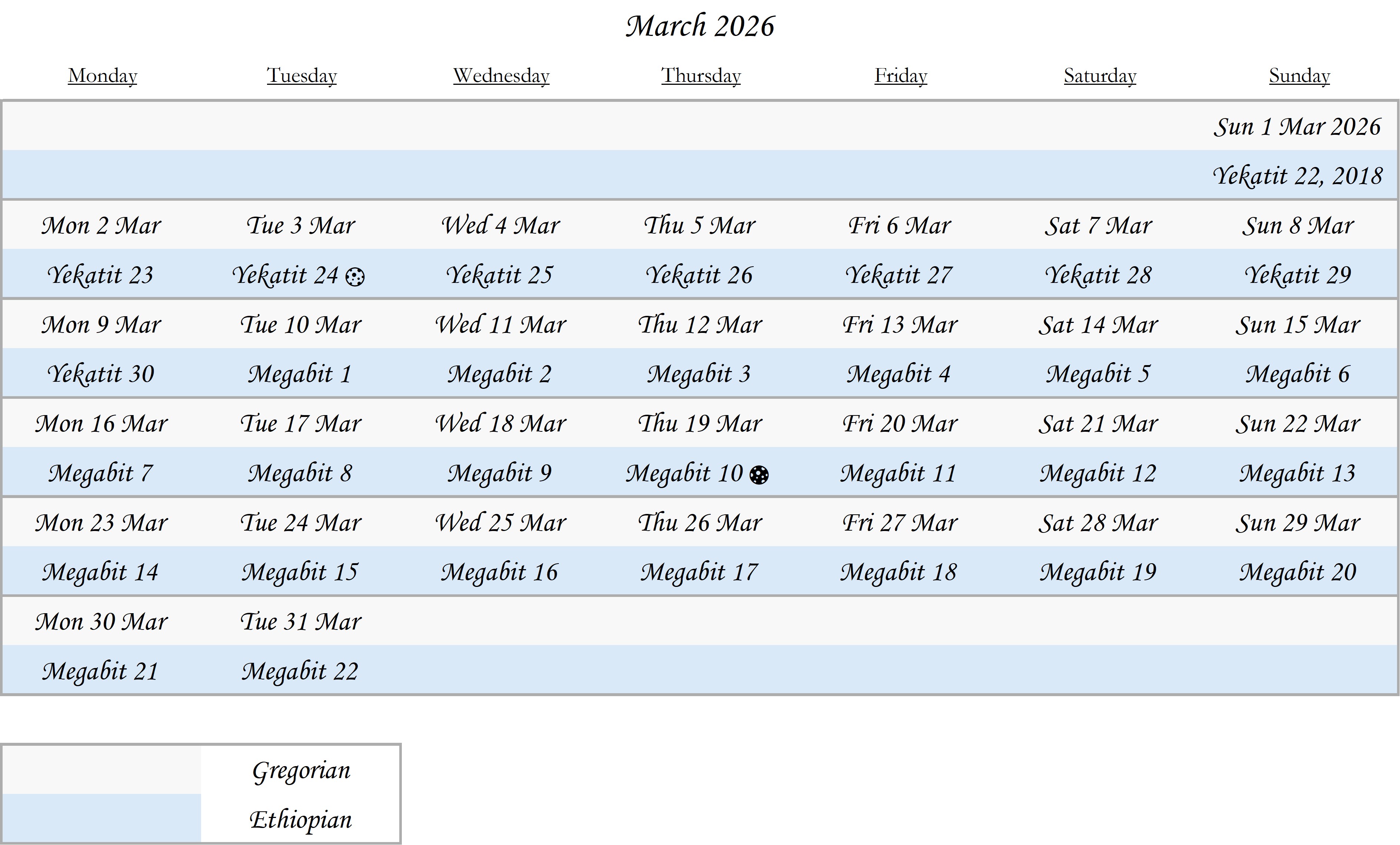
Month passages
1–9 March 2026 → Yekatit 2018
- Ethiopian dates: Yekatit 22–30, 2018
- Name (EN): Yekatit
- Totem: Rain Bird — Bearer of Memory
- Traits: compassion • adaptability • poetic vision
- Proverb: “When the sky opens, hearts remember their source.”
10–31 March 2026 → Megabit 2018
- Ethiopian dates: Megabit 1–22, 2018
- Name (EN): Megabit
- Totem: Lotus — The Visionary Dreamer
- Traits: sensitivity • artistry • inner harmony • inspired imagination
- Proverb: “Dreams are the seeds that teach the earth to bloom.”
April 2026

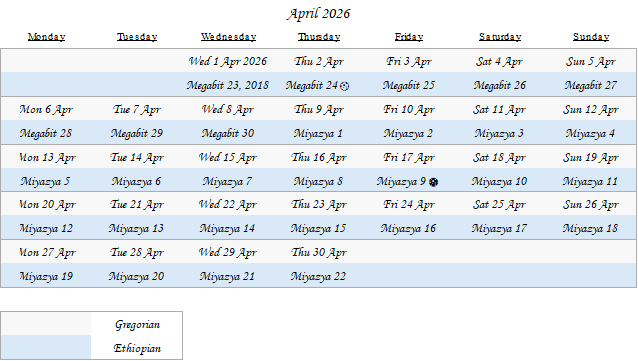
Month passages
1–8 April 2026 → Megabit 2018
- Ethiopian dates: Megabit 23–30, 2018
- Name (EN): Megabit
- Totem: Lotus — The Visionary Dreamer
- Traits: sensitivity • artistry • intuitive harmony • imagination
- Proverb: “Dreams are the seeds that teach the earth to bloom.”
9–30 April 2026 → Miyazya 2018
- Ethiopian dates: Miyazya 1–22, 2018
- Name (EN): Miyazya
- Totem: Fire Stag — The Igniter of Dawn
- Traits: courage • creative renewal • honest impulse • awakening
- Proverb: “Light leaps from the heart before the eyes can see it.”
Loading comments…